



.svg)

HVAC Installation in Citrus Heights, CA
Upgrade your property with comprehensive HVAC installation in Citrus Heights, CA. Improve air quality and energy efficiency. Contact our specialists today.
Maintaining a perfectly balanced indoor environment requires a climate control system capable of handling extensive thermal demands without constant interruption. Aging units often struggle to provide consistent heating and cooling, leading to uncomfortable temperature fluctuations, poor air circulation, and rising utility expenses. When mechanical failures become a regular occurrence, patching individual components is no longer a sustainable strategy for property management.
Upgrading to a comprehensive heating, ventilation, and air conditioning system transforms the way your property regulates temperature and manages indoor air quality. A modern, integrated setup ensures that the furnace, air handler, and cooling equipment work in absolute synchronization to deliver optimal airflow to every room. Replacing outdated infrastructure eliminates persistent mechanical issues, drastically reduces energy consumption, and provides quiet, reliable performance year-round.
Navigating the complexities of a complete system overhaul demands professional expertise to guarantee precision sizing and flawless integration. Reach out to our specialists to explore your options and plan your next major property upgrade.
Complete Heating and Cooling Upgrades in Citrus Heights, CA
Replacing an entire climate control network is a significant undertaking that impacts every aspect of a property's thermal management. Property managers and homeowners in Citrus Heights, CA depend on integrated systems that can effortlessly transition between heating and cooling functions to maintain consistent comfort. An aging infrastructure often suffers from compromised ductwork, inefficient air handlers, and outdated heat exchangers that collectively degrade performance and inflate operational costs. Moving to a modern, fully synchronized setup resolves these systemic issues, ensuring that the condenser, furnace, and ventilation components operate seamlessly as a single, highly efficient entity. Proper installation of these intricate systems requires meticulous planning, an advanced understanding of thermal dynamics, and a commitment to technical excellence to achieve maximum performance and longevity.
Warning Signs It Is Time to Replace Your Entire System
Determining when to replace an integrated heating and cooling system involves analyzing the overall health of multiple interconnected components. Persistent temperature inconsistencies across different zones of the property frequently indicate that the air handler is losing its capacity to push conditioned air effectively through the ductwork. If you notice a significant increase in airborne dust or experience chronic indoor air quality issues, it often points to deteriorating ventilation components and failing filtration mechanisms within the central unit. Additionally, a steady rise in utility costs without a corresponding change in usage patterns suggests that the system's motors and compressors are working exceptionally hard to overcome severe mechanical degradation.
Frequent and expensive repairs are another major indicator that a full replacement is necessary. When a furnace requires a new heat exchanger or an outdoor condenser needs a compressor replacement, the high cost of these individual parts often makes investing in a completely new, integrated system the wiser financial choice. Furthermore, if your equipment relies on outdated ignition systems or obsolete refrigerants, maintaining the unit becomes increasingly difficult due to the scarcity of compatible replacement parts. Upgrading the entire infrastructure eliminates these recurring headaches, providing a cohesive solution that delivers reliable, uninterrupted climate control.
Advanced Sizing for Heating and Cooling Loads
Deploying a multi-component system requires precise engineering to ensure that heating and cooling capacities are perfectly matched to the specific demands of the building. Every property assessed by Bronco Plumbing Heating and Air receives a comprehensive ductwork evaluation and structural analysis to determine the exact thermal load. An oversized system will blast conditioned air into the space, shutting off rapidly before it can adequately filter the air or manage indoor humidity levels. Conversely, undersized equipment will operate constantly, leading to excessive energy consumption and rapid deterioration of critical moving parts.
Accurate load calculations evaluate the thermal envelope of the entire property, analyzing insulation density, window glazing, external shading, and overall square footage. The assessment also scrutinizes the condition and layout of the existing ventilation network to ensure it can accommodate the airflow requirements of modern, high-velocity air handlers. By mathematically verifying these parameters, professionals guarantee that the selected heat pump, furnace, and cooling coil are engineered to work together flawlessly. This rigorous sizing protocol prevents uneven temperatures, optimizes energy utilization, and ensures the new equipment operates exactly as the manufacturer intended.
The HVAC Installation Process Step-by-Step
Executing a comprehensive system replacement requires a highly orchestrated approach to safely manage electrical, gas, and refrigerant connections. The project begins with a detailed site inspection in Citrus Heights, CA to map out the removal of the old infrastructure and plan the integration of the new components. Safety protocols are strictly enforced as technicians carefully disconnect the main power supplies, shut off gas lines, and safely extract any existing refrigerants from the legacy equipment.
Once the old furnace and condenser are removed, the team meticulously prepares the installation areas. This involves reinforcing the structural supports for heavy air handlers, leveling exterior concrete pads, and modifying plenum transitions to perfectly fit the new indoor unit. The new furnace or air handler is then installed, focusing on securing tight, leak-free connections to the existing ductwork to prevent any loss of conditioned air. Following the indoor setup, the outdoor unit is positioned, and the complex process of running new electrical conduit and brazing copper refrigerant lines takes place.
With the major components physically in place, the focus shifts to establishing critical safety and control connections. Gas lines are reconnected and rigorously pressure-tested for leaks, while the electrical systems are wired to support the increased demands of modern variable-speed motors. The entire network is then integrated with a digital thermostat interface. The final phase involves extensive functional testing, where our experienced technicians measure manifold gas pressures, calculate refrigerant subcooling, and balance the airflow at individual registers to guarantee the entire system operates in perfect harmony.
Upgrading Ductwork and Air Handlers
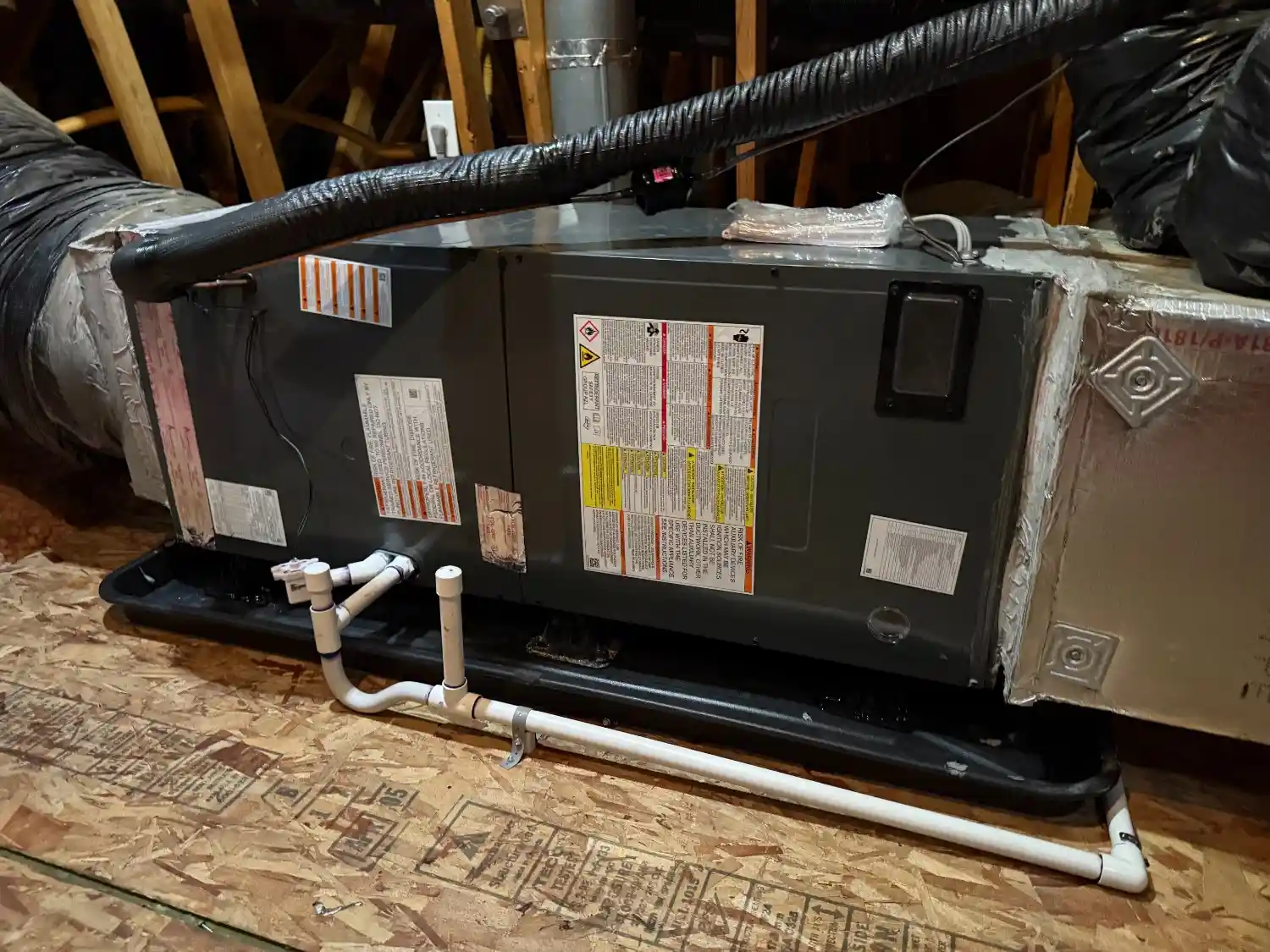
A high-performance furnace and condenser cannot deliver optimal comfort if the delivery mechanism is fundamentally flawed. The air handler acts as the respiratory center of the property, utilizing powerful blower motors to circulate conditioned air through the ventilation network. Modern air handlers feature variable-speed technology that continuously adjusts airflow output, providing precise temperature management and vastly improved humidity extraction compared to traditional single-speed models. Integrating a new air handler requires careful calibration to ensure the blower speed matches the resistance of the ductwork.
Simultaneously, the condition of the ductwork dictates the overall efficiency of the climate control network. Leaky, uninsulated, or improperly designed ducts can cause a significant portion of conditioned air to escape into attics or crawlspaces before reaching the intended living areas. A professional upgrade often includes sealing connections with specialized mastic, replacing crushed or degraded flexible ducting, and installing proper insulation to prevent thermal loss. By optimizing the air distribution channels, property owners ensure that the energy expended by the new equipment translates directly into measurable indoor comfort.
Benefits of a New Integrated Climate Control System
Transitioning from an aging, mismatched setup to a fully unified heating and cooling solution provides substantial long-term advantages. The synergy between perfectly matched components elevates the standard of living and simplifies property management.
- Maximized Energy Conservation: Unified systems communicate intelligently, ensuring that furnaces and heat pumps operate at peak efficiency, drastically lowering monthly utility expenditures.
- Consistent Thermal Comfort: Variable-capacity compressors and modulating gas valves eliminate harsh temperature swings, delivering a steady, precise climate throughout the building.
- Superior Indoor Air Quality: Advanced air handlers integrate easily with high-efficiency media cabinets and electronic air cleaners, significantly reducing airborne allergens and dust.
- Enhanced Operational Safety: Modern heating components feature advanced safety sensors and sealed combustion chambers, providing absolute peace of mind regarding carbon monoxide risks.
- Whisper-Quiet Performance: State-of-the-art blower motors and compressor sound blankets ensure that the system operates with minimal acoustic disturbance, both indoors and outdoors.
Comprehensive Post-Install Support
A successful full-system overhaul relies on meticulous attention to detail during the final commissioning phase and a commitment to ongoing operational excellence. With Bronco Plumbing Heating and Air, the transition to modern efficiency is seamless, as every connection, sensor, and safety switch is independently verified before the project is considered complete. Strict adherence to local building codes in Citrus Heights, CA ensures that the installation passes municipal inspections and meets all regulatory standards for safety and environmental compliance.
The value of a professional installation extends well beyond the initial activation of the equipment. Homeowners and property managers are provided with extensive guidance on how to navigate the features of their new digital thermostats, establish optimized scheduling, and perform essential maintenance tasks like filter replacements. Establishing a routine maintenance protocol is highly encouraged to keep the coils clean, the motors lubricated, and the entire system running at the manufacturer's specified efficiency rating. This comprehensive approach to post-installation support ensures that the investment in a new integrated system continues to yield superior comfort and reliability for the life of the equipment.
Secure Your Comfort Upgrades
Operating a property with outdated, inefficient climate control equipment leads to unnecessary expenses and constant frustration. Upgrading to a seamlessly integrated heating and cooling network transforms your indoor environment, providing exceptional air quality and precise temperature management. Turn to Bronco Plumbing Heating and Air for dependable property upgrades that prioritize long-term performance and meticulous craftsmanship.
Delaying a necessary system replacement only leads to further mechanical failures and increased energy consumption. Choosing professional HVAC installation in Citrus Heights, CA ensures that your new equipment operates safely, efficiently, and at peak capacity. Please submit your project details through our online portal to schedule a comprehensive evaluation. Contact us today to secure a modern, high-performance climate control system tailored to your exact specifications.
