



.svg)


How Many Mini Split Heads Do I Need? Here's Your Quick Answer
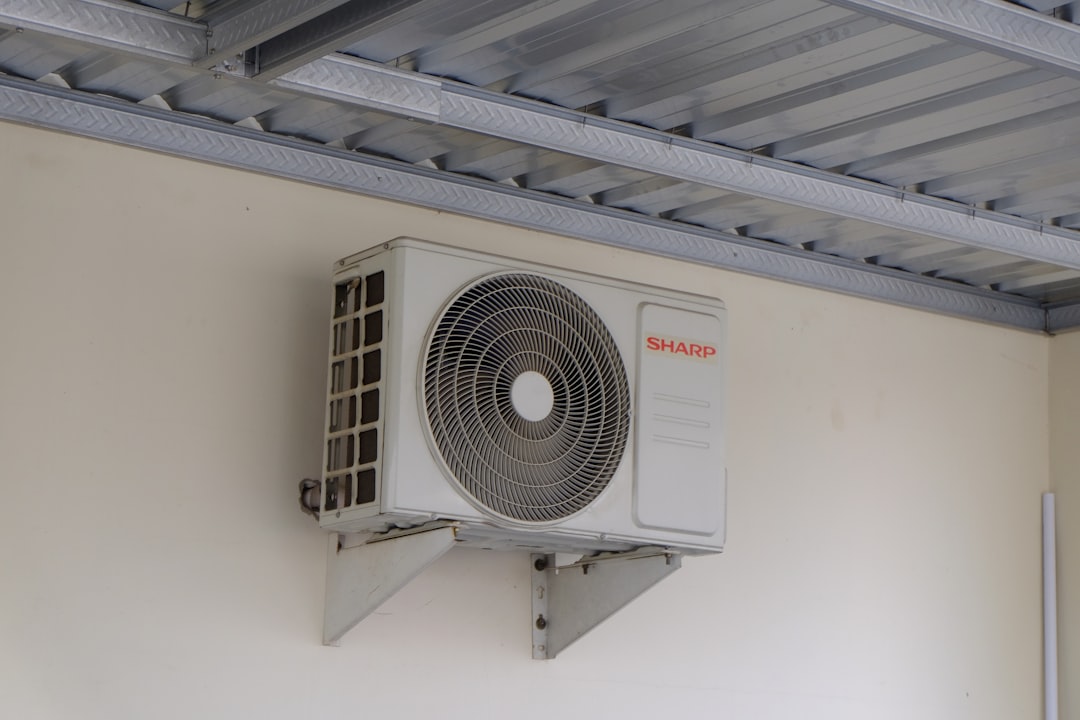
How many mini split heads do i need depends on your home's layout, square footage, and how many separate zones you want to control. Here's a fast reference to get you started:
Quick Sizing Guide:
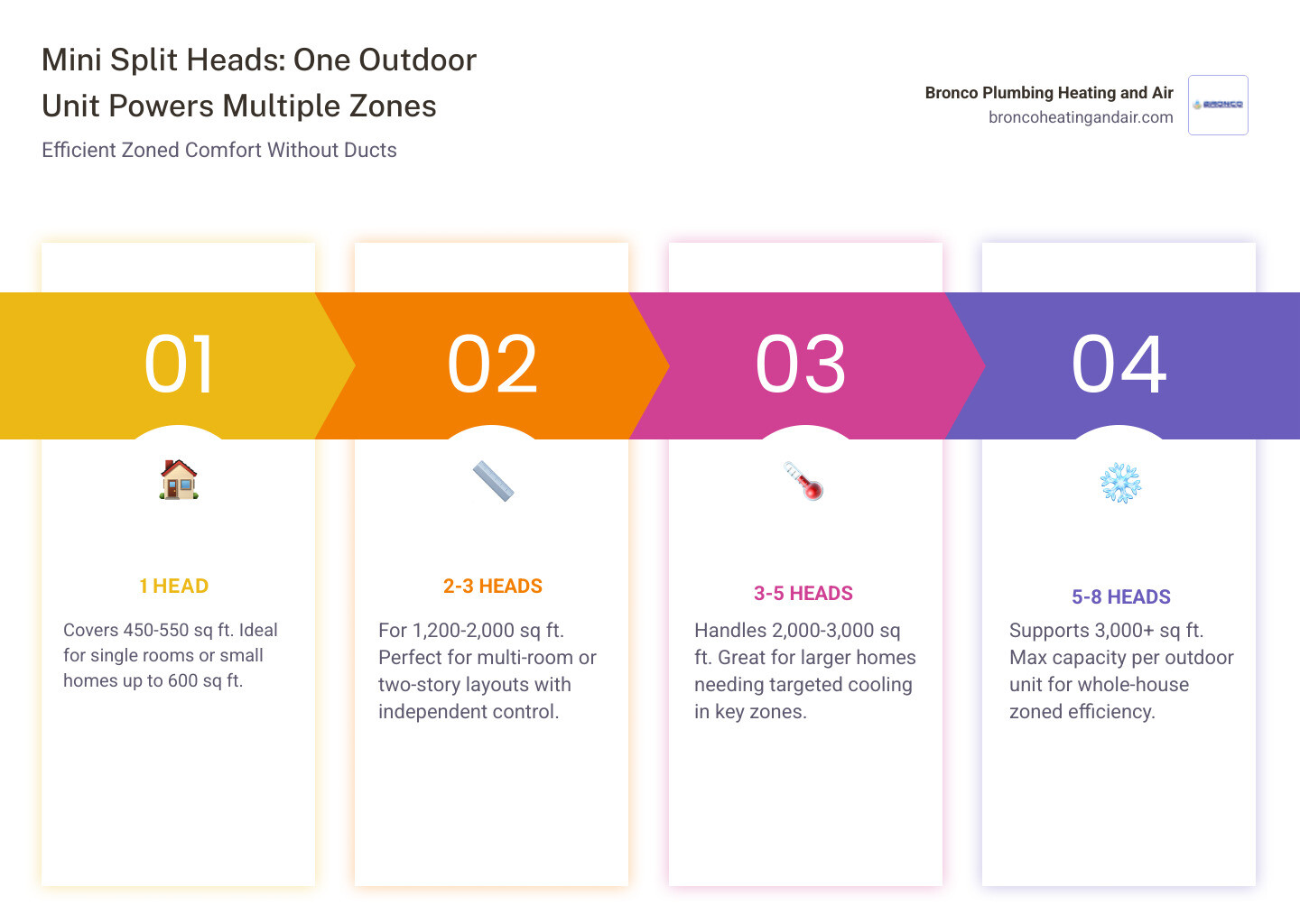
• Up to 600 sq ft — Estimated Heads Needed: 1 head
• 600 – 1,200 sq ft — Estimated Heads Needed: 1 – 2 heads
• 1,200 – 2,000 sq ft — Estimated Heads Needed: 2 – 3 heads
• 2,000 – 3,000 sq ft — Estimated Heads Needed: 3 – 5 heads
• 3,000+ sq ft — Estimated Heads Needed: 5 – 8 heads
The simple rule: Plan for one indoor air handler (head) per enclosed room or zone you want to heat and cool independently. Open-concept spaces can often share a single head. Bathrooms typically don't need one at all.
One outdoor unit can support up to 8 indoor heads, so you don't need a separate outdoor system for every room.
For Sacramento homeowners, figuring out the right number of mini split heads can feel overwhelming — especially when every room, floor, and window orientation plays a role in your comfort. Get it wrong and you end up with hot spots, wasted energy, or a system that's working twice as hard as it should. Get it right and you have quiet, efficient, room-by-room comfort without a single duct in sight.
This guide walks you through exactly how to calculate the number of heads your home needs, what factors to weigh, and when it's time to bring in a professional to make sure everything is sized correctly.
Understanding Mini Split Systems: Single-Zone vs. Multi-Zone
Before we can answer exactly how many mini split heads do i need, we have to look at the "brain" of the operation: the outdoor unit. In the HVAC world, we call these systems "split" because the components are divided between the inside and the outside of your home.
A Mini Split system consists of an outdoor condenser (the heat pump) and one or more indoor air handlers (the "heads"). These are connected by small refrigerant lines, suction lines, and power cables that usually only require a three-inch hole in your wall.
Single-Zone Systems
A single-zone setup is exactly what it sounds like: one outdoor unit connected to one indoor head. This is the perfect solution for a new home office in Folsom or a finished basement in Elk Grove. It’s simple, powerful, and dedicated to one specific space.
Multi-Zone Systems
This is where the magic happens for whole-house comfort. A multi-zone outdoor unit is designed to support multiple indoor heads—sometimes up to eight. Each indoor head has its own thermostat. This means your teenager can keep their bedroom at a chilly 68 degrees while you keep the living room at a comfortable 72.
Because these systems use inverter technology, the outdoor unit can adjust its speed to match the exact cooling or heating demand of the active heads. This prevents the "all or nothing" energy waste common with older central AC systems. It’s quiet, efficient, and allows us to provide targeted comfort to the rooms you use most.
How Many Mini Split Heads Do I Need for My Home?
When we sit down with homeowners for a Mini Split Installation Roseville CA, the first thing we do is look at the floor plan. The number of heads isn't just about square footage; it’s about how air moves (or doesn't move) through your house.
The "Door" Rule
As a general rule of thumb, you will need a mini split head in every room that is separated by a door. Why? Because walls and doors are physical barriers to airflow. If you put a powerful head in the hallway, the bedrooms behind closed doors will remain stubbornly warm in the Sacramento summer.
Zoning Your Lifestyle
Think about how you use your home. Do you have a guest room that stays empty 90% of the time? You might choose to skip a head there to save on initial costs, or you can install a head and simply keep it turned off until guests arrive. This flexibility is a major advantage of ductless systems—you aren't paying to cool empty space.
Floor Count and Heat Stratification
If you have a two-story home in Rocklin or El Dorado Hills, you have to account for the fact that heat rises. We typically recommend at least one head per floor to manage "heat stratification." Even if your downstairs is perfectly cool, an upstairs without its own air handler will likely feel stuffy and uncomfortable.
Calculating BTUs: How Many Mini Split Heads Do I Need per Square Foot?
BTU stands for British Thermal Unit, and it’s the standard measurement for cooling and heating capacity. To determine how many mini split heads do i need, we first have to determine the "load" of each room.
The baseline rule is 20 BTUs per square foot. For example, a 500-square-foot living room would require approximately 10,000 BTUs. However, we don't just stop at the floor measurements. We also look at:
• Ceiling Height: The 20 BTU rule assumes a standard 8-foot ceiling. If you have those beautiful 10-foot or 12-foot vaulted ceilings common in newer Mini Split AC Roseville CA installations, we typically add 10% more capacity for every two feet of extra height.
• Insulation Quality: An older home in Land Park with original insulation will need more "oomph" than a brand-new, tightly sealed home in Natomas.
• Window Efficiency: Windows are essentially holes in your insulation. Large, single-pane windows allow significant heat transfer, requiring a higher BTU head to compensate.
• 150 – 250 — Required BTU Capacity: 5,000 – 6,000 — Recommended Head Size: 6k BTU
• 250 – 400 — Required BTU Capacity: 7,000 – 9,000 — Recommended Head Size: 9k BTU
• 400 – 600 — Required BTU Capacity: 9,000 – 12,000 — Recommended Head Size: 12k BTU
• 600 – 1,000 — Required BTU Capacity: 12,000 – 18,000 — Recommended Head Size: 18k BTU
• 1,000 – 1,500 — Required BTU Capacity: 21,000 – 30,000 — Recommended Head Size: 24k - 30k BTU
Room Layout and Airflow: How Many Mini Split Heads Do I Need for Open Concepts?
If your home features an open-concept kitchen, dining, and living area, you might be able to use a single, higher-capacity head. This is a great way to save on equipment costs while still achieving total comfort.
However, we have to be careful of "hot pockets." These are corners of a room or alcoves where air becomes stagnant because a wall or large piece of furniture blocks the flow from the air handler. In these cases, our technicians providing Mini Split AC Citrus Heights CA services might recommend two smaller heads placed at opposite ends of the space rather than one giant unit in the middle.
The Slim-Ducted Alternative
Sometimes, homeowners want the efficiency of a mini split but don't want a "head" on every single wall. In these scenarios, we can use slim-ducted units. These are hidden in a crawlspace or attic and use very short, localized duct runs to cool two or three small, adjacent rooms (like a cluster of bedrooms). This reduces the visible head count while maintaining the benefits of a ductless heat pump.
Key Factors That Influence Your Head Count
Living in the Sacramento Valley means dealing with unique climate challenges. When we perform a Mini Split Installation Carmichael CA, we have to look beyond just the square footage of the room.
Sun Exposure and Window Orientation
A room with large, south-facing windows will act like a greenhouse in July. Even if that room is the same size as a north-facing bedroom, it will require a head with higher BTU capacity—or potentially its own dedicated zone—to fight off the afternoon sun.
Kitchens and High-Heat Areas
Kitchens are the hardest rooms to cool because of appliances. Between the oven, the stovetop, and the dishwasher, you are constantly fighting internal heat gains. We often recommend slightly oversizing the head in a kitchen to ensure it can keep up when you're hosting Sunday dinner.
Occupancy Patterns
How many people usually stay in the room? People generate heat! A home gym or a living room where the whole family gathers for movie night will have a higher cooling demand than a home office used by one person.
Attic and Wall Insulation
If your home in North Highlands or Rio Linda has poor attic insulation, the ceiling acts like a radiator, pushing heat down into your living space. Improving insulation can actually allow you to use smaller, more efficient mini split heads, which is why we always look at the "whole home" during our assessment.
Planning Your Configuration for Maximum Efficiency
Planning the perfect system is a bit of a balancing act. You want enough heads to ensure comfort, but you don't want to over-complicate the system or overwork your outdoor unit.
The Manual J Calculation
While the 20 BTU rule is a great starting point, professional HVAC teams use what’s called a Manual J Load Calculation. This is a detailed analysis that accounts for dozens of variables, including your local climate in Sacramento, the direction your home faces, and the specific materials used in your walls and roof. This is the only way to be 100% sure of your sizing.
Understanding Load Diversity
One of the coolest things about multi-zone systems is "load diversity." In a typical home, you aren't using every room at peak capacity at the same time. During the day, you're in the kitchen and living room. At night, you're in the bedrooms.
Because of this, the total BTU capacity of your indoor heads can actually be higher than the capacity of your outdoor unit (often up to 130%). This allows you to have heads in every room without needing a massive, expensive outdoor condenser. The system simply shifts the cooling power to where it's needed most.
Multi-Head Limits
While one outdoor unit can support many heads, there are physical limits. Each outdoor unit has a maximum number of "ports." If you have a large home in Granite Bay or Folsom that needs 10 or 12 heads, we would likely install two separate outdoor units. This also provides built-in redundancy—if one unit needs maintenance, the other half of your house stays perfectly comfortable.
When we handle a Mini Split AC Carmichael CA project, we also carefully plan the "line set" runs. This is the piping that carries refrigerant. If the distance between the indoor head and the outdoor unit is too long, the system loses efficiency. Strategic placement is key to keeping your utility bills low.
For those in the middle of a renovation, a Mini Split Installation Citrus Heights CA is often the most cost-effective way to add climate control to new additions or converted garages without the massive expense of tearing out walls to add ductwork.
Frequently Asked Questions about Mini Split Sizing
Do I need a mini split head in every room?
Not necessarily. You need a head in every zone you want to control. If you have a cluster of rooms that are always open to each other, one head may suffice. However, any room with a door that you plan to keep closed (like a bedroom or home office) should have its own head to ensure it stays comfortable.
How many heads can one outdoor unit support?
Most residential multi-zone outdoor units support between 2 and 5 heads. However, high-capacity systems can support up to 8 indoor air handlers from a single outdoor condenser. If your home requires more than 8 zones, we simply add a second outdoor unit to handle the additional load.
How many square feet can one mini split head cool?
A standard 12,000 BTU head is typically rated to cool between 450 and 550 square feet. Smaller 6,000 or 9,000 BTU units are perfect for small bedrooms (200-350 sq ft), while large 24,000 or 36,000 BTU heads can handle large open-plan areas up to 1,500 square feet.
Can I add more heads later?
It depends on the outdoor unit you install initially. If you install a 3-zone outdoor unit but only use 2 heads, you can easily add a third head later. However, if you "max out" the outdoor unit on day one, adding more heads later would require replacing the outdoor unit or adding a second one. We always recommend planning for your future needs during the initial design.
Do bathrooms need a mini split head?
Generally, no. Bathrooms are small, and the airflow from the adjacent bedroom or hallway is usually enough to keep them comfortable. Plus, the high humidity in bathrooms can sometimes interfere with the sensors in the air handler.
Conclusion
Finding the perfect balance for your home’s climate doesn’t have to be a guessing game. By understanding the layout of your home, the specific BTU needs of each room, and the power of multi-zone technology, you can achieve a level of comfort that traditional central air simply can't match.
At Bronco Plumbing Heating and Air, we pride ourselves on providing Sacramento homeowners with licensed, professional, and courteous service. Whether you’re in Citrus Heights, Roseville, or anywhere in the greater Sacramento area, our technicians are here to help you design a system that fits your lifestyle and your budget. We don't believe in one-size-fits-all solutions; we believe in customized comfort that saves you money on your energy bills while keeping your family happy all year long.
Ready to ditch the dusty ductwork and experience the quiet efficiency of a modern ductless system? Schedule your expert Mini Split consultation today and let us help you find the perfect configuration for your home.

Customer Testimonials
Our customer testimonials highlight the reliable service, quality workmanship, and trusted results homeowners experience with Bronco Plumbing Heating and Air.


Ready to Transform your Home?
Create a healthier, more comfortable home with expert HVAC, plumbing, and indoor air quality solutions you can trust. From efficient heating and cooling to cleaner air and reliable repairs, our experienced team is here to keep your family comfortable year-round with dependable service and upfront pricing.
Related Articles
Transitioning Your Heat Pump Settings as August Nights Finally Cool Down


The Relationship Between Attic Insulation and Late Summer Cooling Cycles
What a Sudden Spike in Your August Electric Bill Actually Means for Your AC