



.svg)


Why the Mini Split vs Window Unit Comparison Matters for Sacramento Homeowners
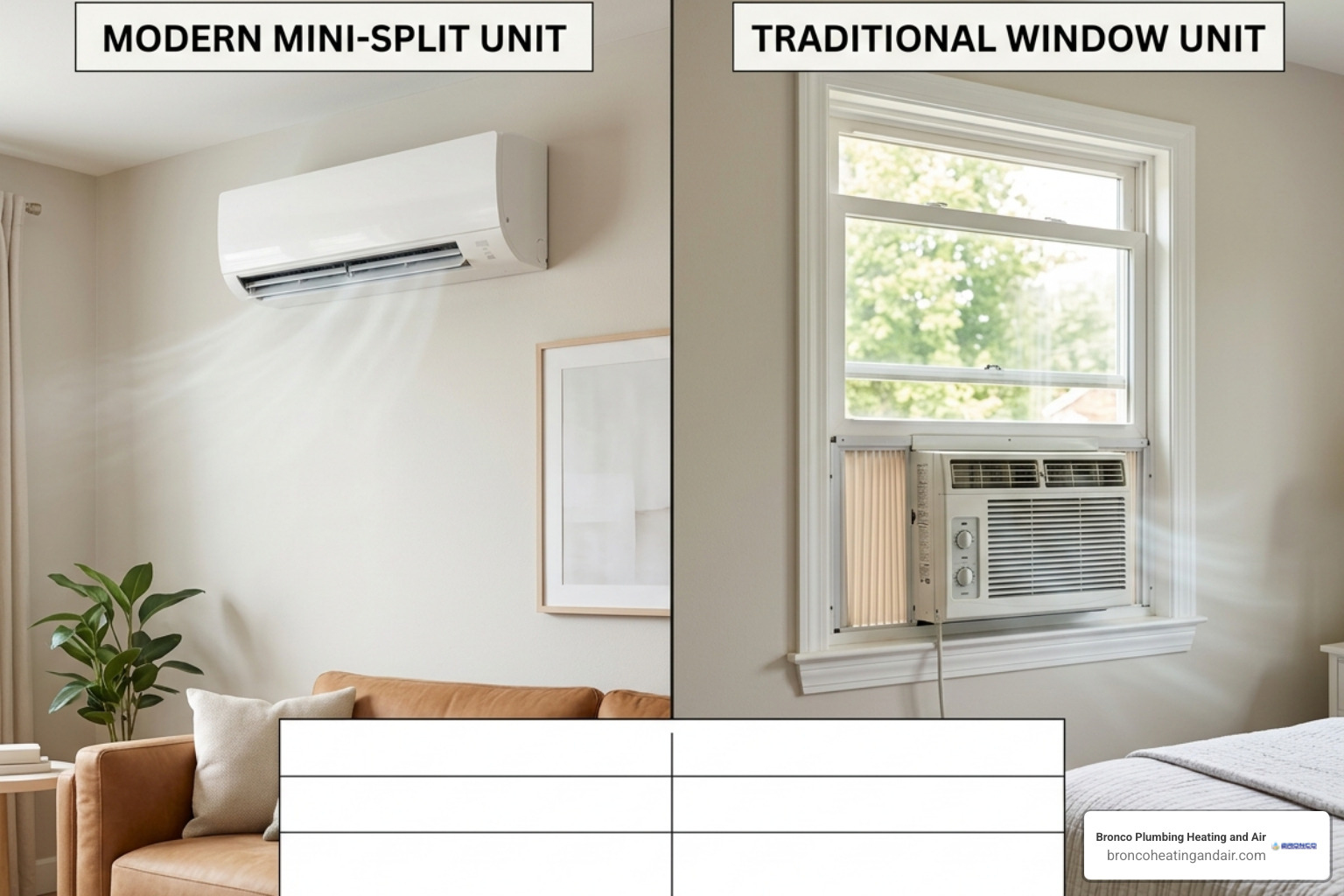
The mini split vs window unit comparison is one of the most common questions Sacramento homeowners face when their old AC setup stops cutting it — and the answer has a real impact on your comfort, energy bills, and home value.
Here is a quick side-by-side to help you decide fast:
• Cooling + Heating — Mini Split: Yes (heat pump) — Window Unit: Cooling only (mostly)
• Energy Efficiency — Mini Split: Up to 40% more efficient — Window Unit: Lower efficiency
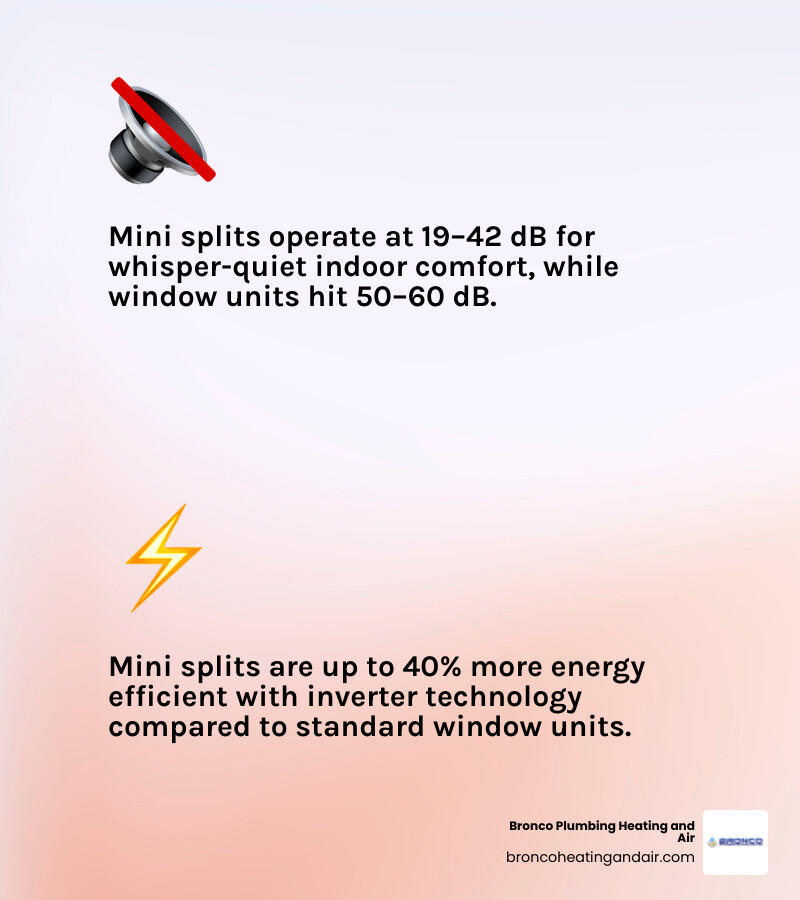
• Noise Level — Mini Split: 19–42 dB (whisper quiet) — Window Unit: 50–60 dB (noisy)
• Lifespan — Mini Split: 15–20 years — Window Unit: 8–12 years
• Installation — Mini Split: Professional required — Window Unit: DIY friendly
• Window Blocked — Mini Split: No — Window Unit: Yes
• Zoned Control — Mini Split: Yes (multi-room) — Window Unit: No (single room)
• Home Security — Mini Split: No window gap — Window Unit: Window must stay open
• Best For — Mini Split: Long-term, whole-room comfort — Window Unit: Temporary or budget use
Sacramento summers are brutal. When temperatures climb well past 100°F, your cooling system is not a luxury — it is a necessity. Window units have been a go-to quick fix for decades, but they come with real drawbacks: loud operation, blocked views, air leaks around the frame, and high energy consumption. Ductless mini splits, on the other hand, use inverter-driven compressors and separate indoor and outdoor components to deliver quieter, more efficient, and more consistent comfort — without sacrificing a single window.
If you have been tolerating the hum and inefficiency of a window unit through another Sacramento summer, this guide will walk you through exactly why an upgrade could be the smartest home improvement you make this year.
The Fundamental mini split vs window unit comparison
When we look at the core differences between these two systems, we are really looking at two different eras of technology. A window unit is a self-contained box. Everything — the compressor, the fan, the coils — is crammed into one plastic and metal chassis that sits in your window frame. Because all the noisy parts are right there in the room with you, the experience is often loud and vibrates the very glass it's sitting against.
In contrast, a ductless mini split is a "split" system, meaning the noisy compressor stays outside while the sleek air handler stays inside. They are connected by a small conduit that only requires a three-inch hole in the wall. This separation is the primary reason why a Mini Split AC Roseville CA provides a much more serene indoor environment than any window-mounted alternative.
Furthermore, window units often suffer from air leakage. No matter how much foam tape or accordion plastic you use, it is nearly impossible to get a perfect, airtight seal. This allows Sacramento’s triple-digit heat to seep back into your home, forcing the unit to work even harder. Mini splits eliminate this issue entirely by allowing your windows to remain closed and locked, maintaining the structural integrity and thermal seal of your home.
Operational Mechanics
The way these units move heat is fundamentally different. Window units typically use fixed-speed compressors. Think of this like a light switch: it is either 100% on or 100% off. When the room gets warm, the compressor kicks on with a loud "thump" and blasts cold air until the thermostat is satisfied, then shuts off. This leads to annoying temperature swings and high energy spikes.
Mini splits utilize advanced inverter technology. Instead of slamming on and off, the inverter allows the compressor to vary its speed. It can slow down to a tiny "sip" of electricity once the room is cool, maintaining a perfectly steady temperature. Inside the unit, refrigerant lines carry heat away from your indoor air, passing it through evaporator coils where blower fans distribute the cooled air. Condensate drainage is handled through a dedicated line that safely funnels moisture outside, preventing the "window drip" that often stains the side of houses with traditional units.
Construction and Durability
If you want a system that lasts, the mini split vs window unit comparison has a clear winner. Window units are often seen as "disposable" appliances. Because they are exposed to the elements on all sides and are frequently moved in and out of windows, they have an average lifespan of just 8 to 12 years. They are prone to mold growth in the basement during off-season storage and can easily be damaged during the "grunt and wedge" installation process every spring.
Mini splits are permanent home improvements. They are constructed with high-quality, weather-resistant materials designed to withstand decades of use. With proper professional maintenance, a mini split can easily last 20 years. This durability comes from the fact that the components are not cramped into a tiny box; they have room to breathe, and the critical electronics are protected within the indoor and outdoor housings.
Efficiency and Performance in the Sacramento Heat
In our region, energy efficiency isn't just about being "green" — it's about keeping utility bills manageable during July and August. Mini split systems are the gold standard here, often consuming 40% less energy than window-mounted units. Many models carry high SEER2 (Seasonal Energy Efficiency Ratio) ratings, with top-tier options reaching as high as 35. For comparison, a standard window unit often struggles to reach an EER (Energy Efficiency Ratio) equivalent of 12.
When you opt for a Mini Split Installation Citrus Heights CA, you are investing in a system that uses about half the wattage of a window unit for the same cooling output. While a window AC might gulp 1,400 watts per hour, a mini split can often maintain your comfort using only 500 to 700 watts. This efficiency is bolstered by the lack of ductwork; since most homes lose 20-30% of their cooling capability through leaky ducts, a ductless system ensures every bit of cold air goes exactly where you need it.
Year-Round Climate Control
One of the biggest advantages of a mini split is that it isn't just an air conditioner — it’s a heat pump. This means it can reverse its operation to provide incredibly efficient heating during our cool, rainy Sacramento winters. While some window units offer heating, they usually rely on "electric resistance" heat, which is notoriously inefficient and expensive to run.
Mini splits move heat rather than creating it. They can pull warmth from the outside air — even when it’s chilly — and move it indoors. They are up to three times more efficient than traditional furnaces or baseboard heaters. This dual-functionality means you get a year-round climate solution for the space, whether it's a primary living area or a converted garage.
Zoned Cooling Advantages
Do you have that one bedroom that is always five degrees warmer than the rest of the house? Or perhaps a home office where you spend all day but don't want to cool the entire house? This is where multi-zone mini splits shine. A single outdoor condenser can power multiple indoor air handlers, each with its own independent thermostat.
This "zoned" approach eliminates energy waste. You can keep your sleeping areas cool at night while the rest of the house stays at a higher temperature, or vice versa during the day. Window units technically offer a form of zoning, but you would need a separate, noisy unit for every single room, which quickly becomes an eyesore and a major drain on your electrical panel.
Aesthetics and Home Impact
Let's be honest: window units are not pretty. They block your view, stop you from opening the window for a fresh breeze, and cut off natural light. From the outside, they can hurt your home’s curb appeal, looking like a bulky after-thought. In some Sacramento neighborhoods or managed communities, there may even be restrictions against them because of their appearance.
Ductless mini splits offer a variety of sleek, modern installation options that blend into your interior design. While the wall-mounted "head" is the most common, we also offer floor consoles that sit low like a radiator or ceiling cassettes that disappear almost entirely into the ceiling. A Mini Split Installation Carmichael CA allows you to reclaim your windows and your view, letting the sunshine back into your home.
Impact on Home Security
Security is a major factor in the mini split vs window unit comparison. A window unit requires a window to remain partially open and "secured" only by a few screws and some plastic panels. For a determined intruder, a window unit is often an easy entry point — they can simply be pushed in or pulled out from the outside.
Because a mini split only requires a small, sealed hole for the refrigerant lines, your windows can stay closed, locked, and even alarmed. This provides peace of mind, especially for ground-floor rooms or homes in busy areas. You get the cooling you need without creating a vulnerability in your home's perimeter.
Noise Level Comparison
The "Bedroom Test" is the ultimate decider for many of our customers. If you have ever been jolted awake by the loud clunk of a window AC compressor kicking on, you know how disruptive they can be. Window units typically operate between 50 and 60 decibels — about the volume of a normal conversation or a loud hum.
Mini splits are designed for tranquility. The indoor units operate at whisper-quiet levels, often between 19 and 42 decibels. For context, 20 decibels is roughly the sound of rustling leaves. Because the compressor is located outside, usually tucked away on the side of the house or in a backyard corner, the only thing you hear inside is the gentle movement of air. This makes them ideal for nurseries, home offices, and bedrooms where sleep quality is a priority.
Installation and Maintenance Requirements
While you can pick up a window unit at a big-box store and shove it in a window yourself, a mini split is a sophisticated piece of HVAC equipment that requires professional attention. We ensure that every installation is handled by licensed, professional technicians who understand the nuances of refrigerant handling and electrical safety.
A Mini Split AC Citrus Heights CA involves mounting the indoor unit, placing the outdoor condenser on a level pad or bracket, and connecting the two with a conduit. This process requires specialized tools, such as a vacuum pump to clear the lines and a torque wrench to ensure leak-free connections. Professional installation also ensures that your manufacturer's warranty remains valid — something that is often voided by DIY attempts.
Professional vs. DIY Considerations
It can be tempting to try a "DIY mini split" kit, but the risks often outweigh the benefits. Handling refrigerants requires EPA certification for a reason; if handled improperly, these gases can be harmful to the environment and the installer. Furthermore, mini splits often require a dedicated 220V electrical line. In older Sacramento homes with smaller electrical panels (under 100 Amps), an upgrade may be necessary to safely power the system.
When we handle your installation, we take the guesswork out of the equation. We calculate the exact BTU (British Thermal Units) needed for your specific square footage, accounting for ceiling height and window orientation. This prevents "short-cycling," where a unit is too powerful and turns off before it can properly dehumidify the air, leaving the room feeling clammy.
Maintenance Best Practices
To keep your system running at peak efficiency through the long Sacramento cooling season, regular maintenance is key. Fortunately, mini split maintenance is straightforward:
• Filter Cleaning: Most indoor units have easy-access filters that should be rinsed every few weeks during heavy use.
• Coil Inspection: We recommend a professional inspection once or twice a year to clean the outdoor coils and ensure the condensate line isn't clogged with debris like leaves or grass clippings.
• System Checkups: A quick annual check of the refrigerant levels and electrical connections can prevent minor issues from becoming major repairs.
Frequently Asked Questions about Mini Split vs Window Unit Comparison
Which system is quieter in a mini split vs window unit comparison?
The mini split is significantly quieter. Because the compressor — the loudest part of any air conditioner — is located outdoors, the indoor noise is limited to a very quiet fan. Most mini splits operate at decibel levels lower than a whisper (19-30 dB), whereas window units vibrate in the window frame and generate 50-60 dB of noise directly inside the room.
Can I use a mini split vs window unit comparison to decide on whole-home cooling?
Yes. While window units are strictly for single-room use, a multi-zone mini split system can cool an entire home. You can connect up to eight indoor air handlers to one outdoor unit, allowing for consistent, customized airflow in every room. This is a popular choice for older Sacramento homes that lack the attic space for traditional ductwork.
Do mini-splits provide better air quality than window units?
Generally, yes. Mini splits often feature multi-stage filtration systems that can trap allergens, dust, and even some bacteria. Because the system is sealed and doesn't rely on a "gap" in your window, it prevents outdoor pollutants, smoke from wildfires, and pollen from leaking into your living space.
Conclusion
At the end of the day, the mini split vs window unit comparison comes down to how you value your long-term comfort and home efficiency. While window units offer a quick, inexpensive fix for a single afternoon, they fall short when it comes to reliability, noise, and energy savings. A mini split is an investment in your home that pays dividends in lower utility bills, better sleep, and a more beautiful living environment.
At Bronco Plumbing Heating and Air, our licensed and courteous technicians are experts in helping Sacramento homeowners transition to more cost-effective and powerful cooling solutions. Whether you are in Elk Grove, Folsom, or right here in the heart of Sacramento, we are ready to provide the professional service you deserve.
Ready to reclaim your windows and upgrade your comfort? Learn more about your options by visiting our Mini Split page today!

Customer Testimonials
Our customer testimonials highlight the reliable service, quality workmanship, and trusted results homeowners experience with Bronco Plumbing Heating and Air.


Ready to Transform your Home?
Create a healthier, more comfortable home with expert HVAC, plumbing, and indoor air quality solutions you can trust. From efficient heating and cooling to cleaner air and reliable repairs, our experienced team is here to keep your family comfortable year-round with dependable service and upfront pricing.
Related Articles

Transitioning Your Heat Pump Settings as August Nights Finally Cool Down


The Relationship Between Attic Insulation and Late Summer Cooling Cycles
What a Sudden Spike in Your August Electric Bill Actually Means for Your AC