



.svg)

Why Upgrading Your AC Might Be the Coolest Move You Ever Make
Why the Standard Efficiency vs High Efficiency AC Comparison Matters for Sacramento HomeownersThe standard efficiency vs high efficiency ac comparison comes down to four things: upfront cost, long-term energy savings,…
Why the Standard Efficiency vs High Efficiency AC Comparison Matters for Sacramento Homeowners
The standard efficiency vs high efficiency ac comparison comes down to four things: upfront cost, long-term energy savings, comfort, and how well your system handles Sacramento's brutal summer heat.
Here's a quick breakdown:
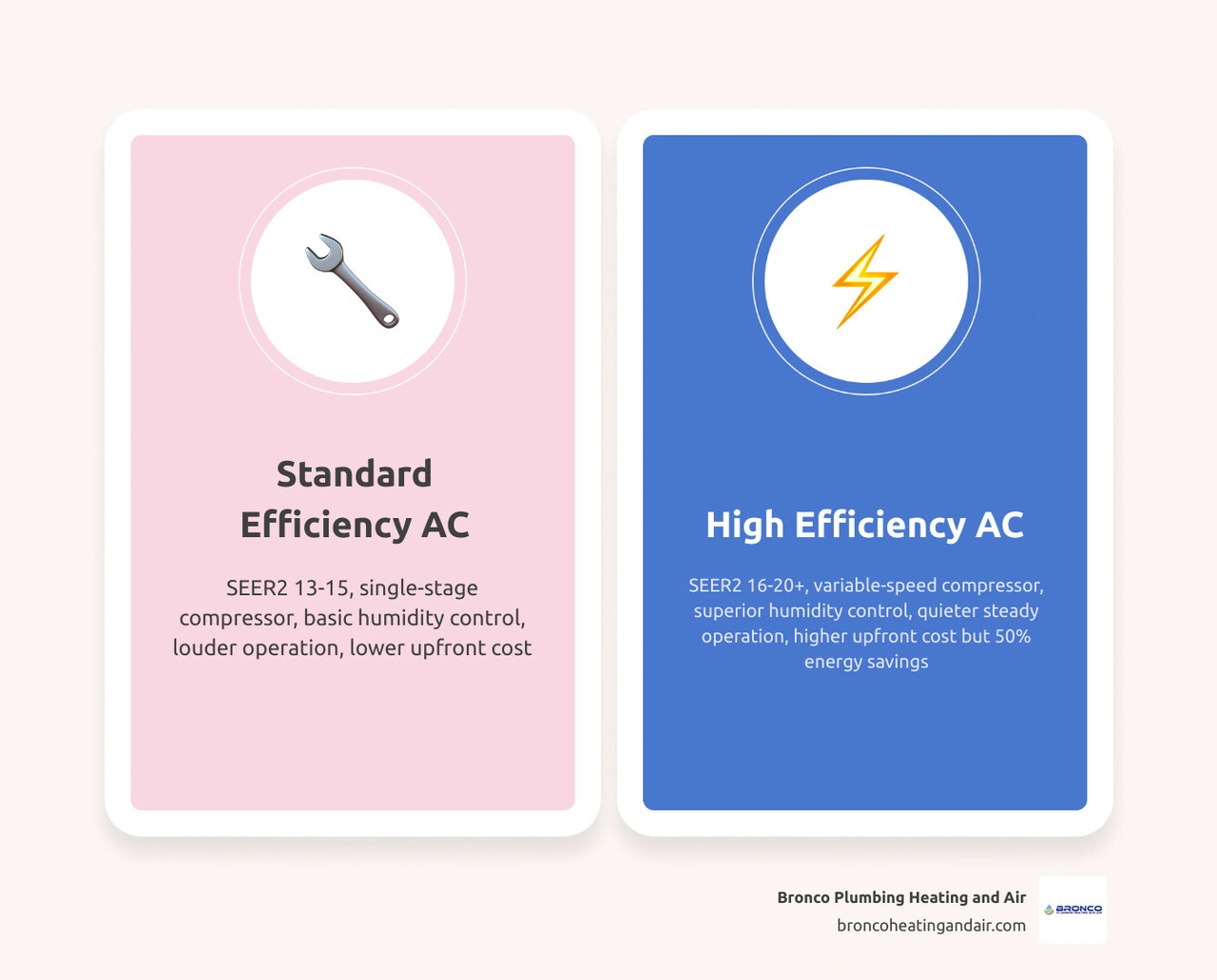
• SEER2 Rating — Standard Efficiency AC: 13–15 — High Efficiency AC: 16–20+
• Compressor Type — Standard Efficiency AC: Single-stage (on/off) — High Efficiency AC: Two-stage or variable-speed
• Energy Savings — Standard Efficiency AC: Baseline — High Efficiency AC: Up to 50% less energy use
• Humidity Control — Standard Efficiency AC: Basic — High Efficiency AC: Superior
• Noise Level — Standard Efficiency AC: Louder cycling — High Efficiency AC: Quieter, steadier operation
• Upfront Cost — Standard Efficiency AC: Lower — High Efficiency AC: Higher
• Best For — Standard Efficiency AC: Short-term ownership, mild climates — High Efficiency AC: Long-term ownership, hot climates like Sacramento
Air conditioning accounts for a significant share of home energy use — and in Sacramento, CA, where summer temperatures regularly push past 100°F, your AC isn't a luxury. It's working hard for months on end. The system you choose — standard or high efficiency — directly affects your monthly utility bills, your indoor comfort, and how often you're calling for repairs.
Standard efficiency units are simpler and less expensive to purchase. High efficiency units cost more upfront but use advanced compressor technology to deliver steadier cooling, better humidity control, and lower energy bills over time. Each step up in SEER2 rating can translate to meaningful savings across a system's 15–20 year lifespan.
The right choice depends on your home, your plans, and your Sacramento neighborhood's specific cooling demands. This guide walks you through everything you need to know.
Understanding the Standard Efficiency vs High Efficiency AC Comparison
When we talk about the standard efficiency vs high efficiency ac comparison, we are essentially looking at how effectively a machine turns electricity into cool air. In the HVAC world, efficiency isn't just a "green" buzzword; it’s a measurable metric that dictates your quality of life during a July heatwave in Roseville CA or Elk Grove CA.
Standard efficiency units are the "workhorses" of the industry. They meet the legal minimum requirements set by the Department of Energy but don't include many "bells and whistles." On the other hand, high-efficiency systems are like modern electric vehicles—they use sophisticated sensors and motors to use the absolute minimum amount of power required to keep you comfortable.
To understand which is right for you, it helps to know the basics of how air conditioning works. Every AC system uses a refrigerant cycle to move heat from inside your home to the outdoors. High-efficiency units simply have larger coils, more aerodynamic fan blades, and smarter compressors that make this heat transfer process much more effortless.
Standard efficiency vs high efficiency ac comparison: Single-stage vs Variable-speed
The biggest technical difference in the standard efficiency vs high efficiency ac comparison is the compressor. Think of your compressor as the heart of the system.
• Single-Stage (Standard): This compressor is either 100% "on" or 100% "off." When your thermostat clicks, it blasts to life with a massive surge of energy. Once the home reaches the target temperature, it shuts down completely. This lead to "temperature swings"—where you feel a bit too cold when it's running and a bit too warm right before it kicks back on.
• Variable-Speed (High Efficiency): These systems can adjust their output in tiny increments (sometimes as small as 1%). Instead of stopping and starting, they run at a low, steady "sip" of energy. This eliminates the loud "thump" of the system starting up and keeps your home within half a degree of your target temperature.
Because standard units start and stop so frequently, they rely heavily on their capacitors to provide that initial jolt of electricity. You can learn more about why these components are so vital in our guide on why air conditioners have capacitors.
Making the standard efficiency vs high efficiency ac comparison for long-term savings
While high-efficiency units require a larger initial investment, they are designed to pay you back. Statistics show that upgrading from an older SEER 10 unit to a modern SEER 18 system can cut your cooling energy bills by as much as 50%. In a climate like Sacramento’s, where we might run our AC for five or six months out of the year, those monthly savings add up fast.
Beyond just the utility bill, there is the question of system longevity. Because variable-speed systems don't experience the "wear and tear" of thousands of hard starts every summer, they often face fewer mechanical breakdowns. If you're wondering how this affects the lifespan of your unit, check out our insights on how long an AC system lasts in Sacramento.
Decoding SEER2 and California Energy Standards
As of April 2026, the industry has fully transitioned to SEER2 (Seasonal Energy Efficiency Ratio 2). This is a more rigorous testing standard that accounts for the external static pressure of your ductwork, providing a more "real-world" look at efficiency than the old SEER ratings.
In California, we have some of the strictest energy standards in the nation. The Department of Energy and the state government have set minimum thresholds that all new installations must meet.
• SEER2 — Northern CA Minimum (2026): 14.3 — High-Efficiency Threshold: 16.0+ — Premium Efficiency: 20.0 - 25.0+
• EER2 — Northern CA Minimum (2026): 11.7 — High-Efficiency Threshold: 12.5+ — Premium Efficiency: 13.5+
In our region, including Folsom CA and Rancho Cordova CA, we must also adhere to California Title 24 energy requirements. These rules ensure that when we replace a system, the entire setup—including the ducts and thermostats—is optimized for efficiency. Many homeowners ask us, "Does Title 24 apply to my replacement?" The answer is almost always yes, and choosing a high-efficiency system often makes meeting these state standards much easier.
Beyond the Rating: Features That Define High-Efficiency Performance
A high-efficiency AC isn't just "better at cooling"; it’s better at managing your entire indoor environment. One of the most critical components in these systems is the variable-speed blower motor (ECM). Unlike older motors that only have one speed, an ECM can ramp up or down to move exactly the right amount of air.
This leads to several "hidden" benefits:
1. Humidity Management: By running at a slower speed for longer periods, high-efficiency units allow the evaporator coils more time to pull moisture out of the air. This makes 75°F feel much cooler and crisper than it would with a standard unit.
2. Noise Reduction: Standard units often sound like a jet engine taking off in your backyard. High-efficiency models are significantly quieter, with some operating at decibel levels as low as a quiet conversation.
3. Improved Air Quality: Since the fan runs more consistently at a lower speed, your air is being constantly pulled through your filtration system, removing more dust, pollen, and pet dander.
The Role of Heat Pumps in Modern Efficiency
When discussing the standard efficiency vs high efficiency ac comparison, we have to mention heat pumps. A heat pump looks exactly like a traditional AC unit, but it contains a "reversing valve." This allows the system to provide high-efficiency cooling in the summer and incredibly efficient heating in the winter by moving heat rather than creating it.
Many Sacramento residents are opting for "dual-fuel" systems—pairing a high-efficiency heat pump with a gas furnace. This gives you the best of both worlds: ultra-efficient electric cooling and heating for most of the year, with a gas backup for those rare freezing Delta nights. Plus, these systems often qualify for significant federal tax credits and local California energy rebates, which can help offset the initial cost.
Choosing the Right System for the Sacramento CA Climate
Sacramento's climate is unique. We deal with "dry heat," but we also deal with extreme temperature spikes. In places like Rocklin CA, and Davis CA, your AC needs to be able to handle a 105°F day without breaking a sweat.
A standard efficiency unit might struggle during a prolonged heatwave, running 24/7 just to keep up. This can lead to "short-cycling" or system freezes. High-efficiency units are built with larger compressors and more robust coils designed to maintain performance even when the mercury climbs. Understanding how the Sacramento climate affects your HVAC system is key to making the right choice. We always recommend protecting your HVAC system during heat waves by choosing a unit that has the "headroom" to handle extreme weather.
Long-Term Reliability and Maintenance Requirements
A common myth in the standard efficiency vs high efficiency ac comparison is that high-efficiency units are "fragile" because they have more electronics. In reality, the opposite is often true. Because these systems operate more smoothly and avoid the violent "on/off" cycles of standard units, their internal components often last longer.
However, maintenance is non-negotiable for both types. To keep a high-efficiency unit performing at its rated SEER2, it needs to be clean.
• For Roseville residents: Regular AC maintenance in Roseville CA ensures your high-tech sensors are calibrated.
• For Citrus Heights residents: Quick AC repair in Citrus Heights CA can prevent a small electrical issue from becoming a major compressor failure.
• For Antelope residents: Following an AC maintenance and repair guide helps you spot trouble before the peak of summer.
During a standard maintenance visit, our technicians check refrigerant levels, clean the coils, and inspect the variable-speed motors to ensure you're getting every bit of efficiency you paid for.
Frequently Asked Questions about AC Efficiency
When does it make sense to choose a standard efficiency AC over a high-efficiency model?
Standard efficiency units are an excellent choice if you are on a strict budget or if you plan on moving out of your home within the next 2–3 years, as you may not stay long enough to see the utility savings "pay back" the higher initial cost. They are also suitable for guest houses or "casitas" that aren't used daily.
Are high-efficiency AC units significantly quieter than standard units?
Yes! Standard units often produce a loud "clunk" when they start and a constant hum while running. High-efficiency units use sound-dampening blankets around the compressor and variable-speed fans that spin more slowly, making them much quieter—ideal for bedrooms or outdoor patios in quiet neighborhoods like Land Park CA or Granite Bay CA.
How does humidity control differ between standard and high-efficiency systems?
Standard units cool quickly and then shut off, which often doesn't leave enough time to remove moisture from the air. High-efficiency units run for longer cycles at a lower speed, which is the "secret sauce" for dehumidification. This prevents that "clammy" feeling indoors and helps protect your home from mold and mildew.
Conclusion
Choosing between standard and high efficiency isn't just about a number on a yellow sticker—it’s about how you want to live in your home for the next two decades. At Bronco Heating and Air, we take pride in helping our neighbors in Sacramento CA, Fair Oaks CA, Carmichael CA, and across the valley find the perfect balance of performance and value.
Whether you need a reliable standard unit to get through the season or a top-of-the-line high-efficiency system to slash your carbon footprint and utility bills, our licensed, professional technicians are here to provide cost-effective solutions. We don't just install boxes; we design comfort systems tailored to the specific needs of your home and family.
Ready to see which system is the "coolest" move for your home? Explore our full range of AC services or contact us today to schedule a consultation. From Woodland CA to El Dorado Hills CA, we’ve got you covered!

Customer Testimonials
Our customer testimonials highlight the reliable service, quality workmanship, and trusted results homeowners experience with Bronco Plumbing Heating and Air.


Ready to Transform your Home?
Create a healthier, more comfortable home with expert HVAC, plumbing, and indoor air quality solutions you can trust. From efficient heating and cooling to cleaner air and reliable repairs, our experienced team is here to keep your family comfortable year-round with dependable service and upfront pricing.
Related Articles
What a Sudden Spike in Your August Electric Bill Actually Means for Your AC

Upgrading to a Smart Thermostat vs. Reprogramming Your Old Honeywell
How Clogged Condensate Drains Cause Ceiling Leaks in Two-Story Homes