



.svg)

A Quick Start Guide to What Does an HVAC Maintenance Visit Include
Why Understanding What an HVAC Maintenance Visit Includes Could Save You From a Costly BreakdownWhat does an HVAC maintenance visit include is one of the most important things a Sacramento,…
Why Understanding What an HVAC Maintenance Visit Includes Could Save You From a Costly Breakdown
What does an HVAC maintenance visit include is one of the most important things a Sacramento, CA homeowner can understand before scheduling service — because knowing what your technician should actually do helps you make sure you're getting real value, not just a quick once-over.
Here's a fast answer:
A standard HVAC maintenance visit typically covers:
• Thermostat calibration and settings check
• Inspection and tightening of electrical connections
• Lubrication of moving parts
• Condensate drain inspection and clearing
• Air filter inspection or replacement
• Evaporator and condenser coil cleaning
• Refrigerant level check
• Blower motor and airflow assessment
• Safety controls testing
• Heat exchanger inspection (heating systems)
• Carbon monoxide testing (gas systems)
• Visual ductwork inspection
Most thorough visits take between 60 and 90 minutes per system. If a technician wraps up in under 20 minutes without opening the air handler or testing anything, that's a red flag — not a tune-up.
Most people don't think about their HVAC system until something goes wrong. By then, what started as a minor issue — a dirty coil, a slow refrigerant leak, a weakening capacitor — has often turned into an expensive emergency repair. According to ENERGY STAR, airflow problems alone can reduce system efficiency by up to 15 percent. And a neglected system can lose roughly 5 percent of its efficiency every single year.
In Sacramento's climate, where summer temperatures regularly push past 90°F and winter nights get cold enough to stress a furnace, a skipped maintenance visit isn't just an inconvenience. It's a risk to your comfort, your energy bills, and your system's lifespan.
The good news is that regular professional maintenance is straightforward, predictable, and one of the smartest investments you can make in your home's comfort.

Quick what does an hvac maintenance visit include terms:
• how often does an ac need maintenance in a hot climate
• how often should you service your hvac system
What Does an HVAC Maintenance Visit Include?
When a professional HVAC technician arrives at your home in Sacramento, CA, or surrounding areas like Roseville, CA and Folsom, CA, they should perform a comprehensive inspection. Think of this visit as a thorough physical for your home's climate control system. It goes far beyond a simple visual check.
A professional tune-up is designed to address the wear and tear that naturally occurs as your heating and cooling equipment runs season after season. Let's break down the universal tasks that should occur during every standard maintenance visit, regardless of the season.
Tightening Electrical Connections
Electrical failure is one of the leading causes of emergency service calls. During operation, your HVAC system vibrates. Over time, this natural vibration—combined with the heating and cooling of wires (thermal expansion)—can cause electrical terminals to loosen.
A technician will inspect all wiring, tighten loose connections, and measure voltage and amperage on motors. Operating a system with loose connections can shorten the lifespan of major components or even create unsafe operating conditions.
Thermostat Calibration
Your thermostat is the brain of your heating and cooling system. If it isn't calibrated correctly, your system will run longer than necessary or shut off before your home reaches the desired temperature. The technician will check the thermostat settings, verify that it reads the actual room temperature accurately, and ensure it communicates properly with your heating and air conditioning units.
Lubricating Moving Parts
Friction is the enemy of mechanical efficiency. Motors, fans, and bearings that lack proper lubrication have to work harder, which increases electricity usage and accelerates wear and tear. Technicians lubricate these moving parts to keep everything spinning freely and quietly.
Inspecting and Clearing the Condensate Drain Line
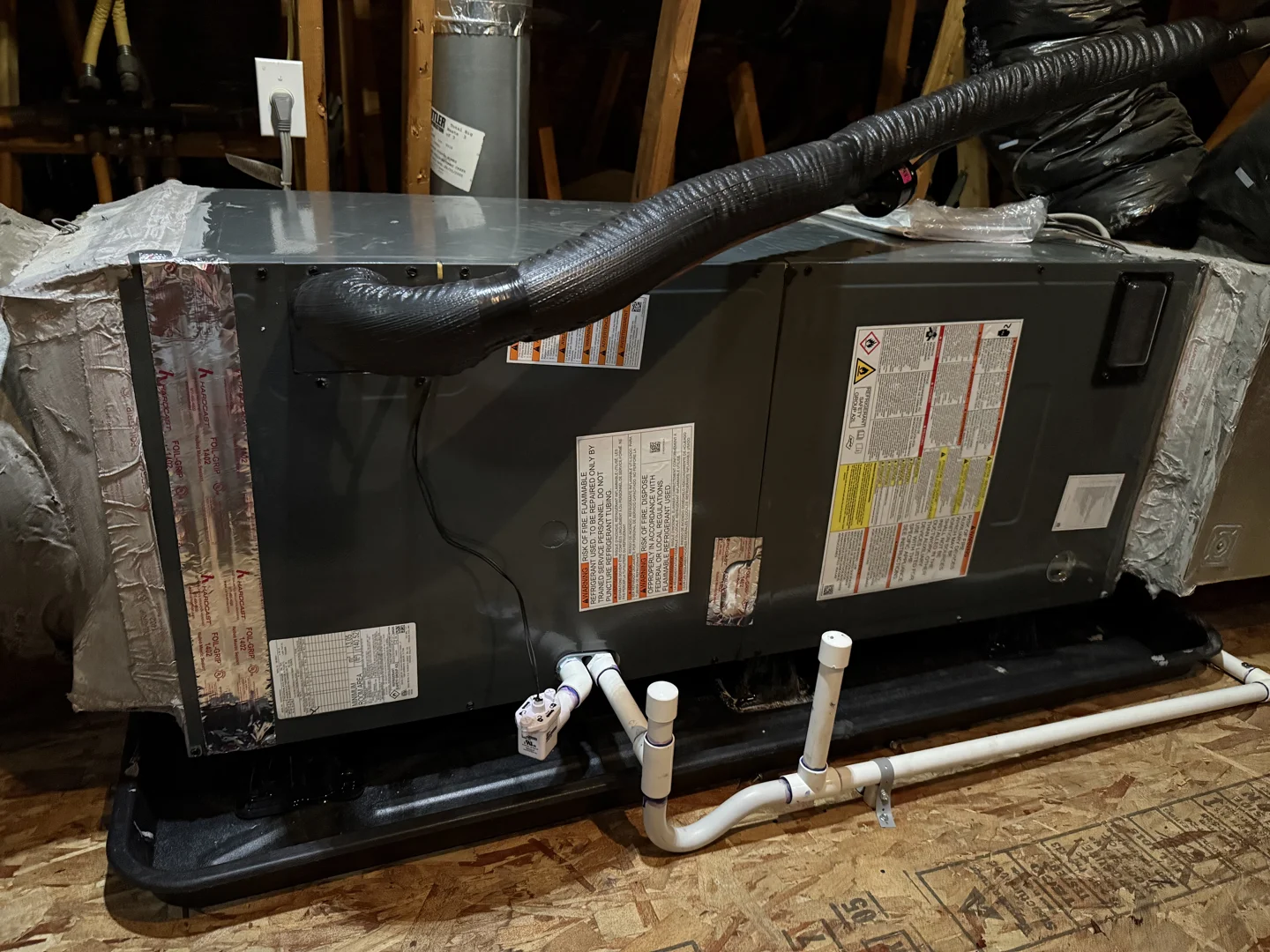
Your air conditioning system does more than cool your home; it also dehumidifies the air. As moisture is pulled from the indoor air, it drips into a condensate pan and flows out of your home through a drain line.
Over time, this dark, damp environment can become a breeding ground for algae and mold, leading to clogs. A clogged drain line can cause water to back up, leading to severe water damage to your drywall, ceilings, and framing. A technician will inspect the drain line and flush or mechanically clear it to ensure water flows safely away from your home.
To get a closer look at the steps involved in keeping your cooling system in top shape, you can read our detailed guide on What Happens During Air Conditioning Maintenance.
Cooling-Specific Tasks: What Does an HVAC Maintenance Visit Include for Summer Prep?
In the Greater Sacramento region, summer is no joke. With temperatures regularly climbing into the triple digits in places like Elk Grove, CA and Rancho Cordova, CA, your air conditioner needs to be in peak operating condition. Spring is the ideal time to schedule cooling-specific maintenance to ensure your system can handle the upcoming heatwave.
Cleaning Evaporator and Condenser Coils
Your air conditioner uses two sets of coils to transfer heat out of your home. The indoor evaporator coil absorbs heat from your indoor air, while the outdoor condenser coil releases that heat into the outside air.
Because the outdoor unit is exposed to the elements, it easily collects dirt, dust, leaves, grass clippings, and cottonwood. Dirt acts as an insulator. When coils are dirty, your system cannot transfer heat efficiently, forcing it to run longer and work much harder. Cleaning these coils restores proper heat transfer and keeps your energy bills from skyrocketing.
Checking Refrigerant Levels
Refrigerant is the lifeblood of your air conditioner. If your system is low on refrigerant, it means there is a leak somewhere in the closed-loop system. Simply adding more refrigerant without finding the leak is a temporary, expensive band-aid that can eventually ruin your compressor.
A technician will measure the refrigerant pressure and temperature. If levels are off, they will recommend a leak test to locate and repair the issue, protecting your system's most expensive component.
Assessing Blower Components and Airflow
Proper airflow is essential for comfort and system health. The technician will inspect the blower wheel, clean any accumulated dust, and adjust the blower components to ensure your system is moving the correct volume of air throughout your home.
To make sure your home is fully prepared before the first heatwave hits, review our Pre-Summer AC Tune-Up Checklist for Homeowners.
Heating-Specific Tasks: What Does an HVAC Maintenance Visit Include for Winter Safety?
When the hot summer months fade and chilly Delta breezes settle over areas like Davis, CA and Woodland, CA, your focus shifts to heating. Fall is the perfect time for a heating tune-up, which places a heavy emphasis on safety checks alongside performance testing.
Inspecting the Heat Exchanger for Cracks
If you heat your home with a natural gas furnace, the heat exchanger is the most critical component to inspect. The heat exchanger is the metal chamber where fuel is burned to create heat.
Because metal expands when hot and contracts when cold, it can eventually crack due to thermal fatigue. A cracked heat exchanger is a severe safety hazard because it can allow combustion byproducts—including deadly, odorless carbon monoxide—to leak directly into your home's breathing air. Technicians use specialized tools, cameras, or mirrors to thoroughly inspect the heat exchanger for any signs of cracking or corrosion.
Checking Gas Connections and Gas Pressure
Improper gas pressure can cause your furnace to run inefficiently or fail prematurely. High gas pressure can overheat the heat exchanger, while low pressure can prevent the burners from igniting properly. The technician will check the gas connections for leaks, measure the gas pressure, and adjust it to meet the manufacturer's exact specifications.
Cleaning the Burner Assembly and Flame Sensor
Over the off-season, dust and soot can build up on your furnace's burners, leading to uneven heating or delayed ignition. Additionally, the flame sensor—a small metal rod that detects whether a flame is present—can accumulate a thin layer of carbon buildup.
If the flame sensor is dirty, it won't detect the flame, causing your furnace to shut down immediately after lighting. Cleaning these components ensures reliable, safe ignition all winter long.
Carbon Monoxide Testing
As an absolute safety baseline, the technician will run a combustion analysis and test the air around your furnace to ensure there is no carbon monoxide leaking into your living spaces. This safety check provides invaluable peace of mind when you turn on your heater for the first time in the winter.
How Often to Schedule and How to Prepare for Your Visit
To keep your system running reliably year-round, we recommend scheduling professional HVAC maintenance twice a year: once in the spring for your cooling system and once in the fall for your heating system. If you use a heat pump system to handle both heating and cooling, it still requires two visits per year because it works hard during both extreme seasons.
To learn more about the ideal timing for your system, check out our guide on How Often Should You Service Your HVAC System.
Preparing Your Home for the Technician's Arrival
You can help your service visit go smoothly and quickly by taking a few simple preparation steps before our technician arrives:
• Clear the workspace: Ensure there is a clear, unobstructed path to your indoor unit (usually located in a closet, garage, attic, or basement) and your outdoor condenser unit.
• Clear outdoor debris: Maintain at least two feet of clear space around your outdoor condenser unit. Trim back any bushes, weeds, or low-hanging branches.
• Secure your pets: Technicians will be moving in and out of your home, so keeping your furry friends in a safe, secure room is best for their safety and comfort.
• Note any unusual symptoms: If you've noticed any strange noises, odd smells, weak airflow, or uneven temperatures in different rooms, write them down so you can share them with your technician.
Homeowner Tasks vs. Professional Service
While a professional technician must handle internal components, electrical wiring, gas lines, and refrigerant, there are several tasks you can safely manage on your own to support your system between visits.
• Air Filter Management: This is the single most important task a homeowner can perform. A dirty, clogged air filter restricts airflow, forcing your system to work harder, which raises your energy bills and shortens the equipment's lifespan. Check your filter monthly and replace it every 30 to 90 days, depending on your household needs (homes with pets or allergy sufferers should change them more frequently).
• Understanding MERV Ratings: When choosing filters, pay attention to the Minimum Efficiency Reporting Value (MERV) rating. While higher MERV ratings capture smaller particles, filters rated MERV 13 or higher can restrict airflow in standard residential HVAC systems, causing coils to freeze or blower motors to fail. A MERV 8 to 11 filter is typically the sweet spot for home comfort and safety.
• Keeping Vents Clear: Walk through your home and ensure that supply vents and return grilles are not blocked by furniture, curtains, or rugs.
For a complete checklist of what you can do yourself, read our DIY HVAC Maintenance Checklist Between Service Visits.
The Long-Term Benefits of a Professional Maintenance Plan
Investing in a regular professional maintenance plan is one of the most cost-effective decisions you can make as a homeowner. Rather than waiting for your system to break down during a heatwave or a cold snap, proactive care keeps your system running at peak performance.
Extending System Lifespan
A well-maintained heating and cooling system can comfortably last 15 to 20 years. Conversely, a neglected system often suffers from premature component failure and may need to be replaced after just 10 years. Keeping parts clean and lubricated reduces the mechanical strain that leads to early system death.
To understand the science behind keeping your system running longer, read about How a Maintenance Plan Extends Equipment Life.
Preserving Energy Efficiency
As dirt and dust accumulate on coils and motors, your system has to run longer to achieve the same indoor comfort. Regular maintenance prevents this "spiral of inefficiency," keeping your monthly utility bills as low as possible.
Protecting Your Manufacturer Warranty
Most homeowners don't realize that their HVAC system's manufacturer warranty comes with a catch. If your system experiences a major part failure, the manufacturer will often require proof of regular, professional maintenance before they will cover the cost of the replacement part. Skipping your annual service could void your warranty, leaving you responsible for expensive repairs.
If you are wondering whether a structured service agreement is right for you, explore our insights on Is an HVAC Maintenance Plan Worth It and Do HVAC Maintenance Plans Save Money.
Preventing Major System Failures
Many of the most common HVAC emergencies can be traced back to simple issues that a technician would have caught during a routine maintenance visit.
• Frozen Evaporator Coils: When airflow is restricted by a dirty filter or dirty coils, the temperature of the evaporator coil can drop below freezing. This causes condensation to turn to ice, completely blocking airflow and potentially damaging your compressor.
• Water Damage from Clogged Drains: A simple condensate line flush during a routine visit prevents water from backing up and damaging your ceilings or flooring.
• Weak or Failed Capacitors: Capacitors are like small batteries that give your motors the extra boost of energy they need to start running. They naturally weaken over time. During a maintenance visit, a technician will test your capacitors. If they are reading below their rated capacity, replacing them proactively prevents a sudden system breakdown on a hot afternoon.
For a deeper dive into preventive care, review our HVAC Maintenance Guide 2026.
Frequently Asked Questions About HVAC Maintenance
We hear many of the same questions from homeowners across the Greater Sacramento area. Here are some quick, clear answers to help you navigate your next service appointment.
How long does a typical HVAC maintenance visit take?
A thorough, professional maintenance visit for a single system typically takes between 60 and 90 minutes. This allows the technician enough time to open the air handler, inspect and clean the coils, test electrical components, flush the drain line, and run safety checks. If you have multiple systems in your home, the visit may take longer.
What is the difference between a maintenance visit and a repair call?
A maintenance visit is proactive and preventive. It is performed on a system that is currently running, with the goal of cleaning components, verifying safety, and catching minor wear and tear before it causes a breakdown.
A repair call is reactive. It is scheduled when your system is already malfunctioning, blowing warm air, making loud noises, or failing to turn on. Repair calls focus on diagnosing a specific symptom and replacing failed parts to get the system running again.
What documentation should I receive after my service visit?
After completing a maintenance visit, your technician should provide you with a written service report. This report should detail the tasks performed, the measurements taken (such as refrigerant levels, electrical voltage, and capacitor readings), any minor adjustments made, and recommendations for future repairs or improvements. Keep this documentation in your files to prove regular maintenance for your manufacturer warranty.
Conclusion
At Bronco Heating and Air, we believe that home comfort shouldn't be a guessing game. Regular HVAC maintenance is the absolute best way to protect your investment, lower your monthly energy bills, and ensure that your family stays safe and comfortable through every hot summer day and chilly winter night in Sacramento, CA.
Whether you live in Carmichael, CA, Citrus Heights, CA, Roseville, CA, or right in the heart of Sacramento, CA, our team of licensed, professional, and courteous technicians is here to provide cost-effective, dependable solutions tailored to your home's unique needs.
Ready to take the hassle out of home comfort and protect your system for years to come? Explore the benefits of our customizable Maintenance Plan and schedule your next visit today!

Customer Testimonials
Our customer testimonials highlight the reliable service, quality workmanship, and trusted results homeowners experience with Bronco Plumbing Heating and Air.


Ready to Transform your Home?
Create a healthier, more comfortable home with expert HVAC, plumbing, and indoor air quality solutions you can trust. From efficient heating and cooling to cleaner air and reliable repairs, our experienced team is here to keep your family comfortable year-round with dependable service and upfront pricing.
Related Articles
Diagnosing Weak Airflow in the Farthest Bedroom of Your House


Why Placer County Soil Shifting Causes Underground Plumbing Stress in Late Summer
Transitioning Your Heat Pump Settings as August Nights Finally Cool Down