



.svg)

How to Diagnose Low Refrigerant Signs in Your AC System
Why Knowing Low Refrigerant Signs in Your AC System Could Save You From a Costly RepairThe low refrigerant signs in your AC system every Sacramento homeowner should watch for include:Warm…
Why Knowing Low Refrigerant Signs in Your AC System Could Save You From a Costly Repair
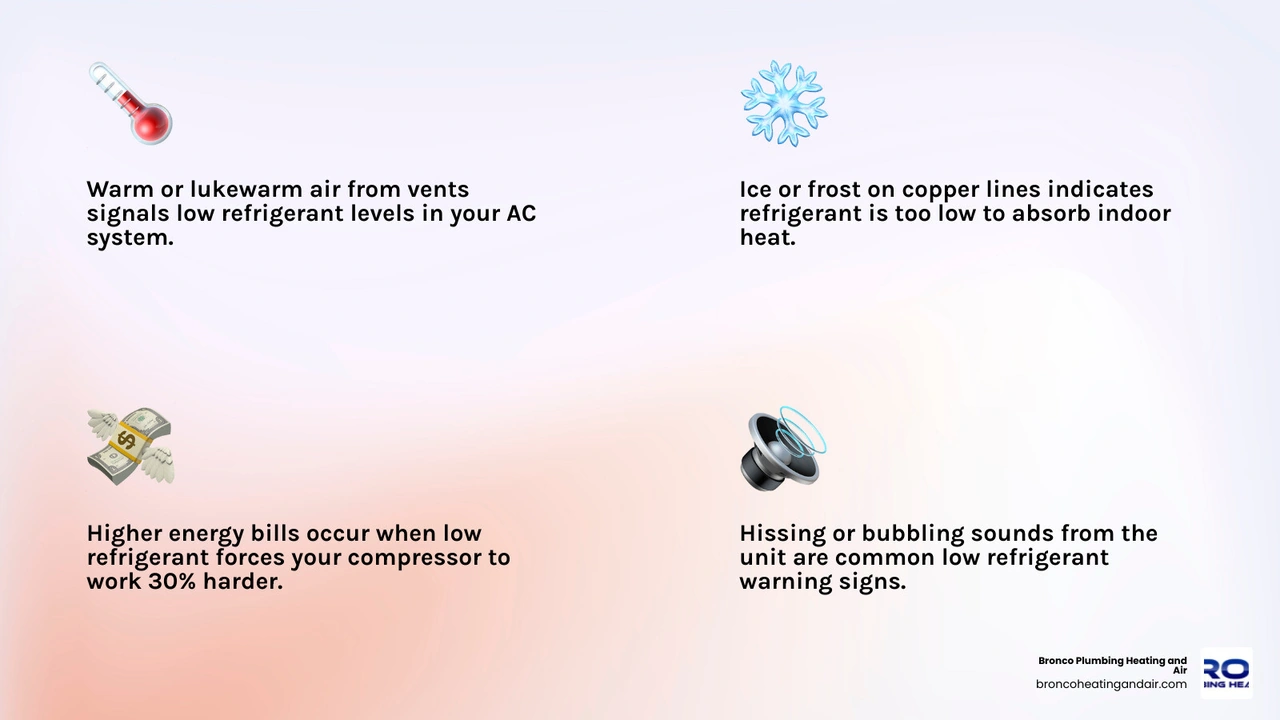
The low refrigerant signs in your AC system every Sacramento homeowner should watch for include:
• Warm or lukewarm air blowing from your vents even when the thermostat is set low
• Ice or frost forming on the copper refrigerant lines or evaporator coil
• Hissing or bubbling sounds coming from your indoor or outdoor unit
• Higher than normal energy bills without a clear reason
• Longer cooling cycles where your AC runs constantly but never quite reaches the set temperature
• Increased indoor humidity making your home feel sticky and uncomfortable
• Water pooling near your indoor unit after frozen coils begin to thaw
Your AC's refrigerant is what makes cooling possible. It absorbs heat from the air inside your home and carries it outside — cycling continuously through a closed-loop system. Under normal conditions, refrigerant never gets "used up." So if your levels are dropping, that means one thing: there's a leak somewhere in the system.
Refrigerant leaks are behind roughly 40% of all cooling-related service calls, and systems between 10 and 15 years old are especially prone to them. Left unchecked, low refrigerant doesn't just hurt your comfort — it forces your compressor to work up to 30% harder, putting one of the most expensive components in your entire AC system at serious risk of failure.
In Sacramento's intense summer climate, where your AC may run for months on end, catching these signs early can be the difference between a straightforward repair and a full system replacement.
Low refrigerant signs in your ac system terms at a glance:
• common reasons ac stops cooling in extreme heat
• why is my ac running but not cooling the house
Understanding Refrigerant and Why It Matters
To understand why low refrigerant causes such a dramatic breakdown in your home's comfort, it helps to look at how your air conditioner actually works. Many people believe an air conditioner produces cold air in the same way a furnace produces heat. In reality, your AC is a heat remover. It takes the heat inside your home and dumps it outside, leaving behind cool, comfortable air.
Refrigerant is the chemical compound that makes this heat transfer possible. It acts like a shuttle train on a continuous, circular track, constantly changing its state from a low-pressure gas to a high-pressure liquid and back again.
Here is how the cycle moves under normal circumstances:
1. Heat Absorption (Indoor Evaporator Coil): Warm indoor air is blown across the cold copper coils of your indoor unit. The liquid refrigerant inside these coils absorbs the heat from your air, causing the refrigerant to boil and transform into a gas.
2. Compression (Outdoor Compressor): The gas travels outdoors to the compressor. The compressor squeezes the gas, raising its pressure and temperature significantly.
3. Heat Release (Outdoor Condenser Coil): The hot, pressurized gas enters the outdoor condenser coil. A large fan blows outdoor air across these coils, releasing the heat into the outside atmosphere. As the heat escapes, the refrigerant condenses back into a liquid.
4. Expansion (Expansion Valve): The high-pressure liquid passes through an expansion valve, which drops its pressure and temperature rapidly, preparing it to return indoors and start the process all over again.
When your system is low on refrigerant, this delicate balance is thrown completely out of whack. A lower volume of refrigerant means a severe drop in system pressure. According to the laws of thermodynamics, when pressure drops inside a closed loop, the temperature drops along with it.
This drop in temperature causes the indoor evaporator coil to fall below the freezing point (32°F). As the warm, humid air from your home blows across this freezing coil, the moisture in the air condenses and instantly freezes on the copper tubing. This ice buildup acts as a thick insulating blanket, preventing the remaining refrigerant from absorbing any more indoor heat.
If you continue to run your system in this state, the compressor—the heart of your air conditioner—will try to compensate for the lack of cooling by running continuously. Deprived of the cool refrigerant gas that normally keeps it lubricated and cool, the compressor will quickly overheat, leading to catastrophic compressor failure. If you are noticing that your system is running constantly but your home remains warm, you can read more about Why Is My AC Running But Not Cooling The House to see how these issues connect.
To help visualize the difference, here is how a system behaves during normal operation compared to when it is suffering from low refrigerant:
• Airflow Temperature — Normal Operation: Crisp, cold air (approx. 15-20°F cooler than return air) — Low Refrigerant Operation: Warm, lukewarm, or room-temperature air
• Evaporator Coil State — Normal Operation: Cold and sweating (normal condensation draining safely) — Low Refrigerant Operation: Frozen solid, covered in frost or thick ice
• System Cycle Length — Normal Operation: Cycles on and off periodically to maintain temperature — Low Refrigerant Operation: Runs continuously or short-cycles rapidly
• Outdoor Unit Air — Normal Operation: Blows hot air out of the top fan — Low Refrigerant Operation: Blows cool or lukewarm air out of the top fan
• Energy Consumption — Normal Operation: Standard, predictable utility usage — Low Refrigerant Operation: Massive spikes in monthly energy usage
• Compressor Condition — Normal Operation: Runs quietly, stays cool and lubricated — Low Refrigerant Operation: Overheats, vibrates, and faces high risk of burnout
Common Low Refrigerant Signs in Your AC System
Recognizing the early warning signs of a leak can prevent minor component wear from turning into a total system breakdown. While a professional technician uses specialized manifold gauges to measure exact refrigerant pressures, you do not need any special tools to spot the physical warnings your system leaves behind.
If you suspect your air conditioner is struggling, keep an eye out for these classic indicators:
• Warm Air from Supply Vents: If the air coming out of your registers feels more like a gentle summer breeze than an icy blast, your system is likely lacking the chemical power to pull heat from the air.
• Weak Airflow: When ice builds up on the indoor evaporator coil, it physically blocks the passage of air. You might feel barely a whisper of air coming out of your vents, even if the indoor blower motor is screaming at full speed.
• Hissing or Bubbling Noises: Refrigerant leaks do not always happen silently. If you have a gas-phase leak, you may hear a distinct hissing sound near your indoor or outdoor coils. If the leak is in a line carrying liquid refrigerant, it often produces a bubbling or gurgling noise.
Ignoring these indicators can lead to severe system damage. For a broader look at other symptoms that suggest your cooling system is in trouble, review our guide on Signs Your AC Needs Repair.

Recognizing Low Refrigerant Signs in Your AC System Indoors
Your indoor living space will often be the first place to show symptoms of a refrigerant issue. Because we spend our time indoors, the subtle shift from a crisp, dry home to a sticky, warm environment is hard to miss.
First, pay close attention to your vents. If the air coming out is warm, your system has lost its heat-exchange capacity. Next, monitor your home's relative humidity. A properly functioning air conditioner naturally dehumidifies your home as it cools, maintaining a comfortable indoor humidity level of around 50%. When refrigerant levels drop, the evaporator coil cannot stay at the correct temperature to extract moisture from the air, leaving your home feeling sticky, muggy, and clammy.
You will also notice your thermostat struggling. If you set your thermostat to 72°F on a warm afternoon, but the display refuses to budge past 78°F despite the system running for hours, your AC is telling you it cannot keep up. For step-by-step troubleshooting tips when your home refuses to cool down, check out our helpful article on AC Not Cooling Properly In Extreme Heat What To Check.
Spotting Low Refrigerant Signs in Your AC System Outdoors
If things feel off inside, take a walk outdoors to inspect your condenser unit. The outdoor portion of your air conditioner provides several clear clues when refrigerant levels are low.
Start by looking at the brass valves and copper lines running from your home into the outdoor unit. If you see a buildup of white frost or solid ice on these lines, your system's pressure has dropped low enough to freeze the moisture in the air.
Next, listen closely to the outdoor unit. A struggling compressor under extreme strain will often emit a loud, stressed hum or a rattling sound as it tries to pump a mixture of gas and liquid through lines that do not have the proper pressure.
You might also notice the outdoor unit running continuously without stopping. During Sacramento's intense summer heatwaves, this constant operation can quickly destroy your system's motor windings. To understand how extreme heat and low refrigerant combine to keep your system running indefinitely, read our deep dive on Why Your AC Runs All Day During Extreme Summer Heat.
What Causes Leaks and Why You Shouldn't Just "Top It Off"
Refrigerant leaks do not happen without a reason. Because your air conditioning system is a completely sealed, welded copper loop, refrigerant should theoretically last for the entire lifespan of your equipment. When a leak develops, it is usually due to one of several common physical factors:
• Formicary Corrosion: This is the single most common cause of leaks in modern residential evaporator coils. Formicary corrosion occurs when household pollutants (such as formic acid found in cleaning products, cosmetics, paints, and building materials) react with the copper tubing of your indoor coil. This chemical reaction creates thousands of microscopic, invisible pinhole leaks over time.
• Vibration and Mechanical Stress: Your air conditioner contains powerful motors and fans that vibrate during normal operation. If the copper lines are not properly supported, or if they rub against other metal components or brackets, this constant friction can wear a hole directly through the metal tubing.
• General Wear and Tear: As systems age—especially those approaching the 10-to-15-year mark—the solder joints, rubber seals, and brass fittings naturally degrade, allowing small amounts of gas to escape.
When a leak is discovered, some homeowners ask if we can simply "top off" or recharge the system with more refrigerant to get them through the summer. While this might seem like a quick fix, it is actually highly ineffective, unsafe, and in many cases, illegal.
First, EPA regulations strictly govern how refrigerants are handled. Knowingly adding refrigerant to a system with an active, unrepaired leak is a violation of environmental laws, as modern refrigerants are powerful greenhouse gases that contribute to environmental damage when vented into the atmosphere.
Second, simply adding more refrigerant does not solve the underlying issue. The new refrigerant will simply leak out again, costing you more money while continuing to starve your compressor of oil and cooling. Over time, running a leaking system will destroy the compressor, forcing you into a much larger, more expensive repair.
When we diagnose a leak, we use advanced detection methods such as electronic leak detectors, UV dye testing, and high-pressure nitrogen testing to pinpoint the exact location of the hole. Once found, the leak must be properly repaired, the system evacuated of all air and moisture, and then recharged to the exact manufacturer specifications.
If your system is older and experiencing recurring leaks, you may need to decide whether to invest in another repair or upgrade your equipment. For professional guidance on making this choice, read our articles on How To Decide Between AC Repair And Replacement and When To Repair Vs Replace Your HVAC System.
Frequently Asked Questions About AC Refrigerant
Can refrigerant run out over time without a leak?
No. Your air conditioner's cooling system is a closed, hermetically sealed loop. Unlike the gasoline in your car or the oil in your engine, refrigerant is not consumed or burned up as the system operates. It simply cycles back and forth between liquid and gas states indefinitely. If your system is low on refrigerant, it is a direct indication of a physical leak that must be located and repaired.
Can I add refrigerant to my AC system myself?
Absolutely not. Handling, purchasing, and disposing of residential AC refrigerants requires specialized equipment, manifold gauges, and EPA certification. Attempting a DIY recharge using retail kits can permanently damage your home's compressor, void your equipment warranty, and expose you to severe safety hazards, including liquid refrigerant freeze burns and inhalation risks.
How can I prevent refrigerant leaks in my home?
The best way to prevent leaks is through regular, professional maintenance. During a routine tune-up, we clean your coils to prevent corrosive buildup, inspect the copper lines for signs of friction or vibration wear, and ensure all electrical connections are secure. Keeping your air filters clean also maintains proper airflow, preventing the temperature fluctuations that stress your copper coils.
To learn more about what we do during our visits, read about What Happens During Air Conditioning Maintenance and explore our specialized AC Tune Up Roseville CA services.
Conclusion
Spotting the low refrigerant signs in your AC system early is the key to protecting your home's comfort and avoiding a major system failure. From warm air blowing out of your vents to frozen copper lines and unexpected spikes in your energy bills, these symptoms are your system's way of calling for help.
At Bronco Heating and Air, we are proud to serve families across the Greater Sacramento region, including Carmichael, Arden-Arcade, Folsom, Roseville, Elk Grove, and Citrus Heights. Our team of licensed, professional, and courteous technicians is dedicated to providing cost-effective, reliable solutions to keep your home cool and efficient all summer long.
If you are noticing any of these warning signs in your home this June 2026, do not wait for your system to freeze over completely. For practical tips in your local area, check out our AC Maintenance Repair Tips Carmichael CA or read our comprehensive AC Maintenance Repair Guide Arden Arcade CA.
Ready to restore your home's crisp, cool comfort? Schedule Professional AC Services with the team at Bronco Heating and Air today!

Customer Testimonials
Our customer testimonials highlight the reliable service, quality workmanship, and trusted results homeowners experience with Bronco Plumbing Heating and Air.


Ready to Transform your Home?
Create a healthier, more comfortable home with expert HVAC, plumbing, and indoor air quality solutions you can trust. From efficient heating and cooling to cleaner air and reliable repairs, our experienced team is here to keep your family comfortable year-round with dependable service and upfront pricing.
Related Articles

Why Summer Tree Root Intrusion Causes Unexpected Sewer Line Backups in Carmichael

Is a 24-Hour Emergency AC Repair Call Justified for a Tripped Breaker?
Surviving a Sacramento Valley Heatwave When Your AC Condenser Freezes Solid