



.svg)

Pro Tips for Surviving Central Valley Weather Without Breaking Your HVAC
Why Central Valley HVAC Tips for Homeowners Can Save Your System (and Your Summer)Central valley hvac tips for homeowners are something every Sacramento-area resident needs before the thermometer climbs past…
Why Central Valley HVAC Tips for Homeowners Can Save Your System (and Your Summer)
Central valley hvac tips for homeowners are something every Sacramento-area resident needs before the thermometer climbs past 100°F — because out here, your HVAC system isn't a seasonal convenience. It's running hard for months on end.
Here's a quick overview of the most important steps you can take:
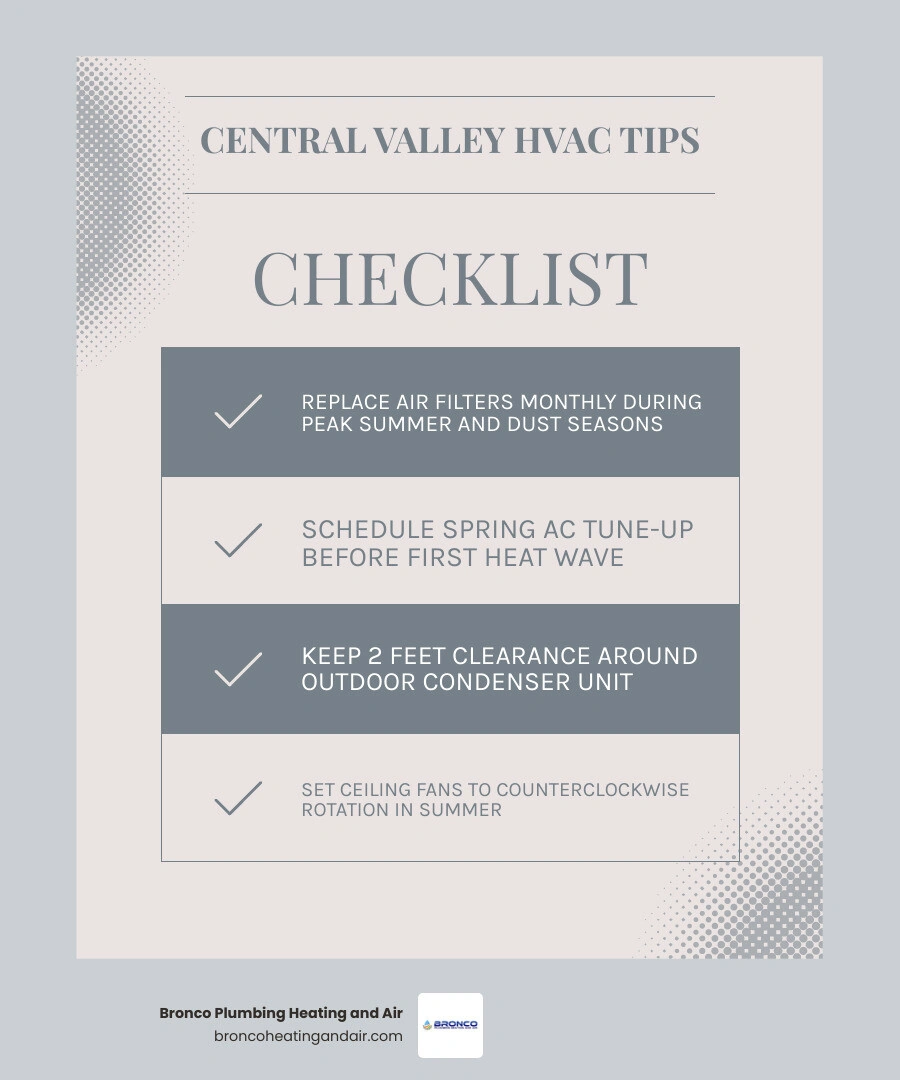
1. Replace air filters monthly during peak summer and dust seasons (not every 3 months like the national standard suggests)
2. Schedule a spring AC tune-up before the first heat wave hits
3. Keep at least 2 feet of clearance around your outdoor condenser unit
4. Set ceiling fans to counterclockwise rotation in summer to push cool air down
5. Schedule a fall heating check before Tule fog and cold nights arrive
6. Watch for warning signs like unusual noises, weak airflow, or rising energy bills
7. Consider upgrading to a high-efficiency system to take advantage of current federal incentives
The Central Valley is one of the harshest climates in the country for HVAC equipment. Summers regularly push past 100°F, agricultural dust coats coils and clogs filters faster than anywhere else, and winters bring dense Tule fog that stresses heating systems in their own way. Research shows that even a 1/16th of an inch of dust on an HVAC coil can cut efficiency by up to 21%. And while a well-maintained system can last 15 to 20 years, a neglected one in this region may give out in under 10.
The good news? A mix of simple DIY habits and timely professional service can keep your system running strong year-round.
Central valley hvac tips for homeowners further reading:
• Dry Hot Summers and HVAC Performance
• Sacramento Climate and HVAC Systems
Essential Central Valley HVAC Tips for Homeowners
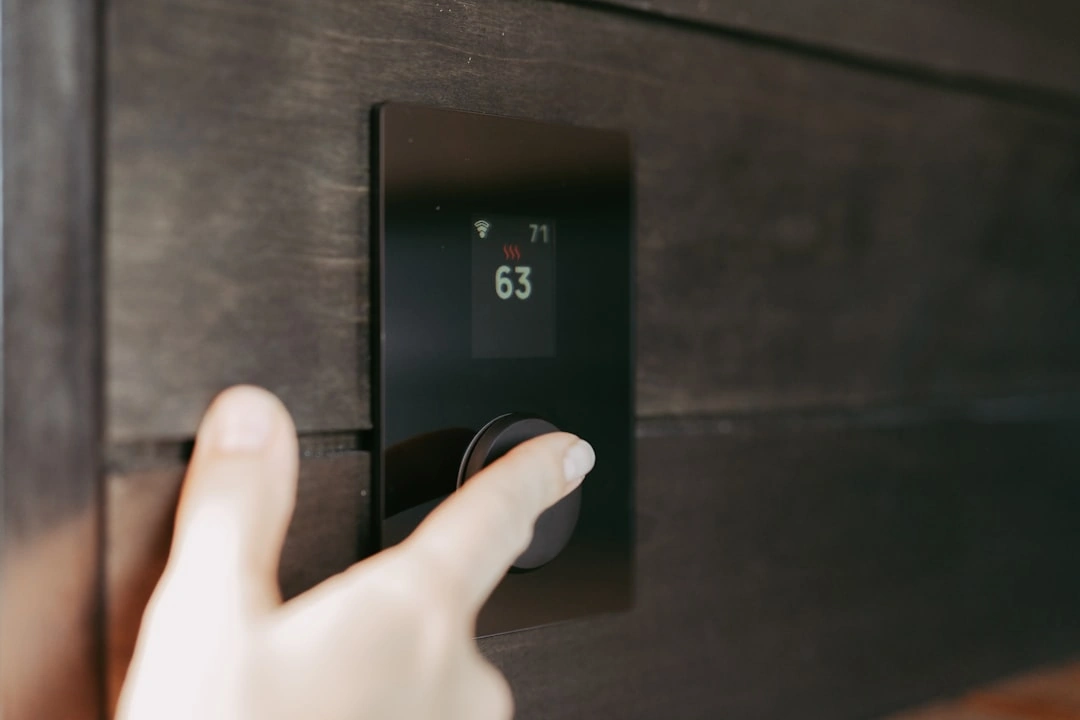
Living in Sacramento CA or surrounding areas like Roseville CA and Elk Grove CA means we experience some of the most dramatic temperature swings in the state. Our HVAC systems are the workhorses of our homes, often running for 10 to 15 hours a day during a July heatwave. This is significantly higher than the national average of just three hours per day.
To keep your home comfortable without seeing your utility bills skyrocket, we recommend focusing on both proactive maintenance and lifestyle adjustments. Understanding How Sacramento Climate Affects Your HVAC System is the first step in realizing that a "set it and forget it" mentality doesn't work here. You have to be active in Protecting Your HVAC System During Heat Waves to avoid an emergency breakdown when it's 105°F outside.
DIY Central Valley HVAC Tips for Homeowners
You don't need a toolbelt to help your AC survive the summer. Some of the most effective central valley hvac tips for homeowners are simple tasks you can do yourself.
• Filter Management: In the dusty environments of Woodland CA or Lincoln CA, the standard "change every 90 days" rule is a myth. During harvest season or high-wind events, your filter can become "gray and fuzzy" in just four weeks. Check it monthly and replace it if you can't see light through the mesh. For more details, see How Often Do I Need to Change My Air Filter.
• Vent Clearance: Walk through your home and ensure no furniture, rugs, or curtains are blocking your supply or return vents. Restricted airflow forces the blower motor to work harder, which can lead to overheating.
• Ceiling Fan Direction: In the summer, your fans should rotate counterclockwise to push a "wind chill" breeze downward. In the winter, flip the switch to clockwise at a low speed to pull cool air up and push trapped warm air down from the ceiling.
• Passive Cooling: Keep your blinds and drapes closed on the south and west-facing sides of your house during the afternoon. This blocks the "greenhouse effect" and reduces the load on your AC by several degrees.
Professional Central Valley HVAC Tips for Homeowners
While DIY tasks help, there are technical components that require a professional eye. When we perform a tune-up, we aren't just looking for dirt; we are performing a safety and efficiency audit.
Key professional checks include:
• Refrigerant Levels: Low refrigerant isn't like gas in a car; it doesn't just "run out." It indicates a leak. We check for proper levels to ensure your system can actually reject heat from your home.
• Electrical Connections: Heat causes metal to expand and contract, which can loosen electrical terminals. Loose connections increase resistance, meaning your system uses more "juice" to operate, which wastes money and can fry expensive components like capacitors.
• Coil Cleaning: Both your indoor evaporator coil and outdoor condenser coil need to be spotless to transfer heat efficiently.
To understand the full scope of a pro visit, check out What Happens During Air Conditioning Maintenance.
Defeating the "Silent Killer": Managing Agricultural Dust
In the Central Valley, dust isn't just a nuisance—it’s a mechanical abrasive. Our local air carries fine silt, fungal spores, and abrasive sand from nearby agricultural activity. This dust acts like sandpaper on moving parts and creates a thermal blanket over your coils.
As we mentioned, just 1/16th of an inch of dust can reduce efficiency by 21%. This is why How Dry Hot Summers Affect HVAC Performance and Lifespan is such a critical topic for us. When dust builds up, your system has to run longer to achieve the same cooling effect, explaining Why Do AC Units Wear Out Faster in Hot Climates.
Protecting Your Outdoor Unit in Roseville CA
Your outdoor condenser unit is the "lungs" of your system. It needs to breathe to reject the heat it pulled from your living room. If you live in Roseville CA or Rocklin CA, where summer winds can whip up dirt, follow these steps:
1. The Two-Foot Rule: Maintain a clear perimeter of at least two feet around the unit. Trim back bushes, weeds, and tall grass.
2. Debris Removal: After a heavy windstorm or "haboob," check the unit for leaves or trash stuck against the fins.
3. Gentle Rinsing: You can use a garden hose on a gentle setting to rinse the exterior fins. Never use a pressure washer, as it will bend the delicate aluminum fins and permanently block airflow.
Learning How to Extend the Life of Your AC in a Hot Climate starts with keeping that outdoor unit clear.
Improving Indoor Air Quality in Sacramento CA
Indoor air quality (IAQ) is a major concern in the Sacramento CA area, especially with the prevalence of allergens and the occasional threat of wildfire smoke.
• Upgrade Your Filtration: Consider moving from a basic fiberglass filter to a MERV 8 or MERV 11 pleated filter. These are much more effective at catching fine silt and spores without putting too much "static pressure" on your fan motor.
• Duct Sealing: The average home loses 20% to 30% of its conditioned air through leaky ducts in the attic or crawlspace. Sealing these leaks keeps the dust out of your vents and the cool air in your rooms.
• Specialized IAQ Solutions: For families with asthma or allergies, we often recommend whole-home air purifiers or HEPA filtration systems that can capture particles as small as 0.3 microns.
For a deeper dive, see our Sacramento Heat HVAC Guide.
Seasonal Preparation for Sacramento CA Weather
It is currently May 2026, which means the "cooling season" is officially upon us. If you haven't already prepared your system for the triple-digit days ahead, now is the time. Waiting until July to find out your AC is broken means waiting in a long line for repairs.
Pre-Summer AC Checklist
Before you flip the switch to "Cool" for the first time this year, run through this quick checklist:
• Test the Thermostat: Switch it to cooling and ensure the outdoor unit kicks on without a "hard start" (loud banging or buzzing).
• Check the Condensate Drain: This is the pipe that carries moisture away from your indoor unit. If it's clogged with "sludge" or algae, it can back up and cause water damage or trigger a safety switch that shuts your system down.
• Monitor Startup Time: If your system takes an unusually long time to start blowing cold air, it could be a sign of a failing capacitor or low refrigerant.
If you want to ensure peak performance, you can Maintain Your Air Conditioner with Our $49 Tune-Up Special. This helps prevent the scenario Why Your AC Runs All Day During Extreme Summer Heat where a dirty system simply can't keep up with the sun.
Winter Heating Readiness
While we focus on the heat, Central Valley winters bring their own challenges. Chilly nights in Folsom CA or Davis CA often drop into the 30s.
• Heat Exchanger Safety: In gas furnaces, the heat exchanger is what keeps combustion gases (like carbon monoxide) separate from the air you breathe. We inspect these for cracks every fall.
• Tule Fog Impacts: Our famous Tule fog is incredibly high in moisture. For those with heat pumps, this moisture can freeze on the outdoor coils, forcing the unit into frequent "defrost cycles." Regular maintenance ensures these cycles work correctly so you don't lose heat.
Understanding How Long Does an AC System Last in Sacramento often comes down to how well it was prepared for these seasonal transitions.
Energy Efficiency and Electrification Upgrades
As we move through 2026, more homeowners in the Sacramento region are looking toward electrification. Modern heat pumps are no longer just for mild climates; they are now incredibly efficient even in our 100-degree summers and freezing winter mornings.
Smart Thermostat Integration in Elk Grove CA
In communities like Elk Grove CA and Rancho Cordova CA, smart thermostats are becoming the standard. They do more than just let you change the temp from your phone:
• Peak Hour Management: You can program your system to "pre-cool" your home in the morning when electricity rates are lower and the air is cooler, then let the temperature rise slightly during peak afternoon hours.
• Maintenance Alerts: Many modern thermostats can tell you when it’s time to change your filter or if the system is detecting a performance issue before it becomes a total failure.
Incentives for Homeowners in 2026
There has never been a better time to upgrade. Between federal tax credits (like the 25C credit) and local utility rebates from SMUD or PG&E, the transition to high-efficiency equipment is more accessible than ever.
• Energy Usage — Traditional AC (14 SEER): Standard — High-Efficiency Heat Pump (20+ SEER2): Up to 30% Lower
• Technology — Traditional AC (14 SEER): Single-stage (On/Off) — High-Efficiency Heat Pump (20+ SEER2): Variable-speed (Inverter)
• Comfort — Traditional AC (14 SEER): Temp swings — High-Efficiency Heat Pump (20+ SEER2): Consistent, precise temp
• Incentives — Traditional AC (14 SEER): Minimal — High-Efficiency Heat Pump (20+ SEER2): Significant Tax Credits/Rebates
Upgrading is a great way How to Extend the Life of Your AC in a Hot Climate because newer variable-speed systems don't have to work at 100% capacity all day long; they sip energy and adjust to the exact needs of the home.
Recognizing Warning Signs of System Failure
Sometimes, despite our best efforts with central valley hvac tips for homeowners, parts simply wear out. Knowing the warning signs can save you from a "no-cool" emergency.
• Ice on the Lines: If you see white frost or ice on the copper lines leading to your outdoor unit, turn the system off immediately. This is usually a sign of a severe airflow restriction (like a filthy filter) or a refrigerant leak. Running it while iced over can destroy the compressor.
• Unusual Noises: Squealing often points to a failing belt or motor bearing. Banging or clanging could mean something has come loose in the blower assembly.
• Short Cycling: If your AC turns on and off every few minutes without ever really cooling the house, it’s "short cycling." This puts immense strain on the starter components.
• The "Spike": If your energy bill jumps significantly but your habits haven't changed, your system is likely struggling with a mechanical issue.
For more on why your system might be struggling, see Why Your AC Runs All Day During Extreme Summer Heat.
When to Repair vs. Replace
We generally follow the "10-Year Rule" in the Sacramento Valley. Because our systems work 3-4 times harder than the national average, a 10-year-old unit here is like a 30-year-old unit in a milder climate.
• Repair if: The issue is a simple fix (like a capacitor or contactor) and the unit is under 10 years old.
• Replace if: The repair involves the compressor or coils, the unit uses phased-out R-22 refrigerant, or the system is over 12-15 years old.
Check our guide on How Long Does an AC System Last in Sacramento for more help with this decision.
Emergency Cooling Strategies
If your system fails during a heatwave, safety becomes the priority.
1. Create a Thermal Fortress: Close all windows, blinds, and even hang heavy blankets over sun-exposed windows.
2. Use the "Base Camp" Method: Since heat rises, stay on the lowest floor of your home.
3. Pulse Point Cooling: Apply cold packs or damp cloths to your wrists, neck, and behind the knees. This cools the blood circulating through your body.
4. Hydration: Drink water constantly, even if you aren't thirsty.
Review our tips on Protecting Your HVAC System During Heat Waves to stay prepared.
Frequently Asked Questions about Central Valley HVAC
How often should I change my air filter in the Central Valley?
You should check your filter every 30 days. In areas like Woodland CA or Natomas CA, agricultural dust and pollen can clog a filter much faster than the manufacturer's suggested 90-day window. If you have pets or allergies, a monthly change is essential. We recommend using a MERV 8 to 11 filter for the best balance of filtration and airflow. See How Often Do I Need to Change My Air Filter.
What is the best time to schedule HVAC maintenance?
The ideal schedule is twice a year: a spring AC tune-up (March-April) and a fall heating check (September-October). This allows us to catch small issues before the "peak seasons" begin, ensuring you aren't left without air on the first 100-degree day or without heat on the first foggy morning.
Can ceiling fans really help my AC work less?
Yes! Ceiling fans create a "wind-chill effect" on your skin, which can make a room feel up to 4 degrees cooler. This allows you to raise your thermostat setting slightly, reducing the workload on your AC. Just remember: fans cool people, not rooms, so turn them off when you leave the area.
Conclusion
At Bronco Heating & Air, we know that surviving the Sacramento climate requires more than just a working air conditioner—it requires a partner you can trust. Our licensed and professional technicians are dedicated to providing cost-effective solutions for families from Citrus Heights CA to Elk Grove CA and everywhere in between.
Whether you need a quick tune-up to beat the May heat or you're looking to future-proof your home with a high-efficiency heat pump, we are here to help. Don't wait for the next heatwave to test your system's limits.
Schedule your professional HVAC service in Sacramento CA today and keep your home a sanctuary of comfort all year long.

Customer Testimonials
Our customer testimonials highlight the reliable service, quality workmanship, and trusted results homeowners experience with Bronco Plumbing Heating and Air.


Ready to Transform your Home?
Create a healthier, more comfortable home with expert HVAC, plumbing, and indoor air quality solutions you can trust. From efficient heating and cooling to cleaner air and reliable repairs, our experienced team is here to keep your family comfortable year-round with dependable service and upfront pricing.
Related Articles

Preparing Your Home Air Quality for Back-to-School Illness Season

Elk Grove's Hard Water Impact on Evaporative Coolers and Plumbing Fixtures
Why Your Vents Smell Like Mildew When the AC Kicks On in Late Summer