



.svg)

Is Your AC Compressor Failing? Here's What Sacramento Homeowners Need to Know
Knowing how to tell if your ac compressor is failing could save you from a sweltering Sacramento summer and a much bigger repair bill down the road. The compressor is the heart of your AC system — it pressurizes refrigerant and pushes it through the coils to pull heat out of your home. When it starts to go, everything downstream suffers.
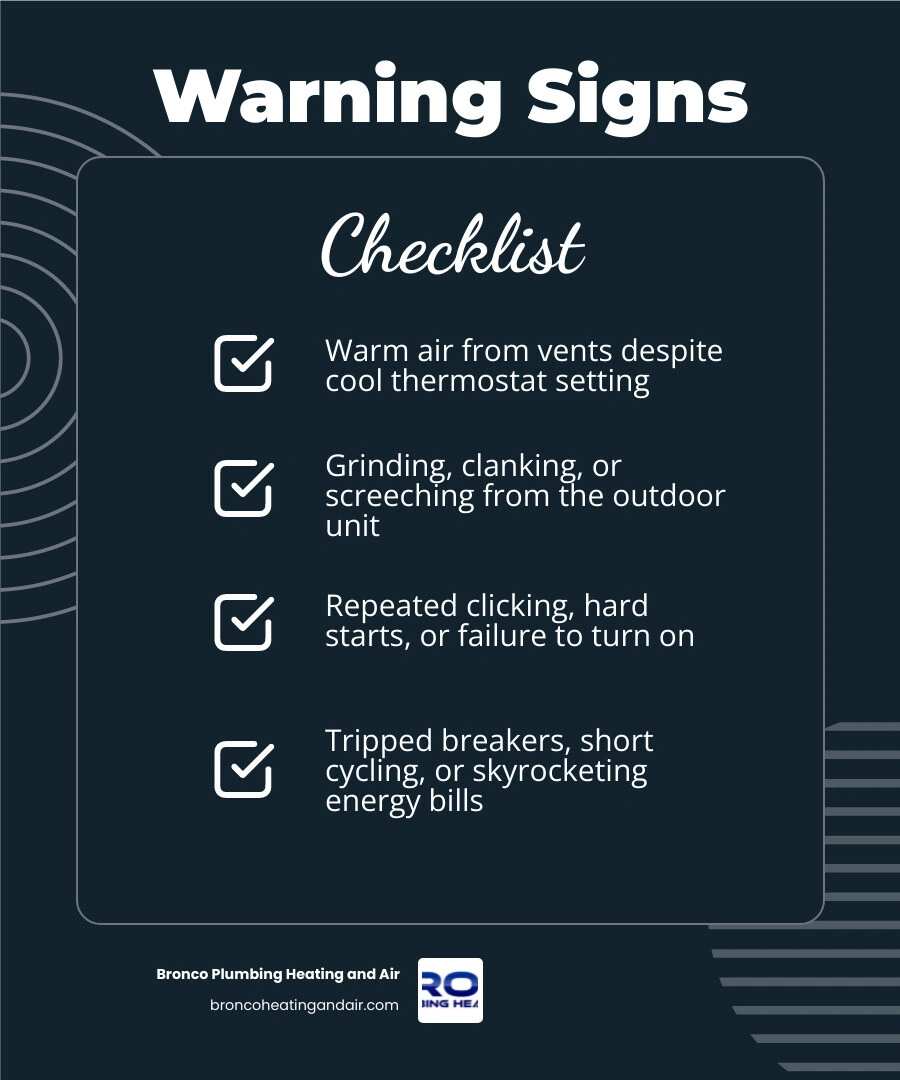
Here are the most common signs your AC compressor is failing:
1. Warm air blowing from vents despite the thermostat being set to cool
2. Strange noises from the outdoor unit — grinding, clanking, rattling, or screeching
3. Hard starting — the unit clicks repeatedly before starting, or won't start at all
4. Tripped circuit breaker that keeps resetting when the AC runs
5. Short cycling — the system turns on and off more frequently than normal
6. Reduced airflow from vents throughout the home
7. Visible oily residue or puddles around the outdoor unit
8. Skyrocketing energy bills with no improvement in cooling
In Sacramento, CA, where summer temperatures regularly push past 100°F, a struggling compressor doesn't just mean discomfort — it can mean a full system breakdown on the hottest day of the year. Most AC compressors last 10 to 15 years with proper maintenance, but catching the warning signs early is the difference between a manageable repair and a costly replacement.
This guide walks you through exactly how to diagnose a failing AC compressor, what symptoms to look for, and when to call a professional.
Related content about how to tell if your ac compressor is failing:
• ac making strange noises what they mean
• ac not cooling properly in extreme heat what to check
How to Tell If Your AC Compressor Is Failing: Key Warning Signs
When summer hits places like Roseville CA, Elk Grove CA, or Folsom CA, your air conditioning system works overtime. If the compressor begins to degrade, it leaves a trail of clues. Understanding these warning signs can prevent a minor mechanical issue from turning into a complete system shutdown.
Warm Air and Reduced Airflow
If you feel lukewarm or flat-out warm air coming from your registers, it is often one of the first signs of trouble. The compressor’s job is to pump and compress the chemical refrigerant, changing it from a low-pressure gas to a high-pressure, high-temperature gas so heat can be released outside. If the compressor cannot compress the refrigerant efficiently, you may find your AC running but not cooling the house.
Simultaneously, you might notice diminished or weak airflow. When the compressor struggles, the entire refrigeration cycle falls out of balance. If you are experiencing this, check out our guide on AC not cooling properly in extreme heat what to check to rule out simpler airflow issues before jumping to conclusions.
Short Cycling
A healthy air conditioning system runs in consistent cycles of 15 to 20 minutes to comfortably cool your home and manage indoor humidity. When a compressor is failing, it may start "short cycling"—turning on and off rapidly every few minutes. This happens because the compressor is overheating or experiencing electrical faults, triggering safety switches that cut the power to prevent a fire. This constant starting and stopping puts immense wear on your system and is a primary reason why your AC runs all day during extreme summer heat without ever actually reaching your thermostat's set temperature.
Tripped Circuit Breakers and Hard Starting
Because the compressor is the single largest consumer of electricity in your HVAC system, any internal mechanical resistance or electrical short will cause it to draw excess amperage. If your outdoor unit turns on and immediately trips the main circuit breaker, do not keep resetting the breaker. This is a clear indicator that the compressor motor is drawing dangerous levels of electrical current.
Additionally, you might notice "hard starting." This is when the outdoor condenser unit shakes, vibrates, or makes a loud clicking sound as it struggles to kick on. The motor inside the compressor is fighting against internal friction or failing start components, which can quickly lead to terminal burnout.
What is the quickest visual method for how to tell if your ac compressor is failing?
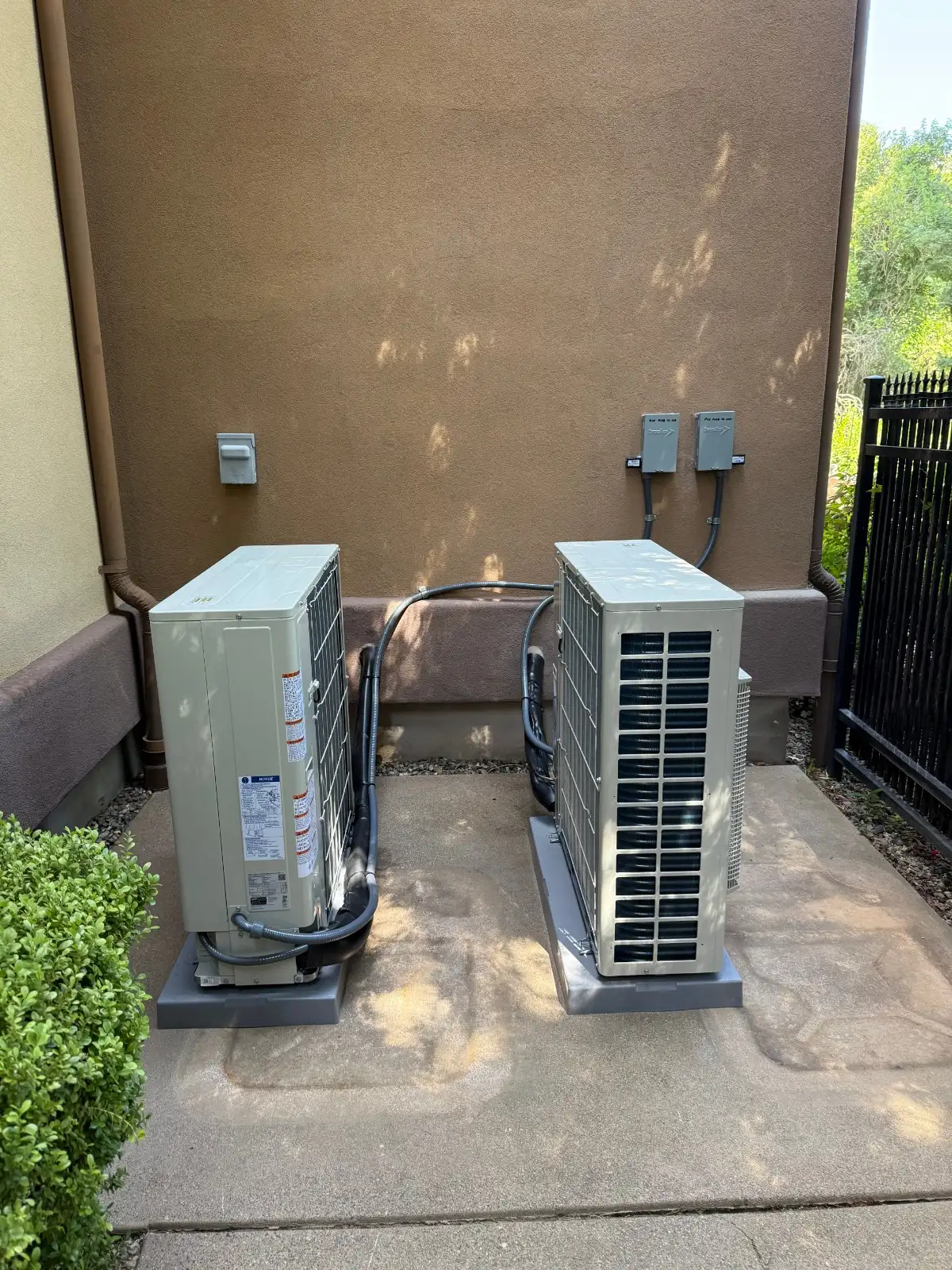
While many compressor issues are internal, a quick visual inspection of the outdoor condenser unit can tell you a lot. Look closely around the base of the outdoor unit for any unusual puddles or dark, oily residue.
Unlike water condensation (which is normal), oily stains around the compressor or refrigerant lines indicate a chemical refrigerant leak that has carried the compressor's vital lubricating oil out of the sealed system. Running a compressor without this oil will cause rapid friction, overheating, and mechanical seizure. If you spot physical damage, deep corrosion, or oil spots, read our checklist on how to tell if your AC is broken to help determine your next steps.
Is it safe to run the system while figuring out how to tell if your ac compressor is failing?
We strongly advise against running your air conditioner if you suspect the compressor is failing. If a compressor continues to run while starving for oil, low on refrigerant, or suffering from electrical shorts, it can experience a catastrophic "acid burnout."
When the motor windings burn up inside the hermetically sealed compressor dome, they create a highly acidic mixture of soot, carbon, and acid that contaminates the entire copper refrigerant line set. If this acid spreads to the indoor evaporator coil, it can ruin the entire system, turning a single component replacement into a total system loss. If your unit is showing these distress signals, review the signs your AC needs repair and shut the system down at the breaker panel immediately.
Mechanical and Auditory Symptoms of Compressor Failure
Because the compressor is a highly pressurized, mechanical pump, its internal components are subject to extreme physical forces. When these metal parts wear down, they make themselves known through distinct sounds and physical symptoms.
• Grinding and Screeching: If you hear heavy metal-on-metal grinding or loud screeching from your outdoor unit, the internal bearings are likely failing. The piston or scroll mechanism is losing its lubrication, causing severe friction. If you hear these noises, check out our guide on AC making strange noises what they mean to identify the exact sound.
• Clicking and Rattling: A clicking sound when the unit tries to start indicates an electrical issue, such as a failing contactor or a weak capacitor. Rattling or clattering sounds can mean the internal motor mounts have broken, causing the compressor motor to wobble and strike the inside of its sealed steel casing.
• Refrigerant Leaks and Oily Residue: The compressor relies on special refrigerant oil to keep its moving parts cool and sealed. If a seal fails, refrigerant and oil will escape. This creates dark, sticky spots on the condenser coils or the copper line connections, which quickly attract dirt and dust.
• Internal Valve Failure: Inside a reciprocating compressor, tiny reed valves control the flow of refrigerant. If these valves chip or break, the compressor will run, but it won't be able to build up the pressure difference needed to cool your home. The system will run constantly, but the air coming out of your vents will remain warm.
How to Distinguish a Bad Compressor From Other AC Issues
One of the most frustrating aspects of HVAC troubleshooting is that different component failures can mimic the symptoms of a bad compressor. In fact, industry data shows that up to 30% of compressors returned under warranty have no actual fault—they were simply misdiagnosed by technicians who didn't rule out other issues first.
Before assuming your compressor is dead, it is essential to distinguish it from other common culprits like a bad run capacitor, low refrigerant, or a failing condenser fan motor.
• Air Temperature — Failing Compressor: Warm or lukewarm air — Low Refrigerant: Gradually warming air — Bad Run Capacitor: Warm air (fan runs, compressor doesn't)
• Outdoor Unit Sound — Failing Compressor: Loud grinding, shaking, or complete silence — Low Refrigerant: Normal hum, but runs continuously — Bad Run Capacitor: Loud humming or buzzing, no compressor start
• Electrical Behavior — Failing Compressor: Trips circuit breaker frequently — Low Refrigerant: Normal electrical draw — Bad Run Capacitor: Unit clicks, fan may spin, but compressor hums
• Physical Clues — Failing Compressor: Oily residue around compressor base — Low Refrigerant: Ice buildup on copper lines and evaporator coil — Bad Run Capacitor: Swollen, bulging, or leaking capacitor cylinder
Misdiagnosis: The Capacitor vs. The Compressor
A run capacitor is a small, cylindrical device that acts like a temporary battery, providing the electrical boost your compressor needs to start and run smoothly. When a capacitor fails, the compressor cannot start. It will sit there, hum loudly for a few seconds, and then shut off on thermal overload.
Unprofessional diagnostics might lead someone to believe the compressor is dead, when in reality, a simple capacitor replacement is all that is needed. If your system is struggling during a hot Sacramento afternoon, check out the common reasons AC stops cooling in extreme heat to see how minor electrical parts can cause major system symptoms.
Advanced Diagnostics: Electrical and Operational Tests
For homeowners interested in how professionals verify a compressor's health, or for those comfortable using a digital multimeter, several precise tests can confirm whether a compressor motor is electrically or mechanically dead.
Always disconnect the main high-voltage power at the outdoor disconnect box and safely discharge the capacitors before performing any electrical tests.
[S] Start Terminal / / / [C]------[R] Run Terminal Common
1. Winding Resistance Test (Ohms)
Inside the compressor dome are two copper motor windings: the Start Winding and the Run Winding. They meet at a point called Common. By measuring resistance (ohms) between the three terminal pins (labeled C, S, and R on the compressor body), a technician can check the health of these windings:
• The Math: The resistance from Common to Start (C-S) plus the resistance from Common to Run (C-R) should equal the resistance from Start to Run (S-R). For example, if C-R is 2 ohms and C-S is 4 ohms, S-R should read approximately 6 ohms.
• Open Windings: If any reading shows infinite resistance (OL or open loop on your meter), the internal copper wire has burned through. The compressor must be replaced.
• Shorted Windings: If the resistance between any two pins is near zero, the windings have shorted together. This will cause the system to instantly trip the circuit breaker.
2. Short to Ground Test
This test checks if the protective insulation on the motor windings has melted, allowing the copper wire to make direct contact with the steel outer casing of the compressor.
• Set your multimeter to the continuity or ohms scale.
• Place one probe on a clean, unpainted copper refrigerant line or a sanded spot on the compressor casing.
• Place the other probe on each of the terminal pins (C, S, and R) one by one.
• The Result: Any reading other than infinite resistance (OL) means the compressor is shorted to ground. This is a terminal electrical failure that requires a new compressor.
3. Checking for Thermal Overload
If a compressor gets too hot, an internal safety switch (the thermal overload) will trip, breaking the electrical connection to the Common pin. If you test a hot compressor and get an infinite resistance reading between Common and the other pins, let the unit cool down completely (which can take several hours) or gently cool the dome with a garden hose before retesting. If the circuit closes once cool, the compressor is electrically intact but is overheating due to an external issue, such as dirty condenser coils or low refrigerant.
4. Operational Testing (Compression Ratio)
A compressor can pass every electrical test but still fail mechanically. To check this, HVAC professionals calculate the compression ratio by measuring the system's operating pressures with a manifold gauge set.$$text{Compression Ratio} = frac{text{Discharge Pressure (PSIG)} + 14.7}{text{Suction Pressure (PSIG)} + 14.7}$$For a standard residential air conditioner, the compression ratio should typically fall between 2.3:1 and 3.5:1. If the pressures on the high and low sides are nearly identical, the internal scroll or valves have failed, and the compressor is no longer pumping.
Repair vs. Replacement: What Sacramento Homeowners Should Do
If you have confirmed that your AC compressor has indeed failed, you are faced with a major decision: should you replace just the compressor, or is it time to upgrade to a completely new air conditioning system?
Several key factors should guide your decision:
• System Age: This is often the deciding factor. If your air conditioning system is more than 10 to 12 years old, replacing just the compressor is rarely a wise investment. The average lifespan of a system in the Sacramento valley is around 10 to 15 years, as detailed in our guide on how long does an AC system last in Sacramento. Putting a new compressor into an aging system leaves you vulnerable to failures in the indoor coil, fan motor, or electronics shortly down the road.
• Warranty Status: If your system is under 10 years old, the compressor may still be covered under the manufacturer's parts warranty. In this scenario, replacing just the compressor is highly cost-effective, as you will only need to cover the labor and refrigerant charges.
• The R-410A Phase-Out: Older air conditioners run on R-410A refrigerant. In compliance with environmental regulations, R-410A is being phased out in favor of newer, more eco-friendly refrigerants. As the supply of older refrigerants decreases, servicing these older systems will become increasingly expensive. Upgrading your system now prepares your home for the future. For more details on California's specific environmental mandates, read our article on when should you replace your AC in California.
• Energy Efficiency: Modern air conditioning systems are significantly more efficient than those built a decade ago. Upgrading to a modern high-efficiency system can lower your summer cooling bills by 20% to 30%, helping to offset the initial installation cost over time.
Frequently Asked Questions About AC Compressor Failure
How long does an AC compressor typically last?
In most parts of the country, a well-maintained AC compressor will last between 10 and 15 years. However, here in the Sacramento valley, our intense summer heatwaves mean air conditioners run for long hours under extreme thermal stress. Without regular preventative maintenance, a compressor's lifespan can be cut short.
What causes a compressor to fail prematurely?
Up to 80% of premature AC compressor failures are completely preventable if the underlying issues are caught and resolved early. The most common root causes of failure include:
• Dirty Condenser Coils: When the outdoor coils are coated in dirt, dust, or cottonwood debris, the system cannot shed heat. This causes internal temperatures and pressures to skyrocket, baking the compressor's lubricating oil.
• Refrigerant Leaks: Running a system low on refrigerant forces the compressor to work harder while starving it of the cool gas it relies on to keep its motor windings cool.
• Liquid Slugging: If your indoor air filter is clogged or your evaporator coil freezes over, the refrigerant won't evaporate into a gas. Liquid refrigerant will travel back down the copper lines and enter the compressor. Because liquids cannot be compressed, this instantly destroys the compressor's internal mechanical parts.
• Electrical Surges: Power fluctuations can damage the motor windings, leading to a sudden short circuit.
Can a homeowner replace an AC compressor?
No. Replacing an AC compressor is not a DIY project. Refrigerant handling is strictly regulated by the EPA, requiring specialized recovery equipment, vacuum pumps, and manifold gauges to prevent environmental contamination. Furthermore, brazing copper lines and working with high-voltage electrical circuits require professional training to ensure a safe, leak-free installation.
Conclusion
Your air conditioner's compressor is a rugged piece of machinery, but it is not invincible. Recognizing how to tell if your ac compressor is failing—from warm air and tripped breakers to strange grinding noises—allows you to take action before a minor issue turns into a complete system breakdown.
If your air conditioning system is struggling to keep your home cool during the hot summer months, don't wait for a total breakdown. The licensed, professional, and courteous technicians at Bronco Heating and Air are here to provide cost-effective solutions tailored to your home. Whether you live in Sacramento CA, Folsom CA, Elk Grove CA, or Roseville CA, we can accurately diagnose your system and help you make the best decision for your comfort and budget.
Contact us today to schedule your professional diagnostic visit or to learn more about our comprehensive AC Services.

Customer Testimonials
Our customer testimonials highlight the reliable service, quality workmanship, and trusted results homeowners experience with Bronco Plumbing Heating and Air.


Ready to Transform your Home?
Create a healthier, more comfortable home with expert HVAC, plumbing, and indoor air quality solutions you can trust. From efficient heating and cooling to cleaner air and reliable repairs, our experienced team is here to keep your family comfortable year-round with dependable service and upfront pricing.
Related Articles
Is a 24-Hour Emergency AC Repair Call Justified for a Tripped Breaker?

Surviving a Sacramento Valley Heatwave When Your AC Condenser Freezes Solid
What Actually Happens When You Set Your Thermostat to 65 Degrees in 100-Degree Heat