



.svg)


Why Is My AC Blowing Warm Air? Here's What's Going Wrong
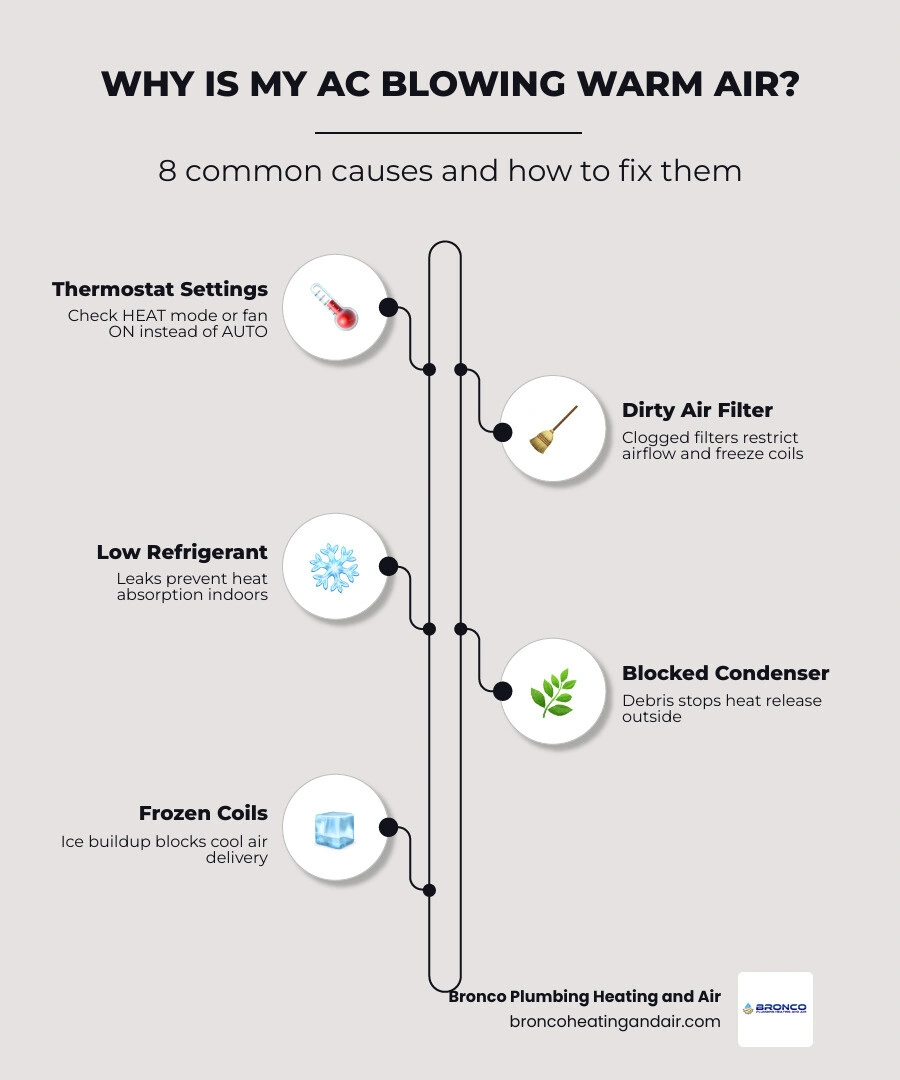
If you've ever wondered why is my AC blowing warm air, you're not alone — especially during a Sacramento summer when temperatures can push well past 100°F. Here's a quick breakdown of the most common reasons:
Most Common Reasons Your AC Is Blowing Warm Air:
1. Thermostat set to HEAT or fan set to ON instead of AUTO — the most easily overlooked fix
2. Dirty or clogged air filter — restricts airflow and can cause the evaporator coil to freeze
3. Low refrigerant or a refrigerant leak — prevents the system from absorbing heat indoors
4. Dirty or blocked outdoor condenser unit — can't release heat properly if coils are clogged or debris is blocking airflow
5. Frozen evaporator coils — ice buildup stops cool air from reaching your vents
6. Tripped circuit breaker — outdoor unit loses power while the indoor fan keeps blowing warm air
7. Failing compressor or capacitor — a serious mechanical issue requiring professional diagnosis
8. Leaky ductwork — cool air escapes before it ever reaches your rooms
One HVAC technician shared a telling story: he drove nearly 40 minutes to a service call only to find the thermostat had been switched to FAN instead of COOL. It happens more than you'd think. But when the problem runs deeper — a refrigerant leak, a failing compressor, or frozen coils — you need to know exactly what you're dealing with before things get worse.
In this guide, we'll walk through every major cause and show you which problems you can tackle yourself and which ones need a licensed technician from Bronco Plumbing Heating and Air.
Why is my ac blowing warm air vocab explained:
• ac making strange noises what they mean
Why Is My AC Blowing Warm Air? Common Causes
To understand why your air conditioner is acting more like a space heater, it helps to understand how the cooling process actually works. Many homeowners assume an air conditioner creates cold air out of nothing. In reality, your AC is a heat-transfer machine. It absorbs the heat inside your home and dumps it outside. For a deep dive into this process, check out How Air Conditioning Works A Users Guide.
When this heat-transfer cycle is interrupted, the system continues to run, but it can no longer cool the air. This results in room-temperature or outright warm air blowing out of your supply registers.
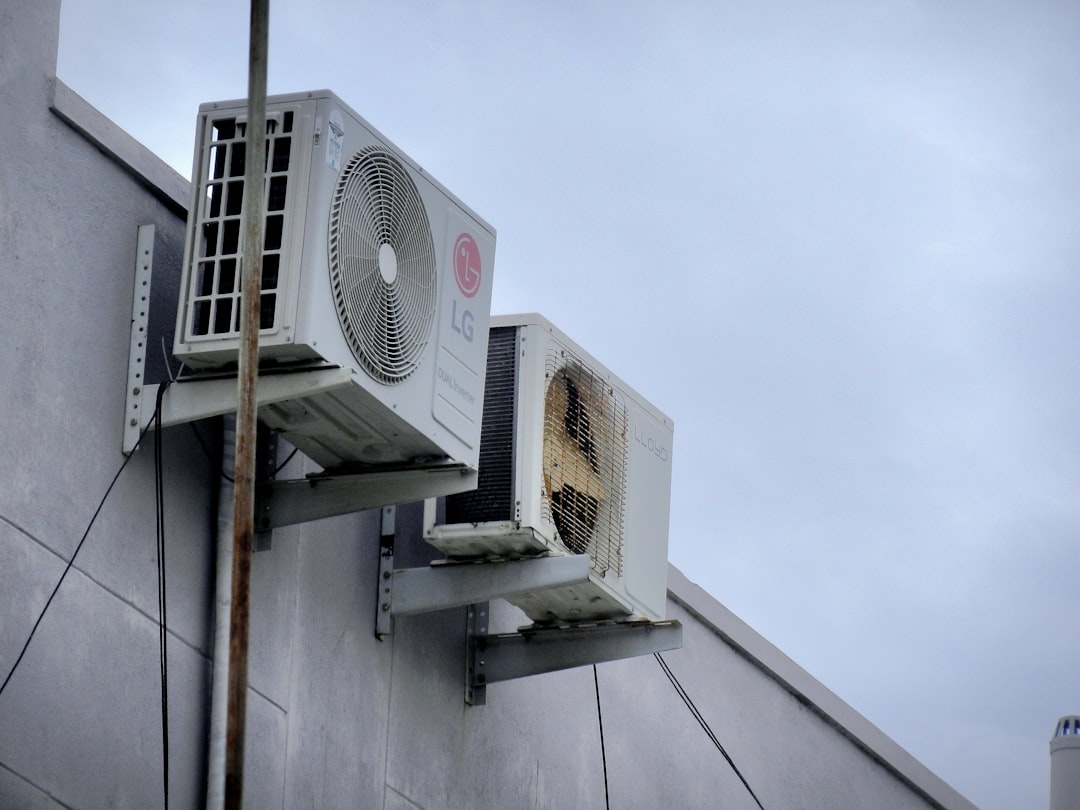
In the Greater Sacramento region—from the sunny streets of Roseville CA to the historic neighborhoods of Land Park CA—our local climate plays a major role in AC performance. During the peak of summer, our systems work overtime to fight off triple-digit heat.
Additionally, the Sacramento Valley is known for the "Delta Breeze"—a cool, marine wind that sweeps in from the San Francisco Bay at night. While this breeze is a welcome relief, the rapid temperature and humidity swings it brings can cause condensation to build up rapidly on your coils. If your system has restricted airflow due to a dirty outdoor unit or clogged filters, this sudden moisture can flash-freeze, completely blocking the cooling cycle.
When 90% of warm air issues trace back to the outdoor condenser unit, keeping that outdoor space clear is your first line of defense. Let's look closer at the primary culprits behind this frustrating problem.
Thermostat Settings: Why Is My AC Blowing Warm Air?
Before you panic about a broken system, take a close look at your thermostat. It is incredibly common for a guest, a child, or an accidental bump to change your settings.
The most frequent culprit is having the fan mode set to ON instead of AUTO.
• ON Mode: This tells your indoor blower fan to run continuously, 24 hours a day, regardless of whether the cooling system is actually running. When the cooling cycle pauses, the fan keeps blowing, circulating uncooled, room-temperature air through your home. This can make it feel like your AC is blowing warm air.
• AUTO Mode: This ensures the blower fan only runs when the system is actively cooling the air. Once the desired temperature is reached, both the outdoor condenser and the indoor fan shut off.
Another simple issue is a system set to HEAT instead of COOL. This is especially common during the spring and autumn transition seasons in places like Folsom CA or Davis CA, where chilly mornings require heat, but hot afternoons demand cooling. If you find your system completely unresponsive, you may want to read about Reasons Your AC Isn't Turning On.
Dirty Air Filters: Why Is My AC Blowing Warm Air?
A dirty air filter is the single most common cause of HVAC system inefficiency and failure. Your air conditioner requires a constant, steady stream of return air to function. When dust, pet dander, and pollen clog the filter, airflow drops dramatically.
Without enough warm indoor air passing over the cold evaporator coils, the refrigerant inside the coils gets too cold. The condensation that naturally forms on the coils quickly turns to ice. Once a layer of ice forms, it acts as an insulator, preventing the system from absorbing any more heat from your home. The result? Your system runs constantly, but only warm air blows from your vents. To see how this affects your system over long periods, read about Why Your AC Runs All Day During Extreme Summer Heat.
Refrigerant Leaks and Low Levels
Refrigerant is the lifeblood of your air conditioning system. It is a chemical compound that cycles between liquid and gas states, absorbing heat from your indoor air handler and releasing it through your outdoor condenser.
A common misconception is that air conditioners "consume" refrigerant over time, much like a car uses gas. In a properly functioning, closed-loop system, refrigerant is never depleted. If your system is low on refrigerant, it means you have a refrigerant leak.
When refrigerant levels drop, the system cannot absorb heat effectively. This leads to a warm breeze coming from your vents, long run times, and eventually, frozen evaporator coils. If you suspect a leak, you might hear a distinct hissing or bubbling noise near your indoor or outdoor units. For more details on diagnosing these sounds, see AC Making Strange Noises What They Mean.
How to Safely Troubleshoot Your AC System
If you are ready to investigate your warm air issue, safety must be your top priority. Air conditioning systems utilize high-voltage electricity and pressurized chemicals. Before you touch any mechanical components, make sure you know how to safely shut down the system.
Always start by turning off the power. You can shut off the system at the thermostat first, but for physical inspections, you should also flip the dedicated HVAC circuit breakers in your home's main electrical panel.
For the outdoor unit, there is typically a metal disconnect box mounted on the exterior wall near the condenser. Open this box and pull the disconnect plug or flip the switch to ensure no electrical current is running to the unit while you work. For more localized advice, check out our AC Maintenance Repair Tips Carmichael CA.
Checking and Adjusting Thermostat Settings
Let's start with the easiest, safest troubleshooting steps:
1. Verify the Mode: Ensure the thermostat is set firmly to COOL, not HEAT or OFF.
2. Check the Fan Setting: Switch the fan setting from ON to AUTO.
3. Lower the Temperature: Set the target temperature at least 3 to 5 degrees below the current room temperature to force the system to call for cooling.
4. Change the Batteries: If your thermostat has a blank or fading digital screen, replace the batteries. A low battery can prevent the thermostat from sending a strong signal to your outdoor unit.
5. Consider an Upgrade: If your thermostat is old, dial-based, or constantly losing calibration, upgrading to a smart thermostat can provide more precise temperature control and prevent accidental setting changes.
Inspecting and Replacing the Air Filter
Next, inspect your air filter. Locate your filter slot—usually found in the return air grille on your wall or ceiling, or directly inside the indoor air handler cabinet.
• The Light Test: Pull the filter out and hold it up to a light source. If light cannot pass through the fibers because of a thick layer of grey dust, it is completely clogged and needs to be replaced immediately.
• MERV Ratings: When buying a replacement, check the Minimum Efficiency Reporting Value (MERV) rating. While higher MERV ratings filter out smaller particles, filters that are too thick or restrictive can actually reduce airflow in older systems. For most residential systems in the Sacramento area, a MERV rating between 8 and 11 offers the perfect balance of filtration and airflow efficiency.
• Frequency: During our hot summers, we recommend checking your filter every 30 days and replacing it at least once every 1 to 3 months, especially if you have pets.
Cleaning the Outdoor Condenser Unit
Your outdoor unit needs room to breathe. If it is buried in weeds, leaves, or dirt, it cannot release the heat it brought out of your home.
1. Clear the Perimeter: Maintain a minimum of a two-foot clearance around the entire outdoor unit. Trim back any bushes, weeds, or low-hanging branches.
2. Clear Debris: Turn off the power at the outdoor disconnect box. Remove any leaves, grass clippings, or twigs that have accumulated against the metal fins.
3. Wash the Coils: Using a standard garden hose with a gentle spray nozzle (never use a pressure washer, as it will bend and ruin the delicate aluminum fins), spray the condenser coils from the top down. This washes away built-up dust, pollen, and dirt that insulates the coils and traps heat.
Identifying Complex Mechanical and Electrical Issues
If you have verified your thermostat settings, replaced your filter, and cleaned your outdoor unit, but your AC is still blowing warm air, you are likely dealing with a more complex mechanical or electrical malfunction.
These issues require a deeper understanding of the system's electrical controls and refrigeration loop. If you want to evaluate whether your system is completely out of commission, read our guide on How to Tell If Your AC Is Broken.
Thawing Frozen Evaporator Coils
If you look at your indoor air handler or the copper refrigerant pipes leading outside and see a thick layer of ice, your evaporator coils are frozen solid.
To resolve this safely, follow these steps:
1. Shut the System Down: Turn the thermostat completely to OFF. Running the system with frozen coils can cause liquid refrigerant to flood back into your compressor, destroying it.
2. Run the Fan: Switch the fan setting to ON (while keeping the cooling mode OFF). This forces warm indoor air over the frozen coils, helping them thaw safely.
3. Wait It Out: It can take anywhere from 12 to 24 hours for a heavily frozen coil to melt completely. Ensure your condensate drain line is clear, as a large amount of melting ice will produce a lot of water.
4. Inspect for Airflow: Once fully thawed, replace your air filter and try running the system again. If it freezes up a second time, you likely have a refrigerant leak or a failing blower motor, which requires professional repair.
Recognizing Signs of a Failing Compressor
The compressor is often called the "heart" of your air conditioning system. It is the pump that circulates refrigerant through the entire system. If the compressor fails, refrigerant cannot flow, and no cooling can occur.
Signs your compressor may be failing include:
• Loud clunking, rattling, or screeching noises when the outdoor unit starts up.
• The outdoor fan runs, but you do not hear the deep hum of the compressor motor.
• "Hard starting," where the system shudders and trips your home's circuit breaker every time it tries to turn on.
• Frequent short-cycling (turning on and off rapidly).
Because the compressor is a highly complex, sealed electrical motor operating under high pressure, a professional diagnosis is absolutely necessary. If you suspect your compressor is on its last legs, read more about Signs Your AC Needs Repair.
Leaky Ductwork and Air Loss
Sometimes, your air conditioner is cooling the air perfectly, but that cool air never makes it to your living spaces. Leaky ductwork in unconditioned spaces—like your attic, crawlspace, or basement—can lose 20% to 30% of its cool air through loose joints, tears, or fallen insulation.
If you have duct leaks in a hot Sacramento attic, two things happen: cool air escapes into the attic, and hot, dusty attic air is sucked into your home's air stream. This can make the air coming out of your vents feel weak, dusty, and warm. Sealing and insulating your ducts ensures the air you pay to cool actually keeps you comfortable.
Preventing Warm Air Issues with Regular Maintenance
The absolute best way to handle an AC that blows warm air is to prevent it from happening in the first place. Regular preventative maintenance keeps your system running at peak efficiency, lowers your monthly energy bills, and extends the overall lifespan of your equipment.
To help you understand what you can handle yourself versus what requires a licensed professional, we have put together this comparison table:
• Air Filter Replacement — DIY (Homeowner): Yes — Professional Technician: Yes — Why It Matters: Maintains proper airflow and prevents frozen coils.
• Clearing Outdoor Debris — DIY (Homeowner): Yes — Professional Technician: Yes — Why It Matters: Ensures the condenser can release heat effectively.
• Checking Thermostat Batteries — DIY (Homeowner): Yes — Professional Technician: Yes — Why It Matters: Prevents communication failures between system components.
• Electrical Component Testing — DIY (Homeowner): No — Professional Technician: Yes — Why It Matters: Measures capacitor strength and compressor amp draw to prevent sudden electrical breakdowns.
• Refrigerant Level Measurement — DIY (Homeowner): No — Professional Technician: Yes — Why It Matters: Detects leaks early and ensures proper system pressures.
• Condensate Drain Line Clearing — DIY (Homeowner): Limited — Professional Technician: Yes — Why It Matters: Prevents water damage and system safety shutoffs.
• Deep Coil Cleaning (Chemical) — DIY (Homeowner): No — Professional Technician: Yes — Why It Matters: Removes stubborn grime from deep inside the aluminum fins.
An annual spring tune-up is the key to worry-free summer comfort. To learn more about what our certified technicians do during a comprehensive visit, take a look at What Happens During Air Conditioning Maintenance. If you live in the Carmichael area, you can easily schedule your seasonal checkup through our AC Service Carmichael CA page.
Frequently Asked Questions About AC Performance
Should I turn off my AC if it is blowing warm air?
Yes, you should turn off your AC immediately. If your system is running but not cooling, continuing to run it will cause severe strain on your compressor and blower motor. This can lead to motor burnout, electrical damage, and a massive waste of energy. Shutting down the system protects your most expensive components until the issue can be resolved. If you need immediate assistance in the Carmichael area, visit our AC Repair Carmichael CA page.
How can I test for a refrigerant leak at home?
While only a licensed professional can legally handle, repair, and recharge refrigerant, you can perform a simple visual inspection:
• Listen closely: Walk near your indoor evaporator coil or outdoor refrigerant lines. Do you hear a faint hissing or bubbling sound?
• Look for ice: Check for physical ice buildup on the copper lines.
• The Soap Bubble Test: If you suspect a leak at a visible copper joint, you can spray a mixture of dish soap and water onto the connection. If you see growing bubbles, you have found a leak.
• Call a Pro: Never attempt to add refrigerant yourself. Handling refrigerant requires specialized EPA certification, and improper levels can permanently destroy your compressor.
How long does it take for an AC to blow cold air?
A properly functioning air conditioning system should start blowing noticeably cool air within 5 to 15 minutes of turning on. It takes a few minutes for the refrigerant cycle to stabilize, the compressor to reach full operating speed, and the ductwork to cool down. If the air coming from your vents is still warm after 20 minutes of continuous operation, something is breaking the cooling chain.
Conclusion
A warm breeze coming from your air conditioning vents on a scorching summer afternoon is a major headache. Fortunately, many causes—like incorrect thermostat settings or a dirty air filter—can be quickly resolved with a little DIY troubleshooting.
However, when you are dealing with frozen coils, refrigerant leaks, electrical failures, or a struggling compressor, trying to fix it yourself can lead to further damage or safety hazards. That is where we come in. At Bronco Heating and Air, our licensed, professional, and courteous technicians are proud to serve communities across the Greater Sacramento region, including Antelope CA, Citrus Heights CA, Elk Grove CA, Folsom CA, Rancho Cordova CA, and Roseville CA.
We are dedicated to providing cost-effective, reliable solutions to keep your home cool and comfortable all year long. Don't spend another day sweating in your own living room. More info about AC services is just a click away—contact us today and let us bring the cool air back to your home!

Customer Testimonials
Our customer testimonials highlight the reliable service, quality workmanship, and trusted results homeowners experience with Bronco Plumbing Heating and Air.


Ready to Transform your Home?
Create a healthier, more comfortable home with expert HVAC, plumbing, and indoor air quality solutions you can trust. From efficient heating and cooling to cleaner air and reliable repairs, our experienced team is here to keep your family comfortable year-round with dependable service and upfront pricing.
Related Articles
Can You Safely Delay a Minor Refrigerant Leak Repair Until Fall?

Tankless vs. Traditional Water Heaters for Large Citrus Heights Families
The Physics of Airflow: Why Closing Vents in Empty Rooms Damages Your HVAC System