



.svg)

The Best Way to Clean Your AC Condenser Unit Safely
Why Every Sacramento Homeowner Should Know How to Clean Your AC Condenser Unit SafelyKnowing how to clean your AC condenser unit safely can save you money, extend your system's life,…

Why Every Sacramento Homeowner Should Know How to Clean Your AC Condenser Unit Safely
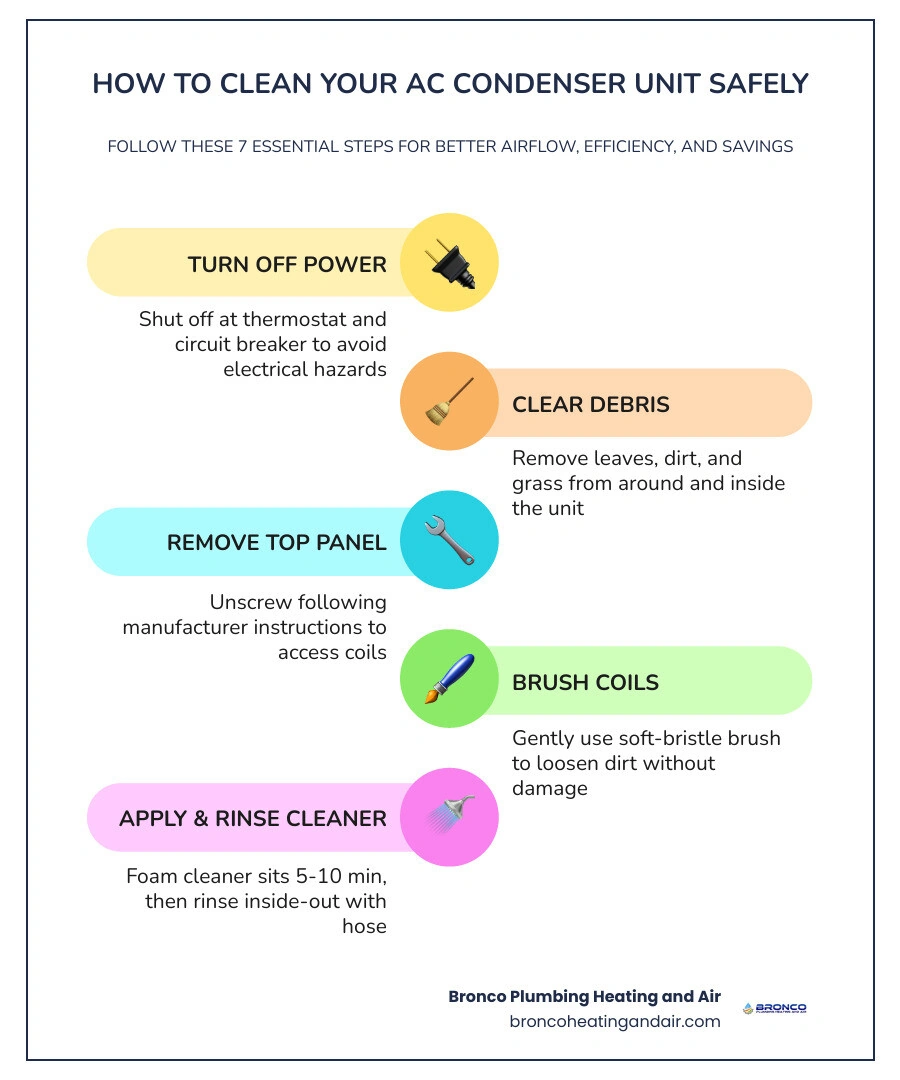
Knowing how to clean your AC condenser unit safely can save you money, extend your system's life, and keep your home comfortable through Sacramento's brutal summers. Here's a quick overview of the safe cleaning process:
1. Turn off power at the thermostat and circuit breaker
2. Clear debris from around and inside the unit
3. Remove the top panel following manufacturer instructions
4. Brush the coils gently with a soft-bristle brush
5. Apply foaming coil cleaner and let it sit 5-10 minutes
6. Rinse with a garden hose spraying from the inside out
7. Reassemble and restore power once the unit is dry
Your AC condenser works hard all summer long. Sitting outside, it pulls in huge amounts of air — and with it comes dust, pollen, grass clippings, leaves, and other debris. Over time, that buildup coats the coils and blocks airflow, making your system work much harder than it needs to.
The result? A clogged condenser can reduce your AC's cooling capacity by 10 to 15%. That means longer run times, higher energy bills, and a system that wears out years sooner than it should.
The good news is that basic condenser cleaning is a beginner-level DIY task that takes less than an hour and costs very little. The key is doing it the right way — with the right tools, the right cleaner, and the right safety steps — so you don't accidentally damage the unit or put yourself at risk.
This guide walks you through exactly that.
Why is cleaning your AC condenser unit important?
Your outdoor condenser unit has one main job: release heat from your home to the outside air. When the condenser coils are clean, heat moves out efficiently. When they are coated with dirt and debris, that heat transfer slows down.
That matters for a few big reasons:
• Dirty coils reduce airflow through the unit.
• Reduced airflow makes your system run longer to cool your home.
• Longer cycles increase energy use and strain on components.
• Extra strain can shorten equipment life over time.
In practical terms, a dirty condenser can cut cooling capacity by 10% to 15%. During a Sacramento summer, that drop is not small. It can mean hot rooms in the afternoon, a system that never seems to catch up, and utility bills that climb right along with the temperature.
Clean coils also help protect major parts of the system. The condenser fan motor, compressor, and other components all benefit when the system does not have to work overtime. Since air conditioners typically last about 10 to 20 years, routine maintenance like coil cleaning can help you get more life from your equipment.
If you want more warm-weather protection tips, our guide on protecting your HVAC system during heat waves is a helpful next read.
Before you start, gather everything you need. Having the right tools keeps the job safer and helps prevent accidental damage.
Here is a simple DIY tool list:
• Work gloves
• Safety glasses
• Screwdriver or nut driver
• Soft-bristle brush
• Shop vacuum with soft brush attachment
• Garden hose with gentle spray nozzle
• Coil cleaner rated for outdoor condenser coils
• Fin comb
• Trash bag or small scoop for leaves and debris
• Clean rags or microfiber cloths
A few notes on these tools:
• A soft-bristle brush is safer than a stiff wire brush, which can flatten delicate fins.
• A shop vacuum is useful for loose debris inside the cabinet, but use a light touch.
• A garden hose is usually enough. High pressure is not your friend here.
• A fin comb can help straighten minor fin damage, improving airflow.
If you want to build a broader maintenance routine around your cooling system, our AC maintenance repair guide for Arden-Arcade, CA covers more homeowner-friendly upkeep tips.
Choosing the right cleaning solution
Not all coil cleaners are equal, and stronger is not always better. In fact, using the wrong cleaner can strip protective coatings or damage aluminum fins.
In most cases, homeowners should use a coil cleaner specifically labeled for condenser coils and follow the product directions exactly. Foaming cleaners are popular because they expand into the coil surface and help lift dirt. Non-foaming cleaners can also work well, especially for lighter buildup.
• Foaming coil cleaner — Best for: Moderate dirt and oily buildup — Pros: Expands into tight spaces, easy to see coverage, commonly used for outdoor coils — Watch-outs: Must follow label directions, may require rinsing
• Non-foaming coil cleaner — Best for: Light dirt and maintenance cleaning — Pros: Simple application, often easier to control — Watch-outs: May need more manual help on heavy buildup
Keep these safety points in mind:
• Only use a cleaner made for AC coils.
• Follow dilution directions exactly if the product is concentrated.
• Wear gloves and eye protection.
• Do not apply cleaner to hot coils in direct peak heat if the label warns against it.
• Avoid overspraying electrical components.
For most DIY cleaning jobs, a non-acidic foaming condenser coil cleaner is the safest choice. It gives good coverage without being overly aggressive. If you are unsure what your unit's manufacturer recommends, check the manual first. That step can help protect your warranty and your coils.
Step-by-step instructions for DIY maintenance
Step-by-step guide on how to clean your ac condenser unit safely
The safest approach is slow and gentle. Condenser fins are thin aluminum and bend easily, so think "careful rinse" rather than "power wash showdown."
1. Turn the thermostat off
Set your thermostat to off so the system does not call for cooling while you are working.
2. Shut off power to the condenser unit safely
This step is essential. Turning the thermostat off alone does not fully disconnect power to the outdoor unit.
Do this instead:
1. Turn off the AC at the thermostat.
2. Go to your home's electrical panel and switch off the breaker for the air conditioner.
3. Locate the outdoor disconnect box near the condenser and switch it off or remove the disconnect block, depending on the style.
If you are not completely sure you have shut off power correctly, stop and call for service. Electrical safety is never the place for guessing.
3. Let the unit cool down
If the AC was just running, give it a little time. Cleaning a hot condenser is less comfortable, and some cleaners work better on cool surfaces.
4. Prepare the area around the condenser
Clear away anything that blocks airflow or gets in your way:
• Leaves
• Grass clippings
• Branches
• Weeds
• Mulch piled against the base
• Patio items or stored objects
A good rule is to keep at least 2 feet of clearance around the sides of the condenser. More open space is even better. In Sacramento-area yards, spring pollen, cottonwood fluff, and summer dust can build up fast, so this prep step matters.
5. Remove the outer top or side panel if your unit allows it
Check your manufacturer instructions first. Many condensers allow the top grille and fan assembly to be removed with screws. If you do this, be careful not to stretch or strain the fan wires.
If removing the top feels awkward or unsafe, do not force it. Some homeowners are comfortable cleaning only the accessible outer surfaces and leaving interior access to a technician.
6. Remove loose debris by hand or vacuum
Pick out larger debris such as leaves, twigs, and seed pods. Then use a shop vacuum with a soft attachment to gently remove loose dirt from the inside bottom of the cabinet.
Do not jam the nozzle into the coil fins. They bend easily and do not forgive rough handling.
7. Brush the coil surface gently
Using a soft-bristle brush, clean in the direction of the fins, usually up and down. Avoid brushing side to side. That sideways motion is a fast way to bend fins and reduce airflow.
This step loosens surface debris before rinsing.
8. Rinse from the inside out with a garden hose
This is one of the most important tips in the whole guide.
Spraying from the outside inward can push dirt deeper into the coil. If you can safely access the inside, rinse outward through the fins using a gentle stream from a garden hose.
Use low to moderate pressure only. Never use a pressure washer. It can flatten fins, force water into electrical components, and create expensive problems in a matter of seconds.
Can you use a garden hose? Yes, usually.Can you use a pressure washer? No, not safely for condenser coils.
9. Apply coil cleaner
Spray the cleaner evenly onto the coil surface following label instructions. If the product is concentrated, dilute it exactly as directed. Some foaming cleaners are mixed at 1 part cleaner to 3 parts water, but always defer to the label for the product you are using.
Let the cleaner sit for the recommended dwell time, often around 5 to 10 minutes.
10. Rinse again if required
Some cleaners are self-rinsing in certain applications, while others must be rinsed off. Outdoor condenser coils usually benefit from a gentle rinse after cleaning unless the label specifically says otherwise.
Again, rinse with low pressure and avoid soaking electrical areas more than necessary.
11. Wipe down the exterior
Use a damp cloth to wipe dirt from the cabinet, grille, and surrounding surface. This does not affect performance much, but it does make the unit look less like it lost a fight with a leaf blower.
For a look at what a more complete service visit includes, see what happens during air conditioning maintenance.
Straightening bent fins and reassembling the unit
Minor fin damage is common, especially on older units or systems hit by yard debris.
How to straighten bent fins
Use a fin comb that matches the fin spacing on your unit.
• Work slowly.
• Start with lightly bent areas.
• Comb in the direction of the fins.
• Do not force badly crushed sections.
The goal is not perfection. It is simply to reopen airflow paths. If a large section is crushed, stop and have a technician inspect it.
Reassemble the unit
Once cleaning is done:
1. Let the unit dry.
2. Reinstall the top panel or side panels securely.
3. Make sure screws are tightened properly.
4. Confirm no tools or debris are left inside the cabinet.
Restore power
Turn the disconnect back on, reset the breaker, and then restore cooling at the thermostat.
Let the system run and check for normal operation:
• The fan should spin smoothly.
• Air from indoor vents should begin cooling.
• There should be no unusual buzzing, rattling, or burning smell.
If performance still seems poor after cleaning, the problem may be something other than dirty coils. Our guide on how to extend the life of your AC in a hot climate covers additional maintenance habits that help systems handle Sacramento heat.
Common mistakes and safety precautions to remember
DIY condenser cleaning is straightforward, but a few common mistakes can cause trouble fast.
Safety precautions to take before cleaning
Before you touch the unit:
• Turn off power at the thermostat, breaker, and disconnect.
• Wear gloves and eye protection.
• Read the unit manual if available.
• Read the coil cleaner label.
• Wait for the unit to cool.
• Make sure the ground around the unit is dry and stable.
Common mistakes to avoid
Using a pressure washer
This is the big one. Pressure washers can bend fins flat and reduce airflow instantly.
Spraying from outside in
That often pushes dirt deeper into the coil instead of removing it.
Using harsh or acidic chemicals without checking compatibility
Some cleaners can damage factory coatings or corrode metal if misused.
Brushing sideways across the fins
Always brush with the fins, not across them.
Cleaning with power still on
This is unsafe and can damage electrical components.
Soaking electrical parts
Keep water and cleaner away from control boxes, wiring, and capacitors as much as possible.
Ignoring airflow clearance
Shrubs, fencing, storage bins, and even decorative landscaping can choke airflow. Maintain open space around the unit. Two feet on the sides is a good minimum, and more is better.
Forgetting the filter inside the house
A clean condenser helps, but your system also needs proper indoor airflow. Many homes need a filter check every month or two during cooling season, especially with pets, dust, or heavy use.
For more practical local upkeep tips, see our best AC maintenance repair tips in Antelope, CA.
Frequently Asked Questions about how to clean your ac condenser unit safely
How often should I clean my AC condenser coils?
At a minimum, inspect and lightly clean the outdoor condenser once a year, ideally in spring before peak cooling season. In many Sacramento-area homes, that is the baseline.
You may need to clean more often if:
• Your yard gets dusty
• You have lots of trees or cottonwood
• Grass clippings collect near the unit
• Pets shed heavily
• The unit is near a busy road or construction dust
• Pollen buildup is visible
Between deep cleanings, it helps to do simple upkeep like removing leaves and gently hosing off surface dirt when the unit is off.
For location-specific AC maintenance support, visit AC maintenance in Citrus Heights, CA.
What are the signs that my AC condenser coils need cleaning?
Dirty condenser coils usually give a few clues before they become a major problem.
Watch for:
• Higher energy bills without another clear cause
• Longer cooling cycles
• Warm or weak cooling indoors
• Visible dirt, lint, pollen, or grass stuck to the coil
• The outdoor unit seems unusually hot
• Reduced comfort during very hot afternoons
• More strain sounds from the outdoor unit
If the coil surface looks matted or clogged, it is time for cleaning.
You can also think of it this way: if your condenser looks like it has been wearing the same dusty sweater since last summer, it probably needs attention.
For more local maintenance information, see AC maintenance in Carmichael, CA.
When should I call a professional HVAC technician?
DIY cleaning is great for basic debris and light coil buildup. But some situations call for professional help.
Call a technician if:
• You are unsure how to disconnect power safely
• The unit has badly crushed fins
• You see damaged wiring
• There is heavy corrosion on the coil
• The system is leaking refrigerant
• The AC makes unusual grinding, buzzing, or banging noises
• The unit freezes up
• Cooling does not improve after cleaning
• The condenser fan is not running properly
• You have not had a professional tune-up in a long time
Professional maintenance includes more than coil cleaning. It also helps catch refrigerant issues, electrical wear, capacitor problems, drainage issues, and performance concerns before they turn into breakdowns.
If you are ready for a deeper system check, learn more about AC tune-ups in Roseville, CA.
Conclusion
Cleaning your outdoor condenser is one of the simplest ways to help your AC run better through the Sacramento heat. When done carefully, it improves airflow, supports efficient heat transfer, reduces strain on the system, and helps your home stay more comfortable.
The safest DIY approach is also the gentlest one:
• Shut off power completely
• Clear the area around the unit
• Remove loose debris
• Brush and rinse the coils carefully
• Use the right coil cleaner
• Avoid pressure washing and harsh chemicals
• Reassemble only after the unit is dry
And if anything seems beyond a basic cleaning, we recommend bringing in a professional. At Bronco Heating and Air, we help homeowners throughout the Greater Sacramento region keep their cooling systems clean, efficient, and ready for summer.
If you want ongoing help staying ahead of wear and tear, explore our Maintenance Plan.

Customer Testimonials
Our customer testimonials highlight the reliable service, quality workmanship, and trusted results homeowners experience with Bronco Plumbing Heating and Air.


Ready to Transform your Home?
Create a healthier, more comfortable home with expert HVAC, plumbing, and indoor air quality solutions you can trust. From efficient heating and cooling to cleaner air and reliable repairs, our experienced team is here to keep your family comfortable year-round with dependable service and upfront pricing.
Related Articles
Elk Grove's Hard Water Impact on Evaporative Coolers and Plumbing Fixtures

Why Your Vents Smell Like Mildew When the AC Kicks On in Late Summer

Single-Stage vs. Variable-Speed Compressors for Handling Late August Humidity