



.svg)

Surviving a Sacramento Valley Heatwave When Your AC Condenser Freezes Solid
Finding your outdoor AC unit encased in ice during a 100-degree day is a stressful emergency. Take these immediate steps to safely thaw your system and prevent permanent compressor damage.

The Shock of Finding Ice During a Peak Summer Crisis
In our years of keeping Roseville and the greater Sacramento Valley cool, our team at Bronco Plumbing, Heating & Air has seen firsthand how unforgiving our July weather can be. Discovering your air conditioner blowing warm air during a peak heatwave is a stressful experience for any homeowner. Surviving a Sacramento Valley heatwave when your AC condenser freezes solid requires fast, deliberate action. The rapid daytime temperature spikes in the Sacramento Valley mean home interiors heat up dangerously fast, leaving you with little time to waste when the cooling stops.
It feels like a cruel paradox: the outside air is scorching hot, yet your outdoor AC unit is encased in a thick layer of ice. This freezing happens because the system is starved for airflow or lacking refrigerant, causing the internal coil temperatures to plummet below freezing. When the moisture in the humid summer air hits those freezing coils, it rapidly turns to ice, eventually blocking the system entirely.
Right now, you face a critical decision point. You must choose between taking immediate, safe triage steps to thaw the unit or ignoring the problem and hoping it resolves itself. Ignoring a frozen condenser is a guaranteed path to permanent equipment damage. By taking control of the situation and acting quickly, you can protect your system while you arrange for professional AC services. While you can take steps to thaw the ice safely, keep in mind that professional intervention is almost always necessary to fix the underlying mechanical issue causing the freeze.
Step 1: Shut Down the System Immediately to Protect the Compressor
The absolute most important action you can take right now is to stop the air conditioner from trying to cool your home. When you find ice on your system, the equipment is already operating under severe duress. Forcing a frozen unit to keep running is the fastest way to destroy its most expensive component.
Understanding the Threat to Your Compressor
Your air conditioner's compressor is designed to pump warm refrigerant gas. When the coils freeze over, the refrigerant cannot absorb heat from inside your home. As a result, the refrigerant returns to the outdoor compressor as a cold liquid instead of a warm gas. Compressors cannot compress liquid. If liquid refrigerant hits the compressor, it causes a catastrophic failure known as "liquid slugging."
Our team frequently responds to calls where a forced, frozen system has ruined the compressor, turning a repairable issue into a massive, unexpected expense. To prevent this, follow these immediate shutdown steps:
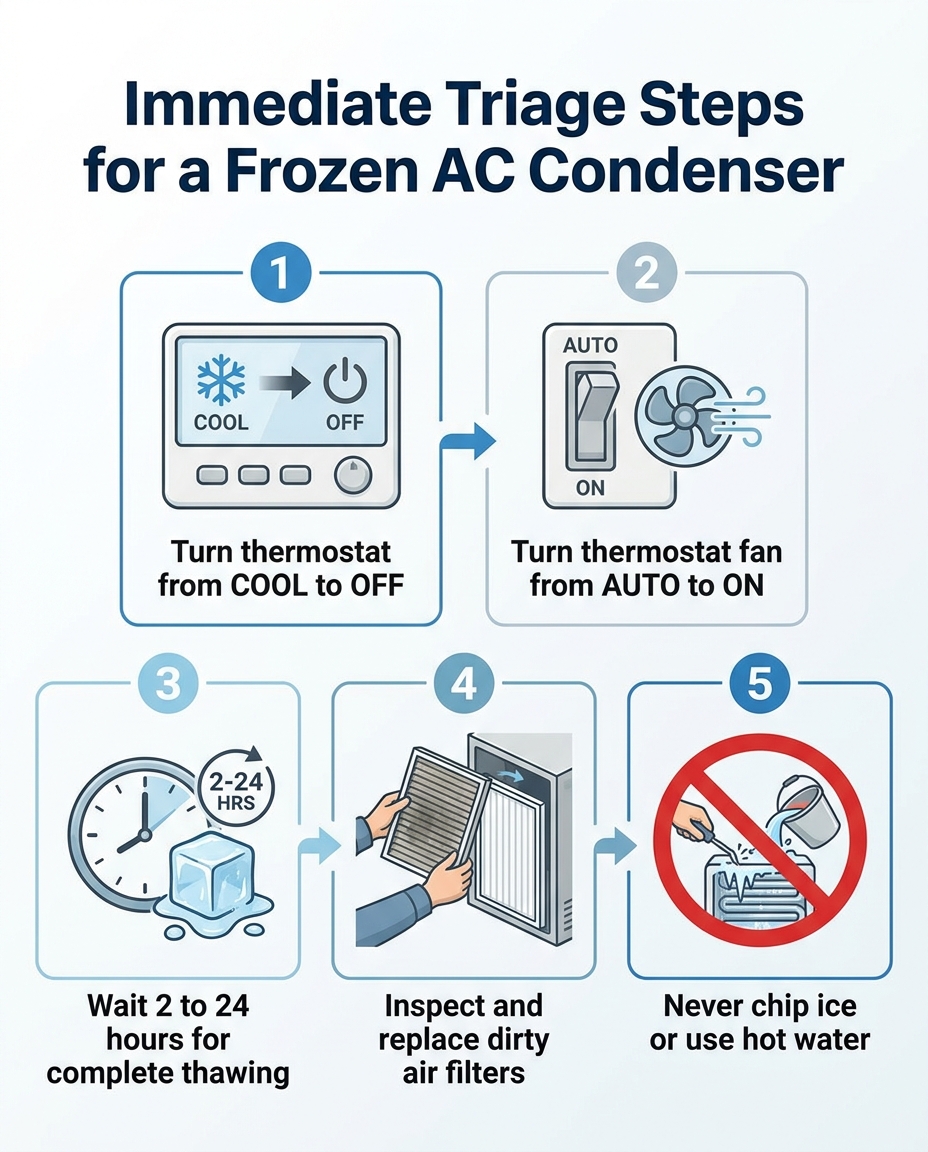
1. Go to your thermostat immediately: Do not wait to see if the ice melts while the system is running. Walk to your thermostat right now.
2. Switch the system from "Cool" to "Off": This completely stops the outdoor condenser from trying to operate. It cuts the power to the compressor, saving it from liquid slugging.
3. Leave it off: Even if your home is becoming uncomfortably warm during 100°F+ peak temperatures, you must leave the cooling cycle off.
Reassure yourself that shutting the system down is actually the fastest path to eventual cooling restoration. A thawed system can be diagnosed and repaired; a destroyed compressor leaves you stranded in the heat for days while you wait for replacement equipment.
Step 2: Initiate the Safe Thawing Process
Once the cooling cycle is safely shut off, your next goal is to melt the ice block encasing your equipment. Because you are dealing with delicate aluminum fins, copper tubing, and high-voltage electricity, this process must happen naturally. You can, however, use your home's existing equipment to safely speed up the timeline.
The Accelerated Air Thaw Method
While the "Cool" setting must remain off, you can use your indoor blower fan to help melt the ice on the indoor evaporator coil (which is likely also frozen if the outdoor unit is iced over).
• Switch the fan setting: On your thermostat, change the fan setting from "Auto" to "On." This forces the indoor blower motor to run continuously without activating the outdoor compressor.
• Circulate warm air: Running the fan pulls the warm air from your home and blows it over the frozen indoor coils, accelerating the melting process safely.
• Monitor the outdoor unit: Check the outdoor condenser periodically to watch the ice melt. Depending on the thickness of the ice block, complete thawing typically takes anywhere from 2 to 24 hours.
• Prepare for water pooling: As the massive amount of ice melts, the water has to go somewhere. Check the area around your indoor air handler or furnace. The condensate drain pan may overflow if it cannot handle the sudden rush of melting water. Keep a few old towels handy to mop up any pooling water around the indoor unit.
Patience is your best tool here. Residents in the Sacramento Valley / Roseville CA area often feel the urgency of the heat, but letting the system thaw at its own pace is the only safe way to proceed.

Dangerous DIY Thawing Myths to Avoid at All Costs
When your house is rapidly warming up during a peak July heatwave, desperation often sets in. It is incredibly tempting to take matters into your own hands to speed up the thawing process. Over countless summer emergency calls, our technicians have unfortunately seen well-meaning homeowners attempt DIY thawing tricks that permanently destroy their air conditioner.
Your HVAC system relies on pressurized copper lines and paper-thin aluminum fins to transfer heat. These components are fragile and highly susceptible to physical and thermal damage.
• Chipping ice with sharp objects — Why It Destroys Your AC: Knives, screwdrivers, or ice picks will easily puncture the pressurized copper refrigerant coils. A single puncture releases all the refrigerant and ruins the coil.
• Pouring boiling water — Why It Destroys Your AC: Applying boiling water to freezing cold metal causes severe thermal shock. The rapid expansion can crack the metal piping and destroy the unit instantly.
• Using heat guns or hair dryers — Why It Destroys Your AC: Intense, localized heat can melt internal plastic components, scorch electrical wiring, and damage the delicate aluminum fins beyond repair.
• Using a garden hose — Why It Destroys Your AC: While mild tap water can melt ice, spraying a high-pressure hose risks driving water into electrical contactors and motors, causing dangerous electrical shorts.
The bottom line: Patience with the natural thawing process is mandatory. Attempting to force the ice off the unit will almost certainly result in major unnecessary repairs.
Step 3: Investigate Airflow and Filter Issues
While you wait for the ice to melt, you can investigate the most common homeowner-level cause of a frozen air conditioner: severe airflow restriction. Your air conditioner needs a constant, massive volume of warm air moving across its coils to function correctly.
The Problem: Starved Airflow
When airflow is blocked, the cold refrigerant inside the coils has no warm air to absorb heat from. Because the heat transfer process is disrupted, the temperature of the coils drops rapidly. Once the coil temperature falls below 32°F, the natural humidity in the air freezes directly onto the metal, creating a snowball effect until the entire unit is a solid block of ice.
The Cause: Clogged Filters and Dirty Coils
When our technicians diagnose a frozen system during these 100°F+ peak temperatures, the number one culprit we find is a filthy air filter. During extreme heat, your system runs almost continuously, pulling vast amounts of dust, pet dander, and debris through the return vents. If the filter is not changed regularly, it becomes a solid wall of dirt that chokes the blower motor. Additionally, environmental factors like overgrown bushes around the outdoor unit or a layer of grime on the outdoor fins restrict airflow. Understanding how a dirty condenser coil impacts AC performance is crucial for preventing these freeze-ups.
The Solution: Inspect and Replace
Locate your HVAC air filter—usually found in a return ceiling grille, a wall grate, or directly at the indoor air handler unit. Pull the filter out and hold it up to a light source. If you cannot see light shining through the filter media, it is completely clogged. Replace it immediately with a fresh, clean filter. Do not turn the cooling cycle back on until the system is 100% thawed and the new filter is securely in place.
Maintaining a Habitable Home While You Wait
Sacramento Valley heatwaves often involve consecutive days of triple-digit temperatures, making passive cooling strategies essential while you wait for your system to thaw. Because thawing can take up to 24 hours, you need a plan to keep your family and pets safe and reasonably comfortable indoors.
• Block out radiant solar heat: Sunlight streaming through your windows acts like a greenhouse, trapping heat inside. Keep all blinds, shades, and heavy curtains tightly closed, especially on south- and west-facing windows during the afternoon.
• Create a wind-chill effect: Utilize ceiling fans and portable oscillating fans in the rooms you are actively occupying. Fans do not lower the room's actual temperature, but moving air evaporates moisture from your skin, creating a cooling wind-chill effect that makes you feel more comfortable.
• Avoid heat-generating appliances: Do not use your oven, stove, dishwasher, or clothes dryer while the AC is down. These appliances release massive amounts of heat into your living space. Opt for no-cook meals or use an outdoor grill instead.
• Prioritize hydration and safety: Drink plenty of ice water throughout the day. Keep a close eye on vulnerable family members, young children, and pets. If the indoor temperature in your Sacramento Valley / Roseville CA home reaches dangerous levels, consider relocating to a cooling center, a local library, or a friend's house until the repair is complete.
When Triage Fails: Calling for Emergency Intervention
If you have safely thawed the unit, replaced a dirty filter, and turned the system back on only to find it freezing up again, your triage efforts have reached their limit. A recurring freeze means the issue is mechanical, and professional HVAC service is now required to resolve the crisis.
Identifying Mechanical Failures
If the filter is completely clean but the unit still froze during a peak July heatwave, the system is likely suffering from a refrigerant leak or a failing blower motor. Low refrigerant causes a drop in pressure inside the evaporator coil, which drastically lowers the temperature and leads to rapid freezing. Alternatively, a weak indoor blower motor may simply lack the strength to push enough air across the coils.
Do not attempt to check refrigerant levels, patch leaks, or repair high-voltage electrical components yourself. Handling pressurized refrigerant requires specialized EPA certification, specific gauges, and professional training. Persistent freezing requires a licensed technician to diagnose the exact location of the leak, repair the copper lines, and recharge the system precisely to factory specifications.
Serving Our Local Communities
Fast response times are critical during peak summer outages. When your home is heating up rapidly, you need a team that understands the specific strain regional weather puts on your equipment. Our technicians at Bronco Plumbing, Heating & Air bring extensive, boots-on-the-ground experience responding to these exact emergency calls across the region. We've diagnosed and repaired hundreds of frozen systems, so we know how to prioritize urgent situations to keep families safe.
If your system is trapped in a freeze-thaw cycle, reach out for emergency AC service immediately. We are proud to support our Sacramento Valley service areas with fast, reliable diagnostics when extreme weather pushes your equipment past its breaking point.
Crucial Questions About Frozen AC Units in Summer
Should I turn off my AC if the outside unit is frozen?
Yes, you must turn the thermostat from "cool" to "off" the moment you discover a frozen outdoor unit. Leaving the system running while encased in ice forces the compressor to work under extreme stress, which often leads to total compressor failure. Shutting it down protects the equipment and begins the necessary thawing process.
How long does it take an AC to thaw in 100 degree heat?
Even in 100°F+ peak temperatures, a frozen air conditioner typically takes between 2 to 24 hours to completely thaw. The exact timeline depends on how thick the ice block is and whether you use your indoor fan to circulate air. You must wait until every trace of ice is melted before attempting to restart the cooling cycle.
Can I pour hot water on a frozen AC unit to speed up thawing?
No, you should never pour hot or boiling water onto a frozen air conditioner. The sudden, extreme temperature change causes thermal shock, which can instantly crack the delicate metal refrigerant lines. Always let the ice melt naturally or use the indoor blower fan to circulate room-temperature air.
Why is there ice on the pipe outside my AC during summer?
Ice forms on the outdoor refrigerant pipe when the system's internal coil temperature drops below freezing, causing the humidity in the summer air to freeze onto the metal. This pressure drop is usually caused by restricted airflow from a dirty filter or a mechanical issue like a low refrigerant charge.
Will a frozen air conditioner fix itself if I just leave it alone?
A frozen air conditioner will not fix itself. While the ice will eventually melt if the system is turned off, the underlying cause—whether a clogged filter, a refrigerant leak, or a broken motor—will cause it to freeze again as soon as you restart it. You must identify and resolve the root cause to restore normal operation.
How does a dirty air filter cause an AC condenser to freeze?
A dirty air filter acts like a wall, blocking the warm indoor air from flowing over the cold evaporator coils. Without that warm air to absorb the cold energy, the refrigerant inside the coils becomes too cold, freezing the condensation on the outside of the coils and eventually spreading out to the outdoor condenser.
Restore Your Comfort with Expert Local Support
Discovering a block of ice on your air conditioner during the hottest part of the year is alarming, but quick action prevents permanent compressor damage. By immediately shutting off the cooling cycle, allowing the unit to thaw safely, and checking your air filter, you take the right steps to protect your investment. However, if the system continues to freeze, it is time to bring in professional help to diagnose low refrigerant or mechanical failures.
Proactive care is the best way to prevent these stressful freezing incidents from happening in the first place. Regular tune-ups ensure your airflow is strong and your refrigerant levels are perfectly balanced before the extreme heat arrives. If you are tired of worrying about your system surviving the next Sacramento Valley / Roseville CA heatwave, establishing a reliable routine is the answer. Reach out today to schedule a diagnostic visit or to enroll in a preventative HVAC maintenance plan to keep your home consistently comfortable all summer long.

Customer Testimonials
Our customer testimonials highlight the reliable service, quality workmanship, and trusted results homeowners experience with Bronco Plumbing Heating and Air.


Ready to Transform your Home?
Create a healthier, more comfortable home with expert HVAC, plumbing, and indoor air quality solutions you can trust. From efficient heating and cooling to cleaner air and reliable repairs, our experienced team is here to keep your family comfortable year-round with dependable service and upfront pricing.
Related Articles
What Actually Happens When You Set Your Thermostat to 65 Degrees in 100-Degree Heat

Repairing vs. Replacing a Blown AC Compressor Mid-Summer

The Hidden Cost of Dirty AC Coils in Dusty North Highlands Neighborhoods