



.svg)

Is a 24-Hour Emergency AC Repair Call Justified for a Tripped Breaker?
When your AC stops on a sweltering night, a flipped switch might be to blame. Learn how to safely diagnose your electrical panel before paying a premium late-night fee.
Lost Cooling in the Heat? Diagnosing a Tripped AC Breaker
When your air conditioner suddenly goes silent, leaving your house to rapidly heat up, you might immediately wonder: Is a 24-Hour Emergency AC Repair Call Justified for a Tripped Breaker? It usually happens at the worst possible time. It is 10:00 PM on one of those notorious 100-degree Sacramento summer nights, and the sudden quiet of a stopped AC compressor is enough to induce instant panic. Your home is trapping the daytime heat, and your first instinct might be to reach for the phone to call for help. But before you assume total system failure, the first diagnostic step actually lies inside your electrical panel.
When the cooling stops abruptly, the core decision you face right now is determining if it is safe to reset the breaker yourself, or if a professional is required. By taking a few careful, informed steps, you can often avoid paying a premium late-night emergency fee for a simple flipped switch. When you understand the basics of your electrical panel, you can make smarter decisions about when to seek professional air conditioning services and when a quick reset is all you need to get the cold air flowing again.
The immediate panic: It is completely normal to worry when your primary source of comfort shuts down. However, a tripped breaker is actually a sign that a safety mechanism is working exactly as designed. The key is knowing how to interpret that signal.
Understanding the Breaker's Role: Protection vs. Nuisance
Circuit breakers are not installed to annoy you; they are critical safety devices designed to protect your home's wiring. To understand why your AC might trip the breaker, you have to look at how much power the system actually uses. Air conditioning compressors require a massive surge of electricity to start up. In fact, an AC compressor naturally draws three to five times its normal running amperage during the first few seconds of startup. This is known as Locked Rotor Amps (LRA).
The National Electrical Code (NEC) outlines basic safety standards regarding residential panels and circuit protection. Your breaker is sized to handle that brief startup surge, but if the high electrical draw continues for too long, the breaker will intentionally cut the power. This prevents the wires inside your walls from overheating, melting their insulation, and potentially starting a fire.
At Bronco Plumbing, Heating & Air, we always remind customers that not all tripped breakers indicate a catastrophic failure. You need to differentiate between a harmless thermal overload and a true, dangerous short circuit. If you misdiagnose the issue, you might end up paying a premium late-night emergency fee for a problem you could have safely resolved yourself.
• Thermal Overload — Cause: Extended run times, hot ambient temperatures at the panel, or a dirty air filter causing the motor to work harder. — Severity: Low to Moderate. Often resolved by letting the system cool and replacing the filter.
• Short Circuit — Cause: Bare wires touching, a grounded compressor, or a failing capacitor pulling excessive current instantly. — Severity: High. Requires immediate professional electrical or HVAC intervention.
• Nuisance Trip — Cause: A weak, aging breaker that trips below its rated amperage due to internal wear and tear. — Severity: Moderate. Requires a licensed professional to replace the breaker switch.
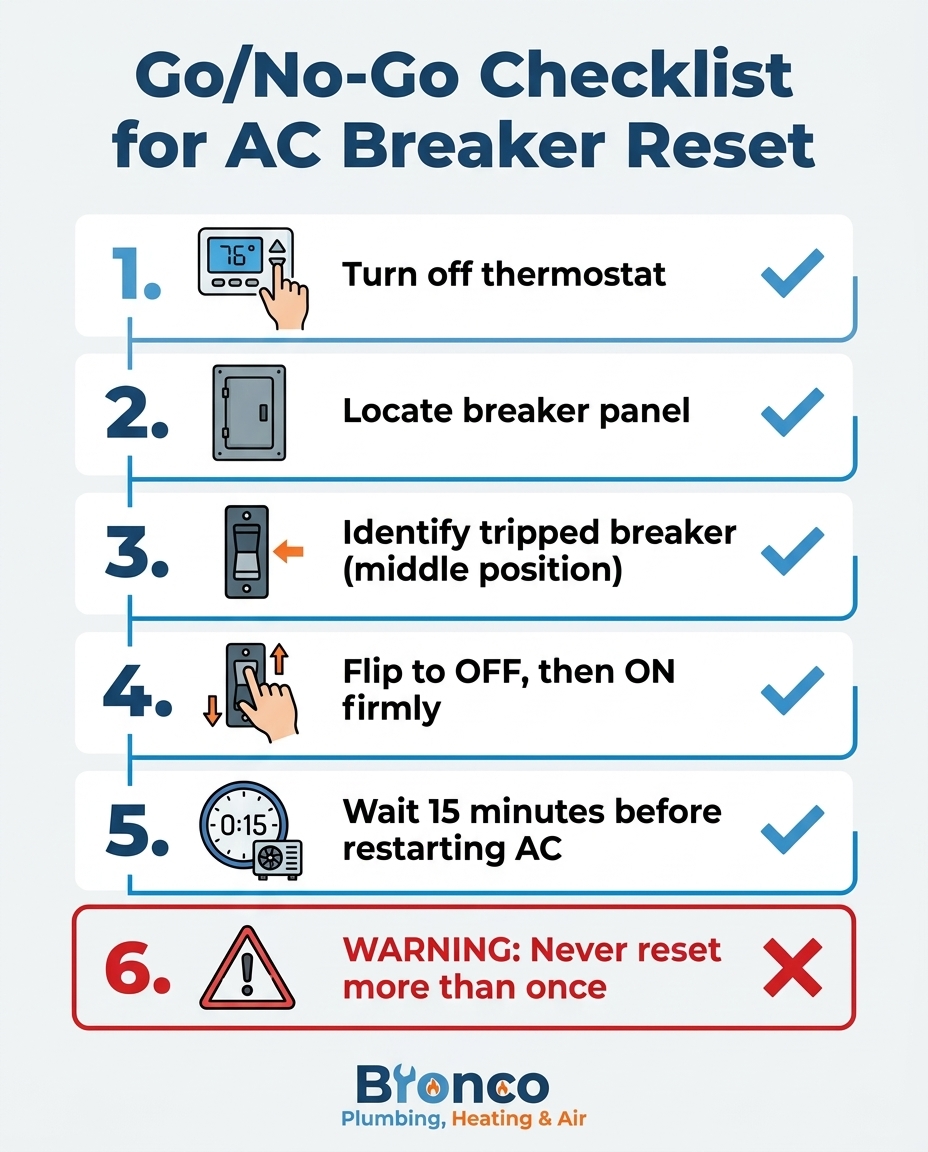
The Go/No-Go Checklist: Safe Steps to Reset an AC Breaker Once
If you find yourself sweating through one of those 100-degree Sacramento summer nights, our team at Bronco Plumbing, Heating & Air frequently advises homeowners that they can safely attempt to restore power—provided they follow strict safety protocols. Never open the metal cover of the electrical panel or touch any exposed wires. You are only interacting with the plastic switches.
1. Turn off the thermostat completely: Before you even approach the electrical panel, go to your thermostat and set it to the "OFF" position. You never want the AC unit trying to pull power the exact second you flip the breaker back on.
2. Locate the breaker box: Find your main electrical panel, usually located in the garage, basement, or on an exterior wall.
3. Identify the AC circuit: Look for the switch labeled "AC," "HVAC," or "Condenser." A tripped breaker will not be fully in the OFF position; instead, it will be resting in the middle or neutral position, feeling slightly spongy if you touch it.
4. Firmly flip the switch: To reset it, you must first push the switch firmly all the way to the OFF position until it clicks. Then, push it firmly to the ON position.
5. Wait 15 minutes: Do not turn the thermostat back on immediately. Wait at least 15 minutes to allow the internal refrigerant pressures inside the compressor to equalize. Starting it too soon forces the motor to fight against massive pressure, which will just trip the breaker again.
6. Enforce the one reset rule: Turn the thermostat back to "COOL." If the breaker trips a second time, stop immediately. Never force a breaker to stay on.
Ignoring the one reset rule can lead to expensive consequences. Recently, our technicians helped a local homeowner with an older HVAC system who noticed their unit inconsistently blowing air and tripping the breaker. Instead of continually forcing the system to reset, they left it off and had our team investigate. It turned out the system needed a replacement circuit board and some rewiring across two visits. By not forcing the breaker, they saved the compressor and avoided a massive replacement bill.
Heatwave Overloads vs. Dangerous Electrical Shorts
Context matters when diagnosing electrical issues. In our years of keeping local homes cool, we've seen how Sacramento's triple-digit extreme summer heat forces systems to run longer cycles, increasing the likelihood of overloaded circuits on older electrical panels. When the temperature outside refuses to drop, your air conditioner has to work overtime just to maintain a baseline level of comfort.
The impact of continuous duty cycles: During peak afternoon and evening hours, your AC might run for hours without cycling off. This continuous operation generates heat. Breakers actually use a thermal mechanism to detect overloads; if a certain amount of current flows through the breaker for a long time, the internal metal strip heats up, bends, and breaks the circuit. If your electrical panel is located on a hot exterior wall or in a baking garage, the ambient heat combined with the normal electrical heat can cause a nuisance trip.
Physical signs of a weather-induced overload: If the breaker tripped after running flawlessly for six hours on the hottest day of the year, and it resets normally after a 15-minute cooldown, you likely experienced a heatwave overload. The system was simply exhausted.
Conversely, if the trip is caused by a fatal compressor flaw, the weather won't matter. A hard short circuit will trip the breaker instantly, whether it is 105 degrees outside or a mild 75 degrees. Understanding this difference helps you determine if those 100-degree Sacramento summer nights are just stressing your system, or if you have a genuine electrical emergency on your hands.
When to Make the Call for 24 Hour Air Conditioning Repair
There is a clear safety threshold where DIY troubleshooting stops and professional emergency intervention becomes mandatory. If your system fails the safe reset test, you must leave the breaker off to protect your home and your family from fire hazards.
So, is a 24 hour air conditioning repair call justified? You should make the call immediately if you observe any of the following:
• Immediate re-tripping: If the breaker snaps back to the off position the second you turn the thermostat on, you have a direct short circuit. Do not attempt to reset it again.
• Burning smells or ozone odors: If you smell melting plastic, burning wires, or a distinct metallic ozone scent near the electrical panel or the outside condenser, cut the power entirely.
• Buzzing or crackling sounds: A healthy breaker should be silent. If you hear a persistent buzzing or crackling coming from the panel, the breaker itself may be failing and arcing electricity.
• Total unresponsiveness: If the breaker is properly reset and the thermostat is calling for cooling, but the system refuses to turn on at all, a critical component like the capacitor or contactor has likely failed.
When searching for 24 hour ac repair near me, you want a team that prioritizes honest, transparent diagnostics. The goal is to save customers from unnecessary fees unless a true electrical hazard exists. For example, one of our customers reached out after hours on one of the hottest days of the summer when their unit went completely down and would not reset. A Bronco Plumbing, Heating & Air technician was dispatched for a fast, professional after-hours rescue, properly diagnosing a failed component rather than just flipping a switch, restoring cooling relief when it was needed most. If you are experiencing these severe symptoms, it is time to schedule professional AC repair.
Avoiding a premium late-night emergency fee is ideal, but never at the cost of your home's safety. If the signs point to a short circuit, professional help is the only safe option.
Long-Term Solutions: Keeping the Breaker On and the AC Running
Once the immediate crisis has passed, it is time to shift the focus from emergency triage to proactive, preventative care. A tripped breaker is a symptom of a system under stress. If you address the root causes of that stress, you can prevent the breaker from tripping again in the future.
One of the most common, yet easily preventable, causes of electrical strain is poor maintenance. When you ignore basic upkeep, the mechanical components have to work harder, which means they pull more electricity. Paying a premium late-night emergency fee because of a clogged air filter is a frustrating experience for any homeowner.
The Impact of Airflow on Electrical Draw
Severely clogged air filters restrict airflow: When the filter is packed with dust, pet hair, and debris, the blower motor struggles to pull air through the return vents. This restriction forces the blower motor to overwork. As the motor strains against the static pressure, it pulls more amperage. If it pulls too many amps for too long, the circuit trips.
Simple replacements prevent shutdowns: Changing your air filter every 30 to 90 days is the single most effective way to prevent airflow-related electrical trips. It is a minor task that yields major reliability benefits.
Beyond filters, you should also be checking for strange operational sounds that indicate mechanical strain before a trip occurs. A grinding or screeching noise from the outside unit often points to failing fan motor bearings. As bearings fail, friction increases, causing the motor to draw excessive power. Highlighting the value of regular system checkups ensures your electrical panel remains perfectly rated for the HVAC load. Staying on top of preventative AC maintenance keeps the amperage low, the cooling output high, and the breakers firmly in the ON position.
Frequently Asked Questions About Tripped AC Breakers
Before diving into the most common questions, remember that strange sounds often precede electrical failures. If you hear buzzing, grinding, or squealing before a breaker trips, checking out our guide on an AC making strange noises can help you identify the root cause early.
Is it safe to reset a tripped AC breaker?
Yes, it is safe to reset a tripped AC breaker exactly once, provided you follow the proper steps. You must turn the thermostat off first, flip the breaker fully off and then on, and wait 15 minutes before calling for cooling again. If it holds, it was likely a temporary overload; if it trips again, you must leave it off.
How many times can an AC trip the breaker before it's dangerous?
An AC can safely trip the breaker and be reset exactly one time. A second immediate trip indicates a hard electrical fault, such as a short circuit or a grounded compressor. Forcing the breaker to reset multiple times can melt wires, destroy your HVAC equipment, and cause an electrical fire.
Will a dirty air filter cause the AC breaker to trip?
Yes, a severely dirty air filter can cause the AC breaker to trip. The clogged filter restricts airflow, forcing the indoor blower motor to work significantly harder to circulate air through the house. This extra mechanical strain causes the motor to draw higher amperage, eventually overloading the circuit.
Why did my AC trip the breaker immediately after turning on?
An immediate trip usually points to a direct short circuit or a failed component like a capacitor. When the compressor tries to start without the boost from a working capacitor, it pulls massive amounts of Locked Rotor Amps (LRA), causing the breaker to instantly cut power to prevent wire damage.
Why does my AC keep tripping the breaker during a heatwave?
During intense heatwaves, your AC system runs continuous, prolonged cycles that generate excess heat. This continuous duty cycle, combined with high ambient temperatures around the electrical panel, can cause the breaker's internal thermal mechanism to overheat and trip as a safety precaution.
When should I call for 24 hour ac repair near me?
You should call for emergency repair if the breaker trips a second time after a proper reset, or if you notice burning smells, ozone odors, or buzzing sounds from the panel. You should also call if the breaker stays on but the AC unit refuses to produce cold air during extreme weather conditions.
Make the Right Call for Your AC System
Losing your air conditioning late at night is incredibly stressful, but having a clear go/no-go diagnostic checklist provides immense peace of mind. By checking the thermostat, locating the panel, and attempting a single, safe reset, you take control of the situation. You might find that a simple 15-minute reset is all it takes to get the cold air flowing again, successfully avoiding a premium late-night emergency fee.
However, if your system failed the safe reset test, or if you smell burning electrical odors, professional help is absolutely necessary. Never compromise your home's electrical safety just to get the cooling back online. Reach out to a local expert for a thorough, honest system evaluation. A qualified technician will trace the electrical fault, replace the failing components, and ensure your system is safe, reliable, and ready to handle whatever the summer heat throws your way.

Customer Testimonials
Our customer testimonials highlight the reliable service, quality workmanship, and trusted results homeowners experience with Bronco Plumbing Heating and Air.


Ready to Transform your Home?
Create a healthier, more comfortable home with expert HVAC, plumbing, and indoor air quality solutions you can trust. From efficient heating and cooling to cleaner air and reliable repairs, our experienced team is here to keep your family comfortable year-round with dependable service and upfront pricing.
Related Articles
Surviving a Sacramento Valley Heatwave When Your AC Condenser Freezes Solid

What Actually Happens When You Set Your Thermostat to 65 Degrees in 100-Degree Heat
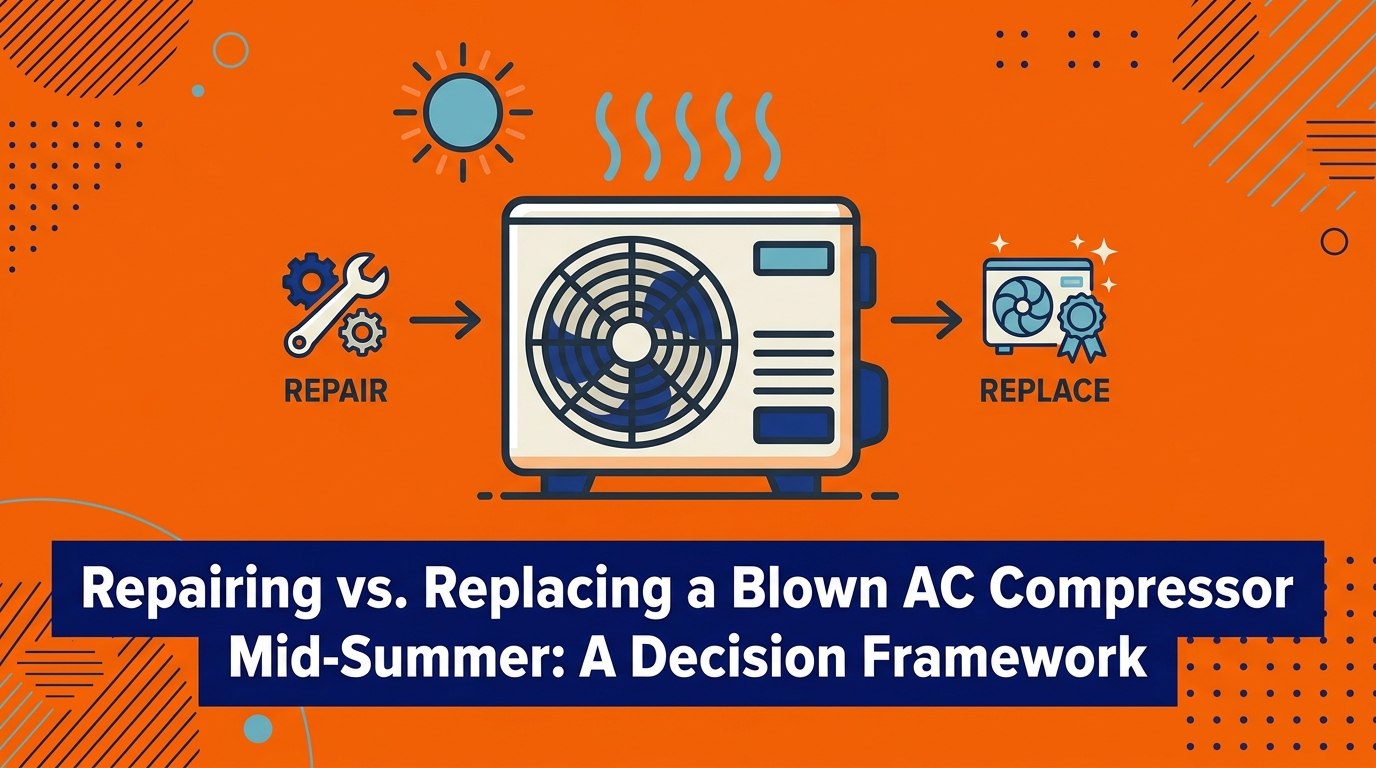
Repairing vs. Replacing a Blown AC Compressor Mid-Summer