



.svg)

Why Placer County Soil Shifting Causes Underground Plumbing Stress in Late Summer
Late summer heat causes local clay soil to shrink, putting immense physical pressure on aging pipes. Spot the early warning signs of underground damage before a main line breaks.
The Hidden Subterranean Threat of August Heat
You might be focused on keeping your home cool right now, but understanding exactly why Placer County soil shifting causes underground plumbing stress in late summer is critical for protecting your property. When the peak of the dry season hits Northern California, the environmental changes aren't just happening in the air above us. Beneath your lawn, your driveway, and your home's foundation, a massive physical transformation is taking place. Here at Bronco Plumbing, Heating & Air, we see firsthand how extended dry spells bake the earth, causing the ground itself to change shape and create an invisible but highly destructive environment for your home's infrastructure.
During August and late summer, as families transition into the back-to-school season, the severe lack of moisture causes the soil to contract dramatically. While you are busy adjusting your thermostat and watering your garden, the earth surrounding your pipes is physically pulling away from them. This creates a highly volatile situation for aging underground main water and sewer lines, which rely on consistent, packed earth for structural support. When dealing with these invisible environmental threats, partnering with our experts in professional home services ensures your property remains safe, functional, and protected from sudden catastrophic failures.
The danger here lies in the fact that this damage is entirely progressive and hidden from view. Homeowners rarely think about their plumbing until a pipe bursts or a drain completely backs up. However, by understanding the mechanics of how the ground shifts during the hottest months of the year, you can learn to spot the early warning signs before complete pipe failure occurs. In our experience, early detection is the only way to prevent a minor stress fracture from turning into a major excavation project.
The Mechanics of Expansive Clay Soils in Northern California
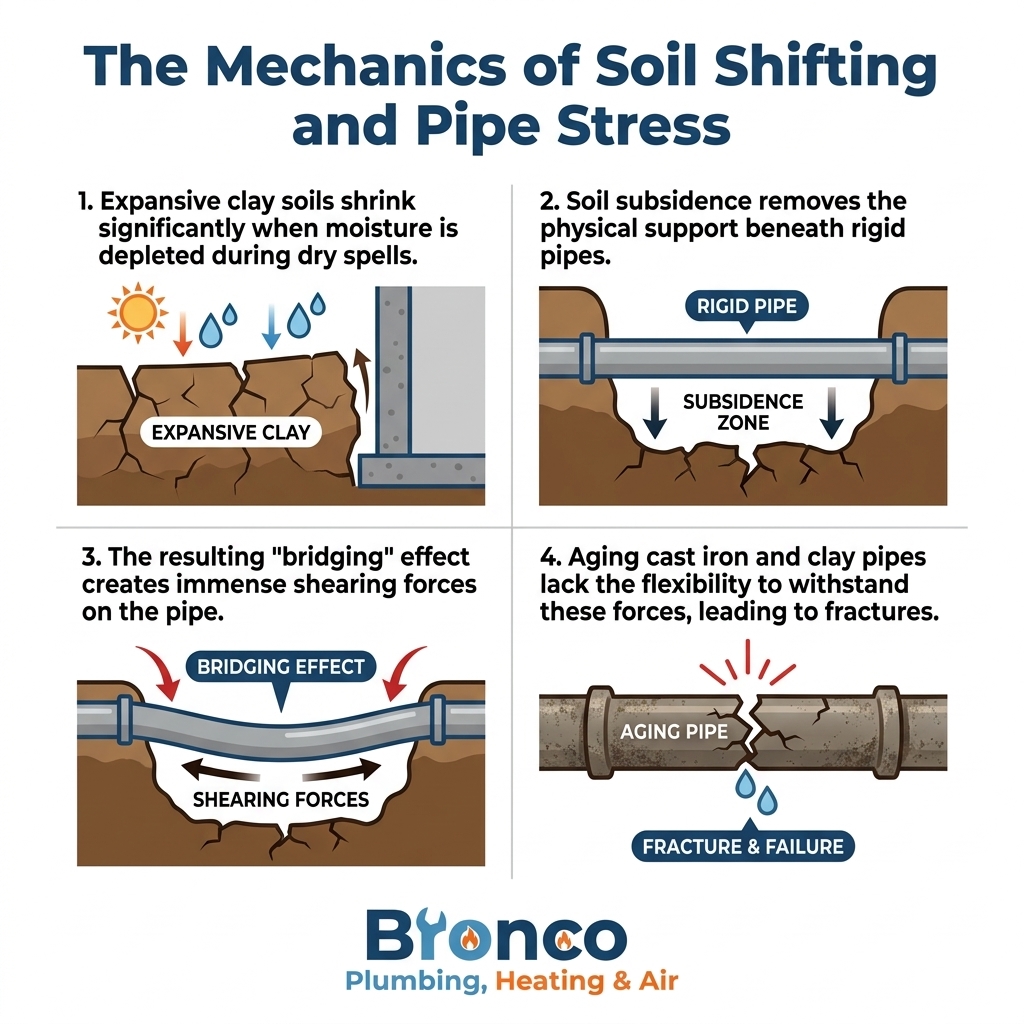
To understand why your pipes are at risk, you have to understand the ground they are buried in. Through our years servicing the Sacramento Valley and Placer County regions, our team has dealt extensively with expansive clay soils. Clay is highly reactive to moisture levels. When it rains during our wet winters, the clay absorbs water like a sponge, expanding in volume and pushing upward. But when the intense heat of late summer arrives, the opposite reaction occurs through a process called soil desiccation.
As the moisture is depleted from the ground, the water molecules that once held the clay particles apart evaporate. Without that water, the volume of the soil shrinks dramatically. This is not a minor shift; expansive clay can lose a massive percentage of its volume during a severe dry spell. As it shrinks, the ground cracks, settles, and pulls apart. This severe soil subsidence creates a hostile environment for anything buried within it. This level of geological stress is exactly why specialized plumbing services are required to properly diagnose and mitigate underground issues in our specific region.
Volume Loss and Subsurface Shifting
The sheer weight and force of soil as it pulls away from buried structures is difficult to overstate. A single cubic yard of soil can weigh roughly 2,000 to 2,700 pounds. When that much weight begins to shift, sink, and pull away, it generates immense physical torque. Furthermore, this drying process does not happen evenly across your property.
Areas of your lawn that receive full afternoon sun will dry out and shrink much faster than shaded areas near your foundation or under large trees. This uneven drying creates localized pockets of extreme pressure and shifting. One section of a pipe might still be firmly supported by moist soil, while the section just three feet away is suddenly suspended in a void created by shrunken, desiccated clay. Our technicians frequently note that this uneven settling is the primary driver of subsurface plumbing damage during the late summer months.
How Soil Contraction Attacks Rigid Infrastructure
When the clay soil pulls away, it completely changes the physical dynamics of your plumbing system. Pipes are designed to rest on a carefully graded, firmly packed bed of soil. When the ground settles unevenly beneath them, it creates a dangerous "bridging" effect. The pipe is no longer resting on the earth; instead, it is suspended across a gap, forced to support its own weight, the weight of the water inside it, and the crushing weight of the soil pressing down from above.
This bridging effect generates immense shearing forces. As the ground continues to sink, it drags the pipe down with it. If you want to fully grasp why your sewer line may sustain damage during a drought, you have to look at the interaction between these shearing forces and the materials your plumbing is made of—a pattern we see often in older Sacramento area neighborhoods.
The Vulnerability of Cast Iron and Clay Pipes
The older your home is, the more at risk your system becomes. Our plumbing specialists frequently find that aging underground main water and sewer lines are made of highly rigid materials that simply cannot flex when the earth moves.
• Historic Clay / Terra Cotta — Flexibility Under Soil Stress: Zero flexibility. Highly brittle. — Vulnerability to Late Summer Subsidence: Extreme risk. Snaps cleanly under bridging pressure or shearing forces.
• Cast Iron — Flexibility Under Soil Stress: Very low flexibility. Prone to interior corrosion weakening the walls. — Vulnerability to Late Summer Subsidence: High risk. Often cracks along the bottom or snaps at the joints when soil drops away.
• Modern PVC / PEX — Flexibility Under Soil Stress: Moderate to high flexibility. Can bend slightly without breaking. — Vulnerability to Late Summer Subsidence: Lower risk. Can often withstand minor soil shifting, though extreme subsidence can still cause joint separation.
Because aging cast iron and historic clay sewer lines are incredibly brittle, they have almost zero tolerance for bending. When the ground beneath them drops, they do not bow—they snap. A lack of flexibility makes them highly susceptible to fracturing under subsidence pressure. Once a fracture occurs, the structural integrity of the entire line is compromised, leading to massive leaks, root intrusions, and eventually, a total collapse of the system.
Recognizing the Early Warning Signs of Underground Pipe Stress
Because this damage happens entirely out of sight, you have to rely on secondary indicators to know that your pipes are under stress. Waiting for a complete rupture is a costly mistake. By monitoring your home for the early warning signs of underground pipe stress, you can intervene before the damage becomes catastrophic.
Here are the primary indicators our Bronco Plumbing, Heating & Air technicians look for when diagnosing failing underground plumbing due to soil contraction:
• Sudden drops in water pressure: If your shower or sinks suddenly lose pressure, it is a key indicator of a stressed or compromised main water line. When a main line cracks due to soil shearing, water escapes into the ground before it ever reaches your fixtures.
• Slow drains or frequent backups: Sewer lines rely on a very precise, gravity-fed slope to move waste away from your home. When the ground settles, the pipe can sag, creating a "belly" where wastewater pools. This loss of proper slope leads to constant clogs and slow drains.
• Unusually green patches of grass: Finding damp soil or a vibrant, green patch of grass in August—when everything else in your yard is dry and brown—is a massive red flag. It almost always means a subterranean pipe is leaking water directly into the soil.
• Unexplained sinkholes or divots: As water leaks from a broken pipe, it washes away the surrounding soil. This creates small sinkholes or noticeable divots in your lawn directly above the plumbing lines.
• Secondary structural signs: Keep an eye out for new foundation moisture, damp spots in your basement, or fresh cracks in concrete flatwork (like driveways or patios) located near your plumbing lines.
If you notice any combination of these symptoms during the peak dry season, it is highly likely that soil subsidence has compromised your underground infrastructure.
Why Late Summer is Just as Hazardous as Winter Freezes
When most people think of weather-related plumbing disasters, they picture exploding pipes in the dead of winter. It is time to reframe that understanding. In Placer County, we routinely remind our customers that the late summer heat is just as hazardous to your plumbing as a deep winter freeze. The mechanics are different, but the results are equally destructive.
The physical forces are comparable. In winter, water freezes inside the pipe, expanding outward until the material bursts. In summer, the clay soil contracts, pulling downward and generating shearing forces that snap the pipe from the outside in. Both seasonal extremes destroy rigid materials.
The damage is insidious and progressive. While a winter pipe burst is usually immediate, loud, and obvious, summer soil damage is quiet. A pipe might crack in July, slowly leak water throughout August, and not fully collapse until September. This progressive failure makes it much harder to catch without professional vigilance.
The compounding effect of tree roots. Drought conditions make trees desperate for water. When a stressed pipe develops even a hairline fracture, the escaping moisture acts like a beacon for thirsty tree roots. These roots will aggressively seek out the leak, wrap around the pipe, and force their way inside, crushing the weakened pipe in the process. This one-two punch of soil shifting followed by root intrusion is a classic late-summer plumbing disaster our team encounters.
Navigating Local Infrastructure and Professional Diagnostics
When you suspect that your aging underground main water and sewer lines have been compromised by soil shifting, taking the right steps is crucial. This is not a situation where guesswork or visual inspections will solve the problem. Excavating or attempting to repair main lines requires licensed professionals, specialized heavy equipment, and a deep understanding of local code.
For homeowners across the Placer County service area, relying on experts who understand the specific soil conditions and older residential plumbing infrastructure of the region is the best way to protect your property. Here is how our team at Bronco Plumbing, Heating & Air handles professional diagnostics when soil subsidence is suspected:
1. Non-Invasive Video Inspections: Plumbers like ours do not start by digging up your yard. Instead, we use high-definition inline sewer cameras. These cameras are fed directly into your pipes to visually inspect the interior walls. This reveals cracks, bellies (sags caused by lost slope), and root intrusions without moving a single blade of grass.
2. Acoustic Leak Detection: For main water lines, professionals use sensitive acoustic listening devices. Because water escaping from a pipe under high pressure creates a distinct frequency, our technicians can pinpoint the exact location of a subterranean leak through the soil and concrete.
3. Soil Mapping and Strategy: Local experts will map the specific soil conditions of your property. By understanding where the soil is driest, where tree roots are located, and how the original infrastructure was laid, we can determine the most effective, least invasive mitigation strategy.
4. Targeted Repairs: Once the exact location and cause of the stress are identified, professionals can perform targeted repairs—often using trenchless technology to replace or line the damaged pipe without destroying your landscaping.
The moment you suspect underground stress, the most proactive step you can take is scheduling a diagnostic inspection. Ignoring the signs only gives the soil more time to shift and the pipe more time to fail.
Frequently Asked Questions About Soil Subsidence and Plumbing
Can dry ground cause water pipes to break?
Yes, severely dry ground is a leading cause of broken water pipes in regions with expansive clay. As the soil loses moisture, it shrinks and pulls away from the pipes, removing their physical support. The heavy earth above then presses down on the unsupported pipe, causing it to bend or snap under the immense pressure. This is especially common during extended late-summer dry spells.
How does soil subsidence affect underground plumbing?
Soil subsidence affects underground plumbing by altering the carefully graded environment the pipes rely on. When the ground sinks unevenly, it creates a "bridging" effect where sections of the pipe are left suspended in empty voids. This forces the pipe to support its own weight and the weight of the soil above it, generating shearing forces that lead to cracks, separated joints, and a loss of proper drainage slope.
What are the warning signs of a stressed main sewer line?
The most common warning signs of a stressed main sewer line include multiple slow drains throughout the house, gurgling sounds coming from your toilets, and frequent sewage backups. You may also notice environmental signs outside, such as unusually green patches of grass during a dry month, foul odors in your yard, or slight sinkholes forming along the path of the sewer line.
How does clay soil specifically impact cast iron and clay pipes?
Clay soil is highly expansive, meaning it expands dramatically when wet and shrinks severely when dry. Cast iron and historic clay pipes are highly rigid and brittle, meaning they have almost zero flexibility. When the clay soil shifts, expands, or drops away, these older pipes cannot bend to accommodate the movement, causing them to snap or fracture much faster than modern, flexible piping materials.
What happens to pipes when the ground settles unevenly?
When the ground settles unevenly, it pulls the plumbing system out of alignment. For sewer lines, this often creates a "belly" or sag in the pipe where wastewater pools instead of flowing away by gravity. For pressurized water lines, uneven settling creates localized stress points that eventually lead to hairline fractures, massive leaks, and total structural failure at the pipe joints.
How can I tell if a slow drain is caused by soil shifting or a simple clog?
A simple clog is usually isolated to a single fixture, like a bathroom sink or a shower drain. If soil shifting has compromised your main sewer line, you will typically experience widespread issues across multiple drains on the lowest level of your home. Additionally, if the slow drains are accompanied by gurgling toilets or patches of damp soil in your yard, the issue is likely underground rather than a simple localized clog.
Securing Your Home's Plumbing Before the Ground Shifts Further
The critical relationship between dry clay soil and underground pipe stress is a reality of living in Northern California. As August and late summer push the ground to its maximum level of desiccation, your aging underground infrastructure is put under immense physical pressure. Recognizing the early warning signs—whether it is a sudden drop in water pressure, unusually green grass in a dry yard, or a slow drain—can mean the difference between a simple repair and a catastrophic main line failure.
Do not wait for the ground to shift further or for autumn rains to complicate an already compromised system. If you notice any signs of subterranean stress, reaching out to the team at Bronco Plumbing, Heating & Air for an expert evaluation of your property's infrastructure is the safest next step. A clear, scientifically grounded diagnostic inspection will give you the answers you need and the actionable solutions required to secure your home's plumbing for years to come.

Customer Testimonials
Our customer testimonials highlight the reliable service, quality workmanship, and trusted results homeowners experience with Bronco Plumbing Heating and Air.


Ready to Transform your Home?
Create a healthier, more comfortable home with expert HVAC, plumbing, and indoor air quality solutions you can trust. From efficient heating and cooling to cleaner air and reliable repairs, our experienced team is here to keep your family comfortable year-round with dependable service and upfront pricing.
Related Articles
Transitioning Your Heat Pump Settings as August Nights Finally Cool Down

The Relationship Between Attic Insulation and Late Summer Cooling Cycles
What a Sudden Spike in Your August Electric Bill Actually Means for Your AC