



.svg)

Recognizing the Difference Between Normal AC Wear and Impending System Failure
When your AC struggles during late August heat, deciding between a quick tune-up and a replacement is stressful. Here are the clear warning signs of a genuinely failing system.
Navigating Late-Summer AC Sluggishness
As late August heat waves push local cooling systems to their absolute limits, recognizing the difference between normal AC wear and impending system failure becomes a top priority for homeowners. You might notice your system running longer than usual or struggling to keep the house cool during the peak afternoon heat. Before you shut your equipment down for the winter, you need to know if that sluggish performance requires a simple tune-up or if it is time to budget for a replacement. Guessing can lead to unexpected breakdowns, but a clear diagnosis gives you control over the situation and protects your comfort.
At Bronco Plumbing, Heating & Air, we know that whether you need professional AC services to get through the final stretch of summer or want to explore flexible HVAC financing options for a planned upgrade, knowing where your system stands is the very first step toward making a smart decision.
The Toll of Extreme Heat on Local Cooling Systems
Cooling a home in this region requires a tremendous amount of energy, and the local climate is unforgiving on mechanical components. Sacramento averages over 20 days of 100-plus degree heat annually. In our years of keeping local homes comfortable, we've seen firsthand how this means local units face accelerated wear compared to the national average. When the outside temperature spikes, your air conditioner has to work twice as hard to remove heat and humidity from your indoor air. After months of continuous operation, that cumulative stress begins to show.
The Cumulative Effect of Continuous Cycles
Prolonged periods of extreme, triple-digit heat force units to run at maximum capacity for hours at a time. This heavy workload strains blower motors, degrades capacitors, and tests the limits of your compressor. While some minor fatigue is expected by the end of the season, it can easily mask deeper systemic issues. What seems like a slightly tired system might actually be a unit on the brink of a major breakdown.
Our technicians at Bronco Plumbing, Heating & Air see this pattern frequently. In fact, we recently responded to one local customer whose AC unit failed completely after hours on the hottest day of late summer, requiring our fast, professional intervention to rescue them from the sweltering heat. This type of sudden shutdown often stems from weeks of unchecked wear and tear on Sacramento area homes. Understanding the toll that extreme weather takes on your system helps explain why end-of-season checkups are so critical for long-term reliability.
Checklist: Signs of Normal End-of-Summer Fatigue
Not every strange behavior means your system is dying. Often, late August heat waves expose minor, easily fixable issues that mimic system failure but actually just require routine seasonal maintenance. Before you panic about replacing your equipment, our team recommends checking for these common signs of normal end-of-summer fatigue.
• Dirty air filters: A clogged filter restricts airflow, forcing the system to work harder to push air through the ductwork. This can cause the evaporator coil to freeze and the system to blow warm air.
• Dust and debris buildup: Over the summer, dirt accumulates on the outdoor condenser coils and indoor evaporator coils. This insulates the coils, preventing them from absorbing or releasing heat efficiently.
• Minor refrigerant fluctuations: Tiny leaks or pressure imbalances can cause temporary inefficiencies, making the system run longer to reach the thermostat setting.
• Dirty sensors or thermostats: Dust on internal sensors can cause the system to misread the indoor temperature, leading to short-cycling or continuous running.
Why Minor Issues Feel Major
These symptoms can feel alarming because they directly impact your comfort, but they are usually resolved with a routine HVAC maintenance plan. Our expert technicians can clear the airflow restrictions, clean the coils, and recalibrate the system. Once the system can breathe properly again, the sluggishness often disappears, restoring your home's cooling capacity without the need for major repairs.
Red Flags: Identifying Impending System Failure
While dirty filters are an easy fix, other symptoms point to fatal systemic issues that indicate the unit is dying. Contrasting normal wear with severe mechanical failure is critical. If you are experiencing longer run times and strange smells, you need to pay close attention to the specific warning signs your system is giving you.
When to Stop Running Your System
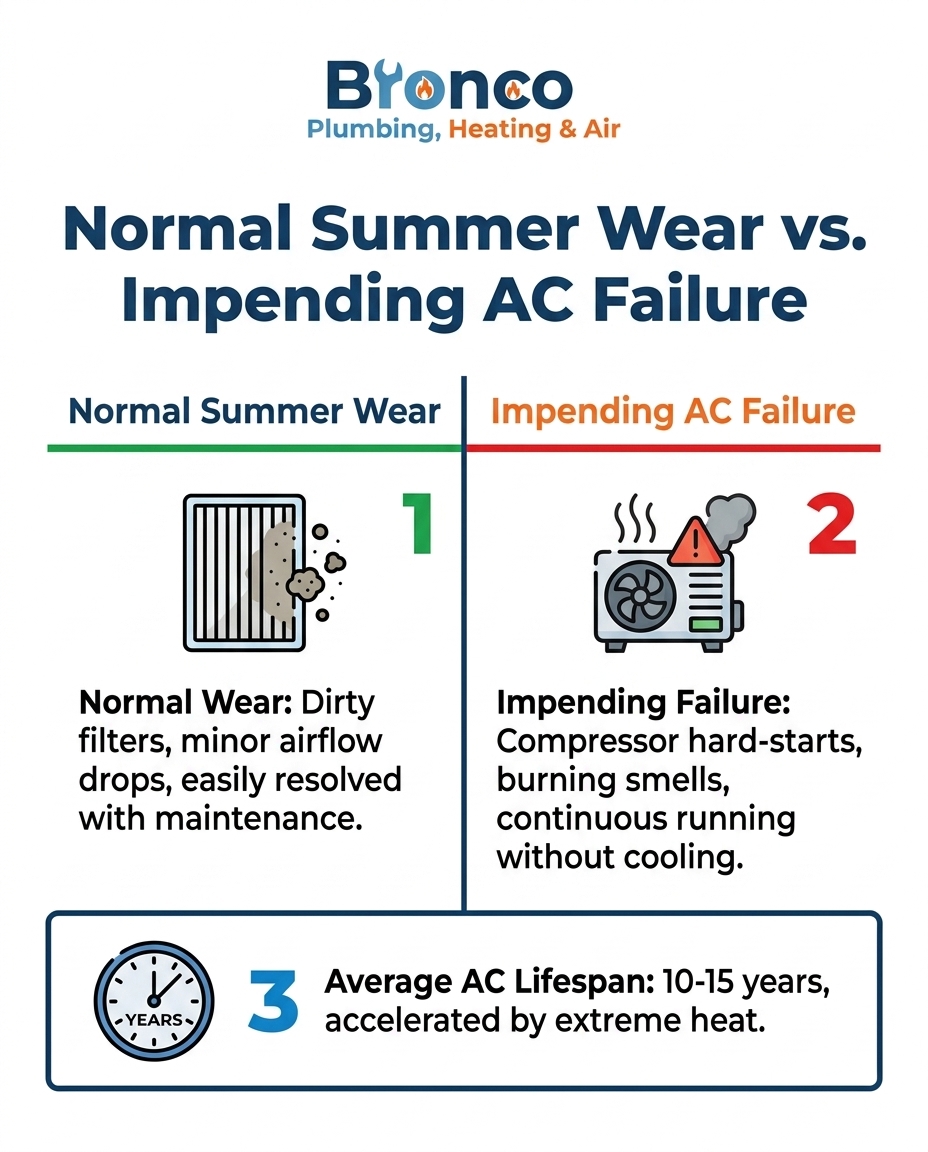
Running a failing system can cause secondary damage to other components, turning a single part failure into a total system loss. Our emergency dispatch team saw this exact scenario when one Sacramento homeowner experienced a complete shutdown on a Sunday during a late-August heat wave; the outside unit would not turn on at all, which was diagnosed as a faulty compressor requiring immediate replacement. To help you spot the difference, here is a breakdown of normal wear versus impending failure.
• Airflow — Normal Summer Wear: Slightly weaker airflow due to a dirty filter or dusty blower motor. — Impending System Failure: Barely any air moving through vents, even after changing the filter.
• Noises — Normal Summer Wear: Standard operational hum, perhaps slightly louder due to loose panels. — Impending System Failure: Grinding, screeching, or loud banging sounds indicating internal motor death.
• Smells — Normal Summer Wear: Musty odors from a damp evaporator coil or dusty ductwork. — Impending System Failure: Burning electrical smells, melting plastic, or acrid chemical odors.
• Cooling Power — Normal Summer Wear: Takes slightly longer to cool the house during the hottest part of the day. — Impending System Failure: Blowing completely warm air constantly, never reaching the set temperature.
• Starting Up — Normal Summer Wear: Turns on smoothly when the thermostat calls for cooling. — Impending System Failure: Hard starting, stuttering, or tripping the circuit breaker repeatedly.
If your system is showing signs of failure, such as your AC making strange noises, it is crucial to have a professional evaluate the equipment before it completely seizes up.
Is It Normal for AC to Run Constantly on a Hot Day?
One of the most common questions our local customers ask during extreme weather is whether their system should be running non-stop. The short answer is nuanced. During peak afternoon heat, especially in extreme Sacramento heat waves, a properly sized air conditioner will run for very long cycles to keep up with the massive thermal load pressing against your home.
The Difference Between Running and Cooling
There is a distinct difference between a long cycle that maintains your thermostat setting and a system that runs 24/7 while the indoor temperature continues to rise. If your thermostat is set to 75 degrees and the house stays at 75 degrees while the unit runs continuously through the afternoon, your system is doing exactly what it was designed to do. However, if the unit runs constantly but the indoor temperature creeps up to 80 degrees or higher, the system is failing to remove heat effectively.
Age also factors heavily into a unit's ability to cycle properly. In our experience, older systems on Sacramento area homes lose their efficiency over time, requiring longer operational hours to achieve the same cooling effect as a newer model. However, you should never ignore a system that never shuts off and fails to cool the space, as this continuous strain inevitably leads to premature compressor death.
Why Proactive Diagnosis Beats an Emergency Breakdown
Waiting for an air conditioner to die completely is a stressful and often costly approach to home maintenance. Diagnosing a dying unit in late summer allows for careful budgeting and research over the fall and winter, rather than forcing you into a panicked decision during a heat wave. The psychological and financial benefits of knowing your system's exact condition cannot be overstated.
Removing the Panic from Replacement
Unexpected breakdowns during peak heat create a frantic scramble to find an available contractor and secure a new unit. By contrast, planned off-season upgrades give you the time to evaluate different brands, efficiency ratings, and installation options. Another local homeowner with an aging HVAC system chose to have our team replace it proactively, resulting in an efficient, respectful installation well before a crisis hit.
Our team at Bronco Plumbing, Heating & Air emphasizes empowering homeowners to proactively budget for replacements without financial panic. Having the time to explore flexible HVAC financing options smooths out the replacement process, allowing you to choose a system that fits your long-term needs rather than just taking whatever is in stock during an emergency.
Exploring Your Options: Repair, Maintain, or Upgrade
Once our technicians provide a clear diagnosis of your system's health, you can confidently decide on the next steps. Central air conditioners generally last 10 to 15 years, but extreme climates accelerate this timeline significantly. If you are dealing with longer run times and strange smells, you need to weigh the cost of continued repairs against the benefits of a modern system.
Making the Math Work
1. Assess the Repair Costs: If the cost to repair your current unit is approaching half the value of a new system, and the unit is over 10 years old, replacement is usually the more financially sound decision.
2. Calculate Long-Term Savings: Upgrading an aging unit to a modern, high-efficiency model provides significant long-term cost savings on your monthly energy bills. Newer systems use far less electricity to produce the same amount of cooling.
3. Consider Alternative Solutions: If only certain rooms in your home are struggling to stay cool, you might not need a full central system replacement. Ductless mini-split systems offer targeted cooling relief for specific zones without the need for extensive ductwork modifications.
4. Explore Available Incentives: Generic federal tax credits and local utility rebates may apply to qualifying high-efficiency installations. These incentives can make upgrading to a premium system much more attainable, but our team always advises consulting a tax professional to see which programs your new equipment might qualify for.
Make the Right Call for Your Cooling System
Distinguishing between a simple fix and a dying system is the key to maintaining a comfortable home and protecting your wallet. Late August heat waves are unforgiving, and ignoring the warning signs will only lead to more severe damage and uncomfortable days. If your system is showing signs of extreme fatigue or impending failure, do not wait for it to break down completely.
Schedule an inspection with the pros at Bronco Plumbing, Heating & Air to get a definitive answer on your equipment's health. Talk to our experts about your specific situation so you can plan effectively, whether that means a seasonal tune-up or preparing for a high-efficiency upgrade before the next major heat wave hits.
Frequently Asked Questions
Is it normal for AC to run constantly on a hot day?
During extreme heat, our technicians note that it is normal for an air conditioner to run in long continuous cycles to maintain your set temperature. However, if the unit runs non-stop and the indoor temperature continues to rise, the system is failing to keep up with the heat load. A system that never shuts off and blows warm air requires immediate professional attention.
How do I know if my AC compressor is going bad?
A failing compressor often gives warning signs before it dies completely. You might hear loud grinding or screeching noises coming from the outside unit, notice the system struggling to start, or experience frequent circuit breaker trips. If the outdoor fan is running but the compressor is silent and the air inside is warm, the compressor has likely failed.
What are the signs your AC is dying?
Signs of a dying air conditioner include a sudden spike in energy bills, continuous operation without actually cooling the home, and strange burning odors coming from the vents. You may also notice weak airflow, frequent breakdowns requiring expensive repairs, and an inability to maintain consistent temperatures across different rooms.
How long should a central air conditioner last?
Most central air conditioners are designed to last between 10 and 15 years under normal operating conditions. However, in regions with extreme summer heat, the continuous heavy workload can accelerate wear and tear, often pushing units toward the lower end of that lifespan. Regular professional maintenance is the best way to extend the life of your equipment.
Can a dirty filter cause my AC to act like it's failing?
Yes, a severely clogged air filter restricts the airflow necessary for the system to operate correctly. This restriction can cause the indoor evaporator coil to freeze over, forcing the system to blow warm air or shut down entirely. Replacing a dirty filter is the first and easiest troubleshooting step if your system seems sluggish.
Should I repair my 10-year-old AC or replace it?
If a 10-year-old air conditioner requires a minor repair, fixing it is usually the right choice. However, if it needs a major component replacement like a compressor or an evaporator coil, investing that money into a new, high-efficiency system is typically more cost-effective. A new unit will provide better reliability, lower energy bills, and a new warranty for peace of mind.

Customer Testimonials
Our customer testimonials highlight the reliable service, quality workmanship, and trusted results homeowners experience with Bronco Plumbing Heating and Air.


Ready to Transform your Home?
Create a healthier, more comfortable home with expert HVAC, plumbing, and indoor air quality solutions you can trust. From efficient heating and cooling to cleaner air and reliable repairs, our experienced team is here to keep your family comfortable year-round with dependable service and upfront pricing.
Related Articles
The Truth About MERV Ratings and Air Conditioner Strain

Diagnosing Weak Airflow in the Farthest Bedroom of Your House
Why Placer County Soil Shifting Causes Underground Plumbing Stress in Late Summer