



.svg)

The Mechanics of Reversing Valves in Heat Pumps During Fall Transitions
A sudden blast of cold air on the first chilly fall night often points to a stuck reversing valve. Understanding this mechanical shift helps you decide when to call a professional for repairs.

The First Chilly Night: When Your Heat Pump Suddenly Blows Cold Air
September and October evenings often bring a rapid, unexpected temperature drop, forcing you to turn on the heat for the first time in months. You adjust the thermostat to chase the chill away, only to feel a blast of icy air coming from the vents. Understanding the mechanics of reversing valves in heat pumps during fall transitions is the key to solving this frustrating problem. Rather than a total system failure, this symptom usually points to a single mechanical component struggling to make the seasonal switch during an early fall cold snap. If you are dealing with a sudden breakdown and need immediate assistance, our comprehensive heating services can quickly restore your home's warmth.
Common signs of a seasonal transition failure:
• Continuous cold air: The system runs constantly but never produces warm air.
• Unusual silence: The outdoor unit turns on, but you do not hear the typical mechanical shifting sounds.
• Defrost cycle confusion: The system seems to be stuck in a defrost loop without actually heating the home.
• Thermostat mismatch: The indoor temperature continues to drop despite the thermostat calling for heat.
When the first cold front hits, realizing your heating system is unresponsive can cause immediate panic. However, heat pumps are highly engineered pieces of equipment, and this specific issue is incredibly common. The culprit is almost always the component responsible for physically reversing the flow of refrigerant. By understanding how this part works, you can better communicate with your technician and get your home back to a comfortable temperature.
Demystifying the 4-Way Valve: How Your Heat Pump Physically Switches Modes
To understand why your system is blowing cold air, you have to look at the heart of the heat pump's design: the reversing valve. Often referred to as a 4-way valve, this heavy-duty brass component is what makes a heat pump different from a standard air conditioner. Instead of just pumping heat out of your home, the reversing valve allows the system to absorb ambient heat from the outdoor air and pump it inside.
When everything is working correctly in the Sacramento Valley, the transition from cooling to heating is a smooth, automated process. The thermostat sends a signal, and the physical mechanics of the valve take over. However, because this is a mechanical shift involving high-pressure gases, several moving parts must operate in perfect sequence.
The Role of the Solenoid Coil
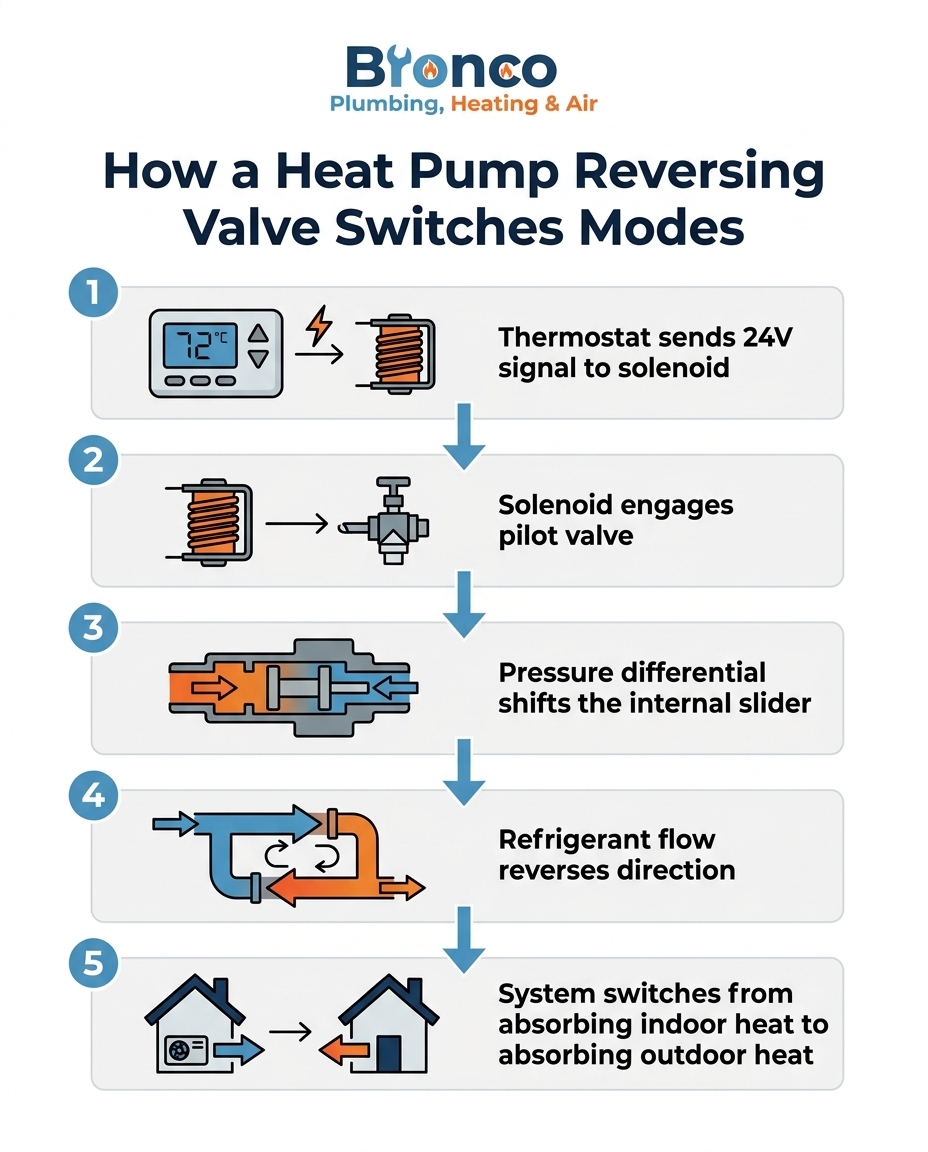
The brain of the reversing valve is the electrical solenoid coil. This small, electromagnetically charged component sits on top of the valve assembly. When your thermostat calls for heat, it sends a 24-volt electrical signal directly to this coil.
How the solenoid initiates the shift:
1. The thermostat detects the temperature drop and sends low-voltage power to the outdoor unit.
2. The solenoid coil energizes, creating a strong magnetic field.
3. This magnetic field pulls a tiny internal plunger inside the pilot valve.
4. The movement of the pilot valve redirects high-pressure refrigerant gas to one side of the main valve body.
Without a functioning solenoid, the mechanical portion of the valve will never receive the command to move. It acts as the critical bridge between your digital thermostat and the physical plumbing of the heat pump.
The Physical Slider Mechanism
Once the solenoid engages the pilot valve, the real heavy lifting begins. Inside the main brass body of the 4-way valve is a sliding mechanism, often made of durable synthetic materials. This slider does not move by electrical force; it moves using the sheer pressure of the refrigerant gas itself.
When the pilot valve changes the pressure dynamics, the high-pressure gas forces the internal slider from one side of the brass tube to the other. As it slides, it physically covers and uncovers different copper lines, completely rerouting the flow of hot discharge gas from the compressor. By sending the hot gas to the indoor coil instead of the outdoor coil, your system officially switches from air conditioning mode to heating mode. If the solenoid is unpowered, most systems are designed to default to one specific mode—often cooling—which is why a failed valve leaves you shivering.
The Toll of Continuous Summer Cooling on Internal Components
To understand why reversing valves fail so frequently in the early autumn, you have to look at the regional climate. In the Sacramento Valley, average summer highs routinely exceed 90 degrees. During these long, punishing heat waves, your heat pump operates exclusively in cooling mode for thousands of consecutive hours. For four to five months, the internal slider mechanism inside the reversing valve never moves.
Sitting idle in one position while subjected to intense heat, high-pressure gas, and constant vibration takes a physical toll on the valve. The internal lubrication can break down, and the tight tolerances of the sliding mechanism can become stiff. When the first autumn night finally arrives and the thermostat asks the valve to shift for the first time since spring, that stiffness can prevent the slider from moving.
• Peak Summer — Reversing Valve Status: Locked in cooling position — Component Vulnerability: Slider sits idle; lubricants settle; thermal stress accumulates.
• Early Fall — Reversing Valve Status: First attempted shift — Component Vulnerability: High risk of sticking due to months of inactivity and stiffness.
• Mid-Winter — Reversing Valve Status: Active shifting (defrost cycles) — Component Vulnerability: Valve moves regularly; lower risk of seizing, but wear and tear continues.
This seasonal vulnerability is exactly why proactive care is so valuable. Scheduling a tune-up before the weather turns allows a technician to verify that the solenoid is firing and the valve is shifting smoothly. If you are preparing your home for the changing seasons, transitioning your heat pump settings as nights cool down is a great time to ensure every mechanical part is ready for the workload ahead.
Listening to Your System: Sounds of a Successful Switchover
Homeowners often wonder how to tell if their system is functioning normally during an early fall cold snap. One of the best diagnostic tools you have is your own ears. Heat pumps are inherently noisy machines, but they produce very specific, predictable sounds when transitioning between cooling and heating modes.
By learning what a healthy switchover sounds like, you can quickly identify when the reversing valve is struggling and call for professional help before the house gets too cold.
The Normal 'Whoosh' and 'Clunk'
When the thermostat triggers the seasonal change, you should hear a distinct sequence of noises from the outdoor cabinet. First, you will likely hear a sharp, metallic "clunk" or click. This is the sound of the electrical solenoid engaging and the pilot valve snapping into place.
Immediately following the click, you will hear a loud, rushing "whoosh" sound. This noise is completely normal. It is the sound of highly pressurized refrigerant gas rapidly changing direction and equalizing across the internal slider. The whoosh usually lasts for just a few seconds before the compressor settles into a steady hum. If you hear this sequence, your reversing valve has successfully physically shifted.
When Silence Indicates Trouble
Conversely, the absence of these sounds is a major red flag. If you turn your thermostat to "Heat" and the outdoor fan kicks on, but you never hear the characteristic clunk or the rush of equalizing gas, the valve has not moved.
Acoustic warning signs to listen for:
• Total silence from the valve: The fan runs, but there is no click or whoosh, indicating a likely electrical failure at the solenoid.
• A humming or buzzing coil: The solenoid is receiving power but the internal plunger is stuck, creating a localized electrical hum.
• Hissing without a full whoosh: The slider may be partially stuck halfway across the valve body, allowing gas to leak between the high and low-pressure sides without fully reversing the flow.
Diagnosing the Disconnect: Electrical vs. Mechanical Valve Failures
When a technician arrives at your home in the Sacramento Valley to investigate a heat pump stuck in cooling mode, they are looking for one of two distinct points of failure. The reversing valve operates at the intersection of electricity and plumbing, meaning a breakdown can be either an electrical disconnect or a mechanical jam.
Understanding the difference between these two issues helps explain why some repairs take twenty minutes while others require major component replacement. These same diagnostic principles apply across various types of equipment, including highly efficient ductless mini-split systems, which also rely on 4-way valves to provide year-round comfort.
Solenoid and Wiring Issues
Electrical failures are generally the best-case scenario for a homeowner. If the brain of the valve isn't getting the message to switch, the physical slider will remain locked in its default position. A technician will use a multimeter to check if the thermostat is sending the proper 24-volt signal down the wire.
If the voltage is present but the valve isn't shifting, the technician will test the magnetic pull of the solenoid coil. Solenoids can short out, crack, or lose their magnetic strength over time. Replacing a bad solenoid is a straightforward process that does not require opening the sealed refrigerant lines, making it a relatively quick and painless repair.
Internal Mechanical Jams
Mechanical failures are significantly more complex. In this scenario, the thermostat is working, the wiring is intact, and the solenoid is generating a strong magnetic field—but the valve physically cannot move. The internal slider may be jammed due to degraded synthetic materials, sludge buildup in the refrigerant lines, or physical damage to the brass casing.
When a valve is mechanically stuck, it almost always requires a complete component replacement. Because the valve is brazed directly into the heat pump's sealed circuit, this involves safely recovering the refrigerant, cutting out the old valve, welding in a new one, and recharging the system.
• Electrical — Root Cause: Burned out solenoid coil, broken control wire, or bad thermostat. — Typical Repair Approach: Replace the external coil or repair the low-voltage wiring. Refrigerant circuit remains sealed.
• Mechanical — Root Cause: Stuck internal slider, damaged pilot valve, or internal debris. — Typical Repair Approach: Recover refrigerant, unbraze the entire 4-way valve assembly, and weld in a replacement.
The Go/No-Go Threshold: Why Refrigerant Circuits Require a Professional
When faced with a sudden breakdown during an early fall cold snap, it can be tempting to search for a quick DIY fix. You might read advice online suggesting you tap the brass valve body with a wrench or try to manually force the slider. The critical rule of thumb: never attempt to bypass, strike, or force a reversing valve.
The reversing valve is permanently brazed into the sealed refrigerant lines. Striking the brass casing can easily dent the metal, permanently jamming the slider inside and guaranteeing a costly replacement. Worse, improper handling can cause a micro-fracture in the copper joints, leading to a dangerous and expensive refrigerant leak. Furthermore, if the valve requires replacement, federal law mandates that only an EPA-certified technician can handle, recover, and recharge the chemical refrigerant.
Fast, professional diagnostics are the safest route. We understand that mechanical failures don't happen on a convenient schedule. For example, one customer reached out on a Sunday during a severe heat wave when their outside unit stopped working completely. Our technician arrived promptly, diagnosed a failed compressor, and performed the necessary repairs to restore their comfort immediately. That same 24/7 emergency readiness applies when your heating fails on a freezing autumn night. You don't have to wait days for a safe, professional repair. Investing in routine HVAC maintenance can also catch stiff valves and weak electrical components before they leave you in the cold.
Frequently Asked Questions About Heat Pump Reversing Valves
Why is my heat pump blowing cold air in heating mode?
If your heat pump is blowing cold air while set to heat, the reversing valve is likely stuck in its default cooling position. The thermostat sends the signal, but the valve fails to physically reroute the hot refrigerant gas indoors. A licensed technician can test whether the failure is due to a bad electrical solenoid or a mechanically jammed slider.
Can a heat pump reversing valve get stuck?
Yes, the internal sliding mechanism inside the reversing valve can become physically stuck. This frequently happens during the seasonal transition in early fall, after the valve has sat idle in the cooling position for months. Intense summer heat, degraded lubricants, or internal debris can all cause the slider to seize when it is finally asked to move.
What does a heat pump sound like when it switches to heat?
A normal transition is characterized by two distinct sounds: a sharp metallic "clunk" followed by a loud, rushing "whoosh." The clunk is the electrical solenoid engaging the pilot valve, while the whoosh is the sound of high-pressure refrigerant rapidly equalizing and changing direction. If you hear these sounds, your valve is successfully shifting.
Can a stuck reversing valve be fixed or does it need replacing?
It depends on the root cause of the failure. If the issue is a burned-out electrical solenoid coil, the coil can be quickly replaced without opening the sealed refrigerant lines. However, if the internal brass slider is physically jammed or damaged, the entire 4-way valve assembly must be cut out and replaced by an EPA-certified professional.
How long does a heat pump reversing valve typically last?
A reversing valve is designed to last the lifespan of the heat pump itself, typically 12 to 15 years. However, severe climate conditions, lack of routine maintenance, or underlying refrigerant pressure issues can cause premature failure. Regular seasonal tune-ups help ensure the valve continues shifting smoothly year after year.
Restoring Your Home's Warmth This Season
A stuck reversing valve is a common but entirely solvable hurdle during the seasonal transition in the Sacramento Valley. While the mechanics of reversing valves in heat pumps during fall transitions are complex, recognizing the acoustic signs and temperature symptoms allows you to act quickly. Do not let a chilly autumn night catch you off guard. Reach out to a local professional to safely diagnose the disconnect, repair the system, and restore reliable warmth to your home before the deep winter freeze sets in.

Customer Testimonials
Our customer testimonials highlight the reliable service, quality workmanship, and trusted results homeowners experience with Bronco Plumbing Heating and Air.


Ready to Transform your Home?
Create a healthier, more comfortable home with expert HVAC, plumbing, and indoor air quality solutions you can trust. From efficient heating and cooling to cleaner air and reliable repairs, our experienced team is here to keep your family comfortable year-round with dependable service and upfront pricing.
Related Articles
Why September is the Critical Window for Sacramento Valley Wildfire Smoke Prep

Recognizing the Difference Between Normal AC Wear and Impending System Failure
The Truth About MERV Ratings and Air Conditioner Strain